How to Come Out Clean in a Drug Test: A Safe, Legal Guide
A thorough, ethical guide to workplace drug testing. Learn how tests work, how to prepare legally, disclose medications, and communicate with employers to protect your rights.


On this page you will learn how to approach workplace drug testing legally and ethically, focusing on understanding the process, protecting privacy, and disclosing prescription medications when required. There is no legitimate shortcut to beating a drug test, and attempting to do so can be illegal. This guide emphasizes accurate information, proper documentation, and clear communication with your employer.
Understanding Drug Tests: What They Detect and How They Work
Drug tests are designed to detect the presence of substances that can affect safety, health, or job performance. Most workplace tests start with a screening test that looks for specific illicit drugs and certain prescription medicines. If the screening result is non-negative or borderline, a confirmatory test is typically performed to verify the result using a more precise method. Tests may use urine, saliva, blood, or hair samples, and the exact process varies by policy and jurisdiction. While you might see advice claiming ways to come out clean in a drug test, this article emphasizes legal and ethical practices instead. By understanding the basics of testing, you reduce uncertainty and protect your rights while complying with policy.
wordCount
Tools & Materials
- Medical prescriptions and medication list(Bring exact names, dosages, and prescribing physician contact if possible)
- Documentation from healthcare provider(Prescription letters, recent lab results, or doctor notes that explain purpose and timing)
- HR contact information and company policy(Know where to send documents and what constitutes allowed disclosure)
- Photo ID(Needed for sample collection and verification)
- Notes organizer(Keep a dated file of all communications and documents)
Steps
Estimated time: 60-90 minutes
- 1
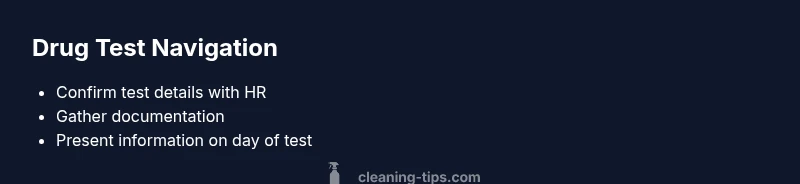
Confirm test requirements with HR
Reach out to HR or the test administrator to confirm the test type, timing, and whether a prescription needs special handling. This helps you prepare the correct documentation and reduces surprises on the day of collection.
Tip: Ask whether this is a screening only or a confirmatory test, and request details on chain-of-custody. - 2
Review medications and prescriptions
Compile a current list of all medications, including over-the-counter drugs and supplements. Note dosages, dates started, and any potential interactions with the test. This preparation prevents misinterpretation.
Tip: Bring copies of labels or prescription receipts to demonstrate legitimate use. - 3
Gather supporting documentation
Collect physician letters, pharmacy printouts, and any relevant medical records. Having this ready helps HR interpret unexpected findings in context.
Tip: Organize documents by date and relevance to reduce search time at the test site. - 4
Consult your clinician about labeling
If you take prescription meds that could appear on a panel, ask your clinician to provide a clear explanation of usage and timing. This can facilitate accurate interpretation if results are questioned.
Tip: Request a brief note specifying indication, dosage, and expected duration. - 5
Disclose medications proactively when appropriate
Many policies require disclosure of prescription medications before testing. Sharing documentation in advance reduces the chance of misinterpretation and demonstrates transparency.
Tip: Use a formal, written note to accompany your documentation when possible. - 6
Attend the test with organized documentation
On test day, present your documentation calmly and clearly. Be prepared to answer questions about your medications honestly and concisely.
Tip: Keep a copy of everything you provided for your own records. - 7
Ask about results interpretation and timelines
Clarify how results will be reported, what a positive result entails, and the expected timeline for any confirmatory testing or follow-up.
Tip: Document the contact person and the steps you were told to expect. - 8
Know your rights and privacy protections
Familiarize yourself with applicable privacy and employment laws. If you believe your rights are not being respected, seek counsel or guidance from your HR department or a legal advisor.
Tip: Request written policy references to ensure consistency with stated rules. - 9
Plan for future testing and compliance
If you rely on medications, work with HR to set expectations and accommodations where possible. Proactive planning helps maintain employment safety while respecting health needs.
Tip: Maintain ongoing documentation and stay informed about company policies.
Questions & Answers
What substances are commonly tested in workplace drug screens?
Most screens test for common illegal drugs and certain prescription medications. The specifics depend on policy and test type, but typically include cannabis, opioids, amphetamines, cocaine, and benzodiazepines.
Most workplace tests look for common illegal drugs and certain prescription meds; specifics depend on policy and test type.
Will a prescription medication affect test results?
Prescription medications may affect results if not properly disclosed. Providing documentation from a clinician helps interpret results accurately.
Prescription meds can affect results if not disclosed; have documentation ready.
Can you request a different test type?
Requests for test type changes depend on policy and safety considerations. Consult HR and refer to policy before any request.
Talk to HR about test type options, if allowed by policy.
What happens if the test is positive?
A positive result usually triggers a confirmatory test and a discussion about next steps per policy. Privacy protections and due process apply.
A positive result leads to confirmation and next steps per policy.
How far in advance should I disclose medications?
Disclose medications as early as possible, ideally when notified of the test. Keep copies of all documentation.
Disclose early and keep documentation handy.
How can I protect my privacy during testing?
Ask about data handling procedures and who can access results. Ensure policy adheres to privacy laws and company guidelines.
Ask who can access results and how data is stored.
Watch Video
The Essentials
- Know your rights and policy before the test.
- Disclose medications with proper documentation.
- Ask questions and document conversations with HR.
- Do not attempt to cheat; consequences can be severe.
- Proactive preparation reduces risk and confusion.