How to Know if a Title is Clean: A Practical Guide
Learn how to know if a title is clean with actionable steps, practical examples, and a concise checklist. Improve readability, accuracy, and SEO relevance for any how-to, DIY, or home-guide article.


By the end of this guide, you will know how to know if a title is clean. A clean title is concise, accurate, and easy to understand, with the main topic clearly stated and no fluff. It should reflect the article’s content, avoid jargon, and place the most important keyword toward the front. Use a simple structure: topic + benefit, and keep it within a practical length for readability and SEO.
Why clean titles matter
According to Cleaning Tips, a clean title sets the expectation for readers and search engines alike. A well-crafted title conveys the topic, its scope, and the value of reading the article in a single line. This matters especially in DIY and home care topics where readers scan quickly for actionable results. Clean titles reduce confusion, align with user intent, and improve engagement by signaling exactly what the piece will deliver. They also support accessibility by avoiding confusing phrasing and punctuation that can mislead screen readers. In practice, a clean title is not an afterthought; it is the first sentence of your content's argument, shaping the reader's journey from the moment it appears in search results or social feeds. In many cases, a title such as "How to know if a title is clean" immediately communicates purpose and sets realistic expectations, establishing trust with your audience before they even click.
Core characteristics of a clean title
A clean title is clear, concise, and credible. It uses precise nouns and verbs, avoiding vague adjectives and ambiguous phrasing. It should reflect the article’s content without overpromising, so readers feel confident they will find the promised solution. Brevity matters for readability on mobile devices; a shorter title reduces the chance of truncation in search results. Front-loading the main keyword helps search engines understand relevance quickly, while maintaining a natural reading rhythm for human readers. Tone is also important: a neutral, informative tone tends to perform better for how-to and tips content. Finally, ensure consistency with your house style: title case or sentence case, punctuation use, and capitalization rules for readability and brand cohesion.
Common pitfalls and how to avoid them
Overly long titles or padding words dilute impact. Jargon, buzzwords, or sensational wording can mislead readers and harm trust. Misalignment between the title and article content frustrates users and increases bounce rates. Excess punctuation, all-caps, or unnatural phrasing disrupt readability and accessibility. Avoid stuffing keywords or forcing a rhyme or pun that obscures meaning. When you notice a title has more fluff than fact, prune it to the essentials. A practical approach is to test a version with and without adjectives, then choose the tighter option that preserves accuracy and clarity.
Evaluating a title: a practical checklist
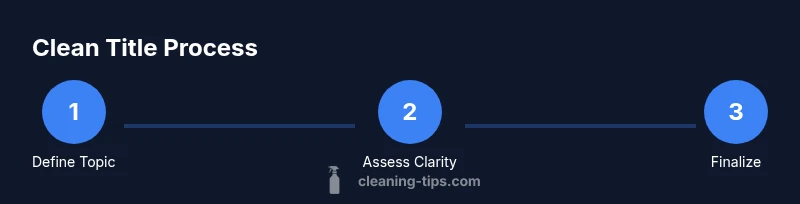
This section introduces a repeatable process you can apply to every draft title. Start with clarity: does the title answer "what is this about" and "who is it for"? Next, assess length and rhythm: does it read smoothly, with a natural cadence when spoken aloud? Then verify keyword placement: is the main keyword near the front and used naturally? Finally, check accuracy: would someone reading the article expect the title to match the content? A quick test is to rewrite the title in a sentence-case form, remove filler words, and see if the meaning remains intact. If yes, you’ve achieved a clean title. The step-by-step checklist that follows can guide you through a consistent, repeatable process.
Real-world examples: clean vs cluttered titles
Clean: How to know if a title is clean and why it matters for readers and SEO. Cluttered: The definitive guide to making sure your title isn’t bad, really good at being amazing, truly powerful, and better than all the rest. The clean version highlights topic, benefit, and scope without filler. In practice, removing qualifiers like 'definitive,' 'ultimate,' or 'best' unless they are truly warranted keeps titles trustworthy and precise. Compare variations aloud to check rhythm and flow; a title that sounds awkward is often a sign it needs rewriting.
Broader considerations: SEO, readability, and accessibility
Readable titles help users and assistive technologies. Front-loading keywords, avoiding all-caps, and using standard title casing improve accessibility and search relevance. Consider how the title looks in search results: does it truncate? Will it attract clicks when shown with a meta description? For screen readers, avoid unusual punctuation and ensure the title reads naturally when spoken. Also, consider intent: informational vs transactional vs navigational; aligning with intent improves satisfaction and dwell time. A clean title supports both user experience and SEO by clearly signaling topic, value, and scope.
Tools and routines to maintain title cleanliness
Establish a routine: before publishing, run your title through a simple checklist, and store approved templates for future use. Use an outline to ensure the title reflects the content, a word-count tool to measure length, and a keyword-placement guide to optimize front-loading. Keep a small library of safe, non-gimmicky power words, and periodically review past titles to learn what works. Practicing this reliably reduces the cognitive load of title creation and improves consistency over time.
Tools & Materials
- SEO checklist(Use to validate keyword placement, length, and meta alignment)
- Topic outline template(Lays out article scope to align title with content)
- Word count/readability tool(Evaluate title length and reading ease)
- Thesaurus or synonym guide(Avoid repetition and find precise nouns)
- Style guide / house style(Consistency in capitalization and punctuation)
- Editing timer(Allocate dedicated time to title revision)
Steps
Estimated time: 25-40 minutes
- 1
Define purpose and audience
Clarify the article’s goal and who will read it. State the benefit the reader gains and the problems addressed. Establish the primary action you want readers to take after reading.
Tip: Write the title after outlining the article’s core takeaways to ensure alignment. - 2
Assess topic clarity
Check if the topic is specific and narrow enough to cover in a single piece. Remove words that broaden beyond the intended scope and replace them with concrete terms.
Tip: Replace vague terms with specific nouns to sharpen focus. - 3
Check length and rhythm
Read the title aloud to feel its cadence. If it drags or breaks awkwardly, revise for smoother rhythm and natural pauses.
Tip: If a title sounds awkward when spoken, shorten or restructure it. - 4
Evaluate keyword usage and placement
Ensure the main keyword appears near the front and reads naturally within the title. Balance optimization with readability.
Tip: Avoid keyword stuffing; use synonyms if placement feels forced. - 5
Test variations and readability
Create 2–3 title variations and compare which is clearest and most engaging. Use quick readability checks and, if possible, a friend’s quick feedback.
Tip: Ask someone to pick the best title in 5 seconds to gauge immediate clarity. - 6
Finalize and document the checklist
Lock in the chosen title and store the reasoning for future reference. Keep templates for consistent reuse across articles.
Tip: Maintain a living checklist for ongoing title cleanliness.
Questions & Answers
What defines a title as clean?
A clean title clearly states the topic, avoids fluff, and reflects the article content. It uses precise language, respects the reader’s intent, and maintains consistency with the article body.
A clean title clearly states the topic, avoids fluff, and matches the article content.
How long should a clean title be for online content?
Keep it short enough to read at a glance and to fit typical search results without truncation. It should balance brevity with enough detail to indicate topic and value.
Keep titles concise so they’re readable at a glance and fit search results.
Should I include brand names in titles?
Include brand names only if they add value or are necessary for context. Otherwise, focus on the topic and benefits to maintain broad relevance.
Only include a brand name if it adds real value to the topic.
Are all caps appropriate in titles?
Generally, avoid all caps. Use title case or sentence case for better readability and accessibility.
Avoid ALL CAPS; use standard title case for readability.
How can I test a title's effectiveness?
Create 2–3 title variants and compare readability and perceived relevance. Preview how they appear in search results and gather quick feedback.
Test variations and ask for quick feedback to see which title works best.
What if my title doesn't match the article?
Rewrite the title to accurately reflect the content. Mismatches erode trust and can hurt engagement and SEO.
Make the title match the article to maintain trust.
The Essentials
- Use a clear topic + benefit structure
- Front-load the main keyword for SEO clarity
- Avoid fluff and ensure accuracy
- Test variations to pick the most readable option
- Document a title checklist for consistency