How to Know If a Car Has a Clean Title
Learn how to verify a car's title status, identify brands that signal issues, and confirm records through DMV and VIN history checks. A practical, DIY-friendly guide from Cleaning Tips.


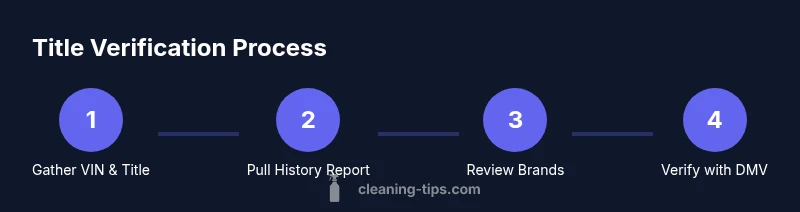
This guide teaches you how to determine if a car has a clean title. You’ll learn to verify title status with VIN history, recognize common title brands, and confirm records through official sources like the DMV. Have the VIN, current title, and seller information ready; plan for about 30–60 minutes to complete the checks.
Why a clean title matters
A clean title is more than a bureaucratic label; it’s your first line of financial and legal protection when buying a used car. A clean title generally indicates clear ownership, no outstanding liens, and no brands that signal damage or reconstruction. According to Cleaning Tips, buyers who start with a clean title reduce the risk of hidden liabilities that could lead to repossession, costly repairs, or title disputes after purchase. For homeowners and renters, this diligence pays off in smoother registration, better insurance outcomes, and higher resale confidence. As you evaluate a vehicle, treat the title as a contract of the car’s history, ensuring what you see on paper aligns with what you experience on the street. Skipping title checks can save time short-term, but it increases the likelihood of surprises that undermine your investment and peace of mind.
What counts as a clean title
A clean title means there are no brands indicating damage or theft, and no liens or other encumbrances that could cloud ownership. It should show the current owner’s name accurately, match the vehicle’s VIN, and include the odometer disclosure if required. The title should be transferable without legal holds or unpaid loans attached. In practice, a clean title should allow you to register the car, insure it, and transfer ownership smoothly. While a title may have minor clerical inconsistencies, those should be resolvable before purchase. If you find signs of a lien, an unreconciled odometer, or mismatched owner names, treat the title as not clean and proceed with caution or walk away if unresolved.
Common title brands to look for
Title branding is a key indicator that something is off. Common brands include salvage and rebuilt, which signal that the vehicle sustained significant damage and was repaired for road use. Flood brands indicate water damage that can affect electrical systems and longevity. Lemon or junk titles are rare and typically reflect serious defects or unresolved disputes. If the title carries any of these brands, you’ll want a detailed history report and a professional inspection before considering purchase. In addition to brands, watch for liens or unreleased loans that could transfer with the title and complicate ownership. Cleaning Tips analysis shows that titles with brands often require additional documentation and sometimes specialized insurance or inspection to be legally operable.
How to verify title history with VIN
Start with the VIN, the unique identifier that ties the car to its past. Use a reputable title history service or your state DMV portal to pull a history report. Look for recorded brands, previous owners, liens, and any odometer discrepancies. Cross-check the VIN on the title with the VIN on the car (door frame, engine bay stamp, and dash plate) to ensure consistency. If the history reveals a salvage or flood brand, request detailed repair records and a third-party inspection before making an offer. In many cases, a clean history through VIN verification is the quickest path to confidence that you’re dealing with a legitimate title.
Checking official DMV records and national databases
Official DMV records provide authoritative confirmation of a title’s status. In many regions, NMVTIS (National Motor Vehicle Title Information System) aggregators pull data from state DMVs, insurers, and junk yards to present a comprehensive view. Accessing these records directly through the DMV or a trusted provider helps verify ownership, liens, and branded titles. When you obtain the report, pay attention to the date of the last transfer, lien releases, and any notes about past repairs or salvage history. If records appear inconsistent with what the seller presents, request a formal explanation or a corrected title before proceeding. Cleaning Tips recommends combining DMV data with a physical inspection and an independent mechanic’s assessment for the most reliable outcome.
Inspect the title and supporting documents
Physically inspect the title for legibility, correct VIN, and accurate owner names. The VIN on the title should match the VIN on the vehicle, insurance card, and registration. Review odometer disclosures for accuracy and ensure there are no erasures or alterations. Check for any stamps or signatures that indicate a transfer or lien payoff. If any part of the document looks forged, altered, or inconsistent, pause the purchase and seek clarification from the DMV or a title specialist. Documentation quality matters just as much as the history data.
What to do if you find issues before purchase
If a red flag appears, don't panic—ask the seller to resolve it before closing. This could mean paying off a lien, obtaining a corrected title, or providing a formal release from the lienholder. If problems persist, consider walking away or negotiating a substantial discount to cover anticipated risk and potential title fixes. In all cases, document your communications and request written explanations. If you already own the vehicle, consult a title expert or attorney to understand your options for quieting title or contesting any discrepancies. A cautious approach protects you from costly surprises and legal headaches.
Questions to ask the seller during title checks
Ask for: (1) The VIN, current title, and any previous titles; (2) A lien release or payoff letter if applicable; (3) Records of any repairs tied to branded history; (4) The vehicle’s odometer history and discrepancies; (5) Any insurance claims that could relate to past damage. Use the seller’s responses to assess credibility and timelines for resolving issues. Keep a written log of answers and request copies of all documents mentioned for your records.
Putting it all together: next steps and documentation
Once you’ve verified a clean title, gather all documents into a single file: the history report, the current title, lien releases, repair receipts, and any correspondence with the seller. If everything aligns, you can proceed with purchase; otherwise, obtain professional verification or walk away. Maintain copies of all records for your future sale or insurance process. A thorough title check creates a solid foundation for a safe ownership experience.
Tools & Materials
- VIN (Vehicle Identification Number)(Found on the dashboard near the windshield, driver’s door jamb, or title document)
- Current title(Must show the correct owner name and VIN; check for any brands or liens)
- Access to an online title history service(NMVTIS, state DMV portal, or reputable vehicle history report provider)
- Notepad or digital device for notes(Record questions, confirmations, and dates)
- Seller contact information(Phone/email for follow-up and requests for documents)
- Printer/Scanner (optional)(Print or save copies of reports and titles for your records)
Steps
Estimated time: 30-60 minutes
- 1
Gather essential documents and information
Collect the vehicle’s VIN, current title, and any prior titles. Ask the seller for access to the title and any associated records. Having all documents ready speeds up subsequent checks and reduces back-and-forth.
Tip: Do this before meeting the seller to ensure you can verify data immediately. - 2
Locate the VIN on the car and confirm it matches the title
Find the VIN on multiple car locations (dashboard, driver's door frame, engine bay) and compare with the VIN on the current title. Any mismatch should raise a red flag and delay the purchase.
Tip: A mismatch could indicate a swapped or incorrect title. - 3
Pull a VIN history from an official source
Use NMVTIS or your state DMV portal to pull the vehicle’s history. Look for branded titles, prior owners, and liens. Cross-check the history with the seller’s information.
Tip: If the report shows a brand, request disclosures or a corrected title before continuing. - 4
Review title brands and encumbrances
Identify any brands (salvage, rebuilt, flood, lemon) and confirm lien status. Brands often require additional documents or inspections; liens could delay transfer.
Tip: Ask for full lien release documentation if a lien exists. - 5
Check odometer and ownership consistency
Compare the odometer reading on the title with the vehicle’s odometer and the history report. Ensure owner names match across documents and there are no unexplained changes.
Tip: Odometer discrepancies can signal tampering or record errors. - 6
Verify with the DMV and request official records
If you see anything unusual, request a formal DMV record or corrected title. Use NMVTIS in combination with state records for a comprehensive view.
Tip: Official records are harder to dispute than third-party reports. - 7
Discuss findings with the seller and set expectations
Present the findings and ask for resolutions if there are issues. If risks remain high, consider postponing or walking away.
Tip: Document all communications and set a clear deadline for responses. - 8
Finalize with documentation and next steps
If clean, collect all documents for your records and complete the transfer. If not, obtain professional advice before deciding.
Tip: Keep digital backups of every report and title.
Questions & Answers
What counts as a clean title?
A clean title indicates clear ownership with no brands like salvage, rebuilt, flood, or liens. It should allow transferring ownership without legal encumbrances and match the vehicle’s VIN across documents.
A clean title means the car has no brands or liens and the ownership records line up across all documents.
Can a car have a clean title but still have serious issues?
Yes. A car can have a clean title yet suffer undisclosed accident damage or mechanical problems not reflected in the title history. Always pair title checks with a professional inspection and vehicle diagnostics.
Even with a clean title, have the car inspected to uncover hidden issues.
What records should I request from the seller?
Ask for the current title, any prior titles, lien release documents, repair receipts, and the VIN-specific history report. Getting copies helps you verify claims and prepare for a smooth transfer.
Request all title documents and history reports so you can verify everything.
How long does a title history check take?
A typical VIN history check can take 10–20 minutes online, plus time to review any reports. If DN DV or third-party portals require extra steps, allocate more time.
Most checks are quick, but some sources may take longer to process.
What should I do if the title shows a lien?
If a lien exists, obtain a lien release from the lender before completing the purchase. If the release cannot be secured, reconsider the deal or renegotiate to cover the payoff.
If there’s a lien, you’ll need a lien release to proceed.
Is NMVTIS the only source for title history?
NMVTIS is a major national source that aggregates data from multiple agencies, but you should also check state DMV records and the seller’s documentation for a complete picture.
NMVTIS is important, but don’t rely on it alone; check state records too.
The Essentials
- Verify title history with VIN first
- Identify and understand any title brands
- Cross-check DMV and history reports for consistency
- Obtain lien releases before purchase
- Document everything for your records