Is Clean the Same as Tidy? A Practical Comparison
Explore whether clean and tidy mean the same in everyday cleaning. This analytical guide clarifies definitions, usage, and practical implications for homeowners and renters.


Is clean the same as tidy? In everyday use, they overlap but center on different outcomes: cleanliness targets removal of dirt and germs, while tidiness targets order and accessibility. This analytical guide shows the differences and when each should influence your cleaning plan.
Defining Clean vs Tidying
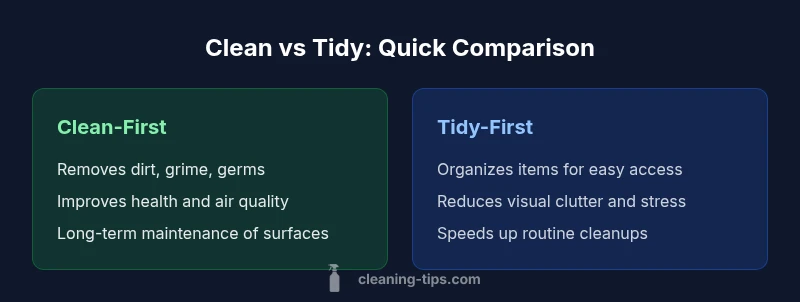
In everyday language, people mix up the words clean and tidy. Yet the terms point to different kinds of outcomes. Cleaning is the process of removing dirt, grime, and microbes from a surface so it is hygienic. Tidying is the process of arranging objects and reducing visual clutter so a space feels calm and accessible. The distinction matters for how households plan tasks, allocate time, and measure success. According to Cleaning Tips, a practical way to approach this is to set two parallel goals for each room: reduce contamination risk and improve usability. When you view your space through these two lenses, you can create a balanced schedule that keeps surfaces sanitary while maintaining order. The point is not that one term is better than the other, but that they serve different purposes in daily routines, guest expectations, and personal comfort.
Comparison
| Feature | Clean-first | Tidiness-first |
|---|---|---|
| Definition scope | Removes dirt, grime, and germs to sanitary state | Arranges items for orderly appearance and accessibility |
| Health impact | Direct sanitation impact | Indirect impact via reduced contamination risk |
| Time investment | Often longer upfront for deep cleaning | Often shorter for organizing tasks |
| Measured outcomes | Visible cleanliness and microbiological state | Visual order and ease of use |
| Best for | Health-focused zones (bathroom, kitchen surfaces) | Clutter reduction and stress relief areas (living room, entry) |
| Cost context | Costs can include cleaning agents and tools | Low-cost organizing aids suffice |
Strengths
- Clarifies expectations between participating household members
- Promotes health and sanitation when prioritized
- Supports efficient maintenance routines
- Can guide budgeting and task scheduling
Weaknesses
- Risk of over-cleaning or under-organizing if emphasis is unbalanced
- Ambiguity in multi-task rooms without clear goals
- Requires ongoing communication to stay aligned
A balanced approach that blends cleanliness and tidiness yields the best home environment.
Prioritize cleaning for health while maintaining tidiness for accessibility and mood. Use a combined checklist to ensure both goals are met without sacrificing time.
Questions & Answers
What is the practical difference between cleaning and tidying?
Cleaning targets removing dirt, germs, and stains to restore a surface to sanitary condition. Tidying focuses on arranging items and reducing visual clutter for easier use and a calmer space. Both aim to improve the home, but through different mechanisms.
Cleaning removes dirt and germs; tidying creates order and ease of access.
Can a space be clean but not tidy?
Yes. You can sanitize surfaces yet still see clutter or misplaced items. A cleaning session can be followed by a quick tidy to improve usability.
Yes, you can have clean surfaces but cluttered spaces.
Can a space be tidy but not clean?
Absolutely. A room might look organized while dust accumulates or surfaces remain dirty. Regular cleaning tasks should accompany organizing to maintain health and order.
Yes, tidy does not guarantee cleanliness.
How should I adjust my cleaning schedule if I care about both cleanliness and tidiness?
Create a weekly plan that alternates deep cleaning with quick organizing sessions. Tie tasks to zones (bathroom, kitchen, living area) to balance health and order.
Plan a weekly mix of cleaning and organizing tasks.
Are these terms used differently in professional cleaning vs home cleaning?
Professionals often emphasize sanitation and standardized cleaning protocols, while homeowners balance comfort and aesthetics. Both approaches can overlap when tasks are designed with clear goals.
Pro cleaning prioritizes sanitation; home cleaning blends health with comfort.
The Essentials
- Define your goal first: clean, tidy, or both.
- Use separate checklists for cleaning and organizing.
- Communicate expectations to household members.
- Schedule routines that address health and order concurrently.
- Adjust focus by room and activity.