Is Clean the Same as Sterile? A Practical Comparison for Home Cleaning
Explore whether cleaning is the same as sterilization in everyday homes. This analytical guide clarifies definitions, differences, and practical implications, with tips on when sterilization matters and how to assess cleanliness.


Is Clean the Same as Sterile? Not exactly. Cleaning removes visible soil and reduces microbes; sterilization destroys all viable microorganisms on a surface. In everyday home contexts, 'clean' and 'sterile' are not interchangeable. This article compares definitions, uses, and practical implications so you can choose the right term for your task.
Defining Clean vs Sterile: Core Concepts
In everyday speech, people often say something is clean when it feels fresh or smells nice. However, in medical and professional cleaning, 'clean' has a narrower meaning: the surface is free of visible soil and has a low microbial load. 'Sterile' goes further: it implies that all viable microorganisms have been destroyed or removed by validated processes. Is clean the same as sterile? Not according to established definitions, and readers should treat these terms as context-dependent. According to Cleaning Tips, clean refers to removing soils and reducing germs to a safe level, while sterile is a formal status achieved only through controlled, validated methods. The distinction matters because using the wrong standard can lead to inadequate protection in risky environments, or unnecessary costs in routine tasks. Understanding the difference helps homeowners set realistic expectations for cleaning outcomes and choose appropriate products and procedures. For most households, finishing a clean task is sufficient; sterilization is reserved for medical equipment, sterile handling of samples, and environments with high infection risk. Marketing language, however, often blurs these lines by labeling products as 'sanitizing' or 'antibacterial' without clear proof of sterility. By keeping the definitions straight, you can avoid confusion and make informed decisions about when to clean, disinfect, or sterilize.
Historical Context and Standards
The concept of cleanliness has evolved from basic dirt removal to a structured framework that includes microbial reduction, disinfection, and sterilization. Historical guidelines distinguished surface cleaning from procedures that require validated sterilization cycles. In healthcare and laboratory settings, sterilization is defined as a process that renders surfaces or instruments completely free of viable microorganisms, including spores. This clarity helps practitioners design proper workflows, validate methods, and monitor outcomes. While homes rarely require true sterility, understanding the lineage of these terms helps prevent misapplication of sterilization concepts to consumer products. Cleaning Tips notes that public health guidance emphasizes using the right product for the context, with sterilization reserved for medical devices, surgical instruments, and other high-risk items. Consumers should interpret product labels with an informed lens, recognizing terms like sanitizing or disinfecting as indicating reductions in microbial load rather than guaranteed sterility. The historical distinction remains relevant when deciding whether a task calls for simple cleaning, disinfection, or a formal sterilization process, and it guides how we evaluate product claims and safety assurances.
Everyday Home Contexts: What Clean Means vs Sterile
For most households, a routine cleaning task involves removing visible soil and reducing microbial presence to a safe level for daily living. This is what people mean when they say a surface is clean. Sterile, in contrast, implies that no viable microorganisms remain on a surface, achieved only through validated procedures such as autoclaving, chemical sterilants, or other controlled processes. The Cleaning Tips team observes that many consumers equate sanitizing with sterility, but sanitizing products reduce microbes to safe levels rather than achieving true sterility. In kitchens, bathrooms, and living spaces, proper cleaning coupled with appropriate disinfection is usually sufficient for health and comfort. When a surface has contact with food, for instance, you may wish to disinfect high-touch areas to minimize contamination risk; this reduces germs but does not render the surface sterile. In sensitive environments, such as medical facilities or areas serving immunocompromised individuals, professionals follow stringent sterilization protocols to meet safety standards. Understanding the difference helps homeowners prioritize tasks, select the right products, and avoid overconfident assumptions about sterility in everyday cleaning routines.
Medical and Food-Safety Contexts: Where Sterility Is Essential
Sterility is a critical requirement in medical settings and certain food-processing environments. Medical devices that enter sterile tissues must undergo validated sterilization processes to achieve an outcome that cannot be reliably guaranteed by routine cleaning or disinfection alone. In food safety, certain tools and surfaces must be kept sterile to prevent cross-contamination during processing or handling of high-risk products. The distinction matters for consumers who are shopping for products that claim to make surfaces sterile; many items marketed as sterilizing agents are designed for specific contexts and may not deliver true sterility in home use. The Cleaning Tips analysis shows that home users should be cautious about applying the term sterility to consumer products and recognize that sterility requires controlled processes, verification, and documentation that are typically outside home cleaning routines. The key takeaway is that not every task calls for sterilization, and mislabeling can lead to unnecessary expense or misplaced confidence in protection.
How Microbes Are Measured in Practice
In professional settings, sterility is established through controlled validation, environmental monitoring, and microbial testing. In the laboratory, scientists describe microbial presence using standardized metrics, and sterility is proven by evidence that no viable cells remain after the process. Household contexts rely on sanitizing and disinfecting claims, which describe reductions in microbial load rather than complete elimination of all viable organisms. Consumers should look for products that specify efficacy against common pathogens and follow label instructions for contact time and surface compatibility. While home cleaning cannot practically achieve the level of sterility seen in hospitals, following a structured approach—cleaning first, then disinfecting where appropriate—provides strong protection for everyday living spaces. The Cleaning Tips team emphasizes reading product directions, ensuring compatibility with surfaces, and using the right disinfection contact times to maximize effectiveness without overspending on unnecessary sterilization products.
Practical Cleaning Guidance for Homeowners
A practical home cleaning plan starts with identifying the task and setting realistic cleanliness goals. For most surfaces, start with mechanical cleaning using soap and water to remove visible soil, then apply an appropriate disinfectant based on the risk level of the environment and the surface. Surface pretreatment improves performance; precleaning removes dirt that can inhibit disinfection. Always ventilate the area when using chemical products and follow the label direction for dwell time, contact time, and dilution ratios. Regular cleaning routines reduce microbial load over time and create a healthier living space. When you handle food-contact surfaces, prioritize hygiene practices such as washing hands, sanitizing cutting boards, and using food-grade sanitizers where appropriate. The Cleaning Tips guidance suggests documenting the limits of household cleaning and not assuming sterility for ordinary tasks. By adopting a disciplined approach and using the right tools, homeowners can achieve safe, comfortable environments without falling into the trap of conflating clean with sterile.
Language and Perception: Why Terms Are Confused
The phrase is clean the same as sterile often arises from marketing, convenience, and imperfect public understanding. Language matters because it shapes how people set expectations for safety and product performance. Consumers may interpret 'sterile' as a guarantee of ultimate cleanliness, while many everyday products only offer microbial reduction through disinfection. Understanding the linguistic distinction helps readers interpret product labels more accurately and avoid overestimating the protective effect of routine home cleaning. The Cleaning Tips team argues that precision in terminology supports better decision-making, cost management, and safe practices in households. Being precise about what you want to achieve—chemical reduction, mechanical cleaning, or true sterility—helps you select the right tools and adopt the most appropriate procedures for each scenario.
Quick Rules to Decide When Sterility Matters
Rule 1: If the task involves entering sterile body tissues or invasive procedures, you need validated sterilization. Rule 2: For normal household surfaces with food contact, cleaning plus disinfecting is usually sufficient. Rule 3: If you are cleaning shared spaces or handling vulnerable populations, consider disinfection emphasis and proper hygiene practices. Rule 4: Do not treat ordinary 'antibacterial' labels as evidence of sterility; check the label for the claimed efficacy and the context. Rule 5: Always follow surface compatibility and safety guidelines from manufacturers. By applying these rules, you can determine whether a sterility approach is needed or if cleaning and disinfection meet the objective. The Cleaning Tips team stresses that science-based handling of cleaning tasks helps avoid unnecessary costs while maintaining a healthy home environment.
Common Misconceptions Debunked
A pervasive myth is that any time you see the term sterilize, you must use extreme measures in all home settings. In reality, sterility is context-specific and often unnecessary for everyday living. Another misconception is that 'sanitized' equals sterile; sanitation reduces microbes to a safe level but does not guarantee sterility. Yet another belief is that cleaning is inherently safe for all pathogens; in fact, certain pathogens require particular disinfection or sterilization methods to ensure adequate safety. The Cleaning Tips team advocates a clear, task-based approach to cleanliness that aligns product usage with the risk profile of the surface and activity. By debunking these myths, readers gain a practical framework for making evidence-based decisions about when to clean, disinfect, or sterilize in homes.
Comparison
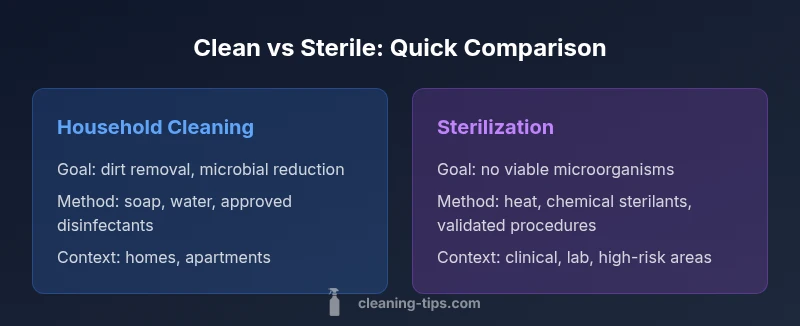
| Feature | Household Cleaning | Sterilization |
|---|---|---|
| Typical goal | Remove dirt and reduce microbes | Eliminate all viable microorganisms |
| Common methods | Soap, water, disinfectants | Validated processes like heat and chemical sterilants |
| Typical environments | Homes, offices | Hospitals, labs |
| Time/effort | Shorter, routine | Longer, controlled procedures |
| Cost range | Low to moderate | Moderate to high |
Strengths
- Clarifies the distinct goals of cleaning versus sterilization
- Helps readers allocate time and resources effectively
- Reduces risk of mislabeling consumer products
Weaknesses
- Can overwhelm readers new to terminology
- Sterility terminology can be misapplied in homes
- Some tasks fall into a gray area with ambiguous needs
Sterile is not the same as clean; use clean for daily tasks and sterilize only where microbes pose a real risk.
Understand the difference to avoid over- or under-cleaning. For most homes, cleaning suffices; sterilization is for medical and high-risk contexts, not routine maintenance.
Questions & Answers
What does 'sterile' mean in everyday cleaning?
Sterile means no viable microorganisms remain on a surface, achieved through controlled processes. Most homes do not require true sterilization for daily tasks.
Sterile means no living microbes remain; for home tasks, clean is usually enough.
Can I achieve sterility with household cleaning products?
Most household products reduce microbes but do not guarantee sterility. True sterilization typically requires specialized equipment and conditions.
Household cleaners reduce germs but don't guarantee sterility.
When is sterilization necessary at home?
Sterilization is generally only necessary for medical procedures, handling vulnerable individuals, or situations with high infection risk.
Only in medical or high-risk scenarios should you pursue sterilization.
What is the difference between cleaning and disinfecting?
Cleaning removes dirt; disinfecting reduces or eliminates microbes on surfaces when done properly with approved products.
Cleaning gets rid of dirt; disinfecting reduces germs when used correctly.
Are 'clean' and 'sterile' ever interchangeable?
They are not interchangeable in most contexts. Use 'clean' for routine tasks and 'sterile' only when required by safety standards.
No, they aren’t interchangeable; use clean for daily tasks and sterile when required.
The Essentials
- Define the task first: clean vs sterilize
- Rely on cleaning methods for daily needs
- Reserve sterilization for medical-risk contexts
- Be cautious of conflating terms in consumer products