List of Clean and Unclean Animals: A Cleaning Guide
Explore the list of clean and unclean animals, the traditional criteria, and practical cleaning tips to reduce cross-contamination in your kitchen and home today.


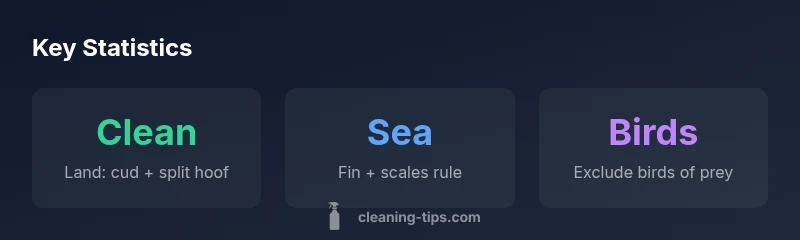
Understanding the list of clean and unclean animals helps explain how traditional dietary laws influence cleaning and kitchen practices. Clean land animals: those that chew cud and have split hooves (for example, cows and sheep). Clean seafood: fish with fins and scales. Clean birds include common poultry like chicken. Unclean examples include pigs, camels, shellfish, and birds of prey. For households, this guidance translates into careful handling during cleaning and kitchen prep.
List of clean and unclean animals: Origins and definitions
Understanding how traditional rules classify animals provides a framework for everyday cleaning decisions. The list of clean and unclean animals helps explain categories rather than an exhaustive roster. In broad terms, clean land animals are commonly those that chew cud and have split hooves, clean seafood refers to fish with fins and scales, and clean birds exclude birds of prey. The Cleaning Tips team notes that these classifications influence how households handle meat, seafood, and animal products during prep and cleaning, contributing to safer food handling behaviors. While many people apply these concepts loosely, it's helpful to align cleaning routines with the general idea: separate, wash, and sanitize when moving between different animal products. This approach is more about practical hygiene than religious ritual, and it can be adapted to modern kitchen workflows without requiring specific textbooks. According to Cleaning Tips, understanding the categories helps you design safer, more efficient cleaning schedules and reduces the risk of cross-contact between different foods and surfaces. The keyword here is context: use the categories to inform decisions about cutting boards, utensils, and storage, not as a rigid rulebook.
Historical context and cultural variations
The idea of clean versus unclean animals has deep historical roots across cultures. While the specifics vary, many traditional systems share a common aim: minimize health risks associated with handling animal products. In practice, people adapted these frameworks to fit domestic life, translating strict rules into flexible hygiene habits. For modern households, this means translating age-old criteria into clear, repeatable cleaning routines—such as separating raw meat from ready-to-eat foods and sanitizing surfaces after contact with animal products. The Cleaning Tips team notes that recognizing broad categories can help you set up practical workflows that respect tradition while prioritizing safety.
Applying the concept to modern cleaning routines
Translating the list of clean and unclean animals into daily cleaning routines starts with simple, repeatable steps. Begin by clearly separating raw animal products from other foods, and use dedicated utensils and cutting boards for meat and seafood. Wash hands thoroughly after handling animal products, and sanitize shared surfaces regularly. Label storage containers to avoid cross-contamination, and keep trash and recycling bins out of food prep zones. In homes with pets, apply the same discipline to pet food and pet waste to limit accidental transfers to surfaces used for food prep. According to Cleaning Tips, a practical approach is to build a routine that prioritizes cross-contact prevention and easy implementation in busy kitchens.
Practical steps for kitchen hygiene when handling animal products
- Use separate cutting boards for meat, seafood, and produce; color-code them if possible.
- Wash hands with soap for at least 20 seconds after handling animal products and before touching other foods.
- Sanitize countertops and utensils after contact with raw animal products.
- Store raw meat on the bottom shelf of the fridge to prevent drips onto other foods.
- Clean and sanitize sink basins used for washing animal products after each use.
- If using disposable gloves, change them between tasks and dispose of them properly.
- Consider vinegar-based or approved sanitizers for effective surface disinfection.
- Regularly audit kitchen routines to minimize opportunities for cross-contamination, especially during holiday cooking or large meals.
Common misconceptions and clarifications
A common misconception is that the list of clean and unclean animals is a rigid, universal rule for modern homes. In reality, many households adapt these ideas to practical hygiene. The goal is safer handling, not ceremonial perfection. Some sources note that certain categories may be treated differently depending on local guidelines or personal beliefs. The key is to learn the core concept—reduce cross-contact and maintain clean surfaces—then implement consistent routines that fit your family’s needs.
The role of local guidelines in cleaning
Local health guidelines often provide practical equivalents to the broad principles found in traditional lists. For households, it’s sufficient to follow general best practices: separate raw and cooked foods, sanitize surfaces after contact with animal products, and maintain clean, organized storage. Cleaning Tips emphasizes that these practices improve food safety and household cleanliness regardless of cultural background.
Ethical and ecological considerations
Beyond safety, many households consider the ethical and ecological implications of animal-based foods when shaping cleaning routines. This includes waste reduction, choosing sustainable sources, and minimizing single-use plastics in the kitchen. By aligning cleaning practices with broader values, households can reduce environmental impact while maintaining high hygiene standards. The Cleaning Tips team encourages readers to approach kitchen cleaning as part of a holistic, health-conscious lifestyle.
Overview of clean vs unclean animal categories
| Category | Clean (Examples) | Unclean (Examples) |
|---|---|---|
| Land animals | cow, sheep, goat | pig, camel, rabbit |
| Sea creatures | fish with fins and scales (e.g., salmon) | shellfish and other aquatic animals without fins/scales (e.g., shrimp, crab) |
| Birds | chicken, turkey, duck | eagles, hawks, owls |
| Insects | locusts (in some traditions) | most other insects |
Questions & Answers
What defines a clean animal in this list?
Clean animals are described by broad criteria across land, sea, and birds, with examples provided for guidance. In modern cleaning, use these categories to minimize cross-contamination.
Clean animals follow general rules across land, sea, and birds. Use these categories to reduce cross-contamination.
Are these rules relevant to cleaning today?
These are historical dietary rules, but the underlying idea—reducing cross-contamination and guiding safe handling—remains useful for household cleaning.
These are historical rules, but they help with safe cleaning today.
Why are shellfish listed as unclean?
Shellfish lack fins and scales, which is why they are generally considered unclean in traditional frameworks.
Shellfish lack fins and scales, which is why they're often labeled unclean.
Can locusts be clean?
In some traditions, locusts are regarded as clean; otherwise, they’re considered unclean. Check your local guidance.
Locusts are clean in some traditions, otherwise unclean.
How can I apply this to day-to-day cleaning?
Apply the categories to kitchen prep and cleaning routines by preventing cross-contact between meat, seafood, and other foods.
Use the categories to prevent cross-contact in your kitchen.
“The clean/unclean framework offers a practical lens for everyday cleaning, helping households reduce cross-contamination while honoring historical practices.”
The Essentials
- Identify clean vs unclean categories before cleaning
- Avoid cross-contamination by separating prep areas
- Use separate cutting boards for meat and seafood
- Wash hands thoroughly after handling animal products
- Consult local guidelines and adapt practices with care