What Is a Clean vs Power Clean? A Practical Guide
A thorough comparison of the clean and power clean lifts, covering technique, muscles worked, and programming tips for beginners and athletes.


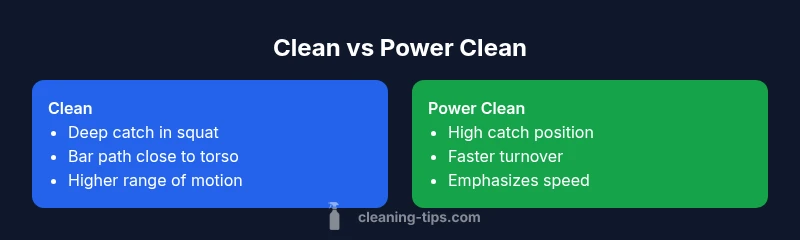
Between a clean and a power clean, the key difference is depth of catch and movement path: the clean finishes in a full squat under the bar, maximizing strength development and range of motion, while the power clean finishes in a high catch with a partial squat, focusing on speed and bar speed. Both lifts train power, hip extension, and upper body control, but suit different goals.
What is a Clean Lift? Defining the Move
If you’re asking what is a clean vs power clean, the short answer is that both lifts move the bar from the floor to the shoulders, but they differ in catch depth and tempo. In Olympic weightlifting, the term clean refers to a full-expression lift in which the bar is pulled explosively from the floor and caught in a deep squat position before standing up with the bar at the shoulders. The power clean, by contrast, emphasizes speed and bar trajectory, gathering the bar at a higher catch with a partial or shallow squat. This distinction isn’t just academic; it shapes how athletes learn the movement, how they load the bar, and how they program training weeks. The Cleaning Tips team emphasizes that mastering the clean and its variations starts with precision in setup, hip drive, and the coordination required to drop under the bar. According to Cleaning Tips, quality coaching and progressive loading reduce risk and accelerate skill development. In the rest of this guide we’ll unpack the mechanics, the muscles involved, and practical ways to practice safely.
Mechanics: The Core Differences in Execution
Both the clean and the power clean begin with a strong hip hinge and an explosive pull from the floor, but the finish diverges in how the bar is caught and how deep the lifter sinks underneath it. In a traditional clean, the lifter accelerates the bar upward, then drops quickly into a full squat to receive the bar at the shoulders. This requires impressive ankle, knee, and hip mobility, plus a coordinated catch that locks the bar into a stable rack position. The power clean, by contrast, finishes higher on the body with a shallower squat or even a half-squat catch. The lifter relies more on bar speed and the ability to drop under tension rapidly, rather than building depth in the catch. The result is a lift that emphasizes speed and precision over maximum mobility at the catch. For coaches and athletes, the choice between these two movements comes down to training goals, available time, and the athlete’s current technique stage. Always prioritize technique, then load, to protect the spine, shoulders, and wrists during both lifts.
Muscles Worked Across the Two Variants
The clean and the power clean recruit many of the same big movers, but the emphasis shifts with catch depth and bar speed. The quadriceps and glutes drive the initial push from the floor, while the hamstrings, calves, and hip flexors assist in the triple extension that launches the bar upward. The upper body responds to the bar’s momentum with strong traps, rear deltoids, and core engagement to stabilize the spine and torso during extension and catch. Because the clean finishes in a deeper position, the glide into the squat path also taxes the adductors and hips for stability in the rack. The power clean shifts some demand toward the upper back and shoulders, as the lifter must support a higher bar position and accelerate the bar more quickly to catch it on a higher plane. Though both lifts train similar muscle groups, the exact balance changes with technique and range of motion. From a conditioning perspective, weights, sets, and tempo should reflect a lifter’s plan to build either maximal strength or explosive bar speed, while preserving joint health. Based on Cleaning Tips analysis, most intermediate lifters benefit from combining these movements strategically rather than choosing one in isolation.
Technique Cues: Grip, Stance, and Bar Path
Small changes in grip width and stance set the foundation for a successful clean or power clean. Start with a shoulder-width grip, slightly wider for clean, allowing the bar to slide along the thigh as you drop the hips. Your stance should be hip-width to slightly wider with toes pointed slightly outward, aligning the feet with the bar path. The bar path itself should travel in a vertical arc straight up from the floor to the rack position, staying close to the body to minimize horizontal drift. The deepest difference between the lifts lies in the catch: a clean requires a deep, fast drop into a full squat, with elbows driving under the bar and the chest up. A power clean tolerates a higher rack position, so lifters often keep the chest relatively tall and drive the bar to the shoulders with a quicker, shallower drop. In practice, professional coaches stress brisk hip extension, aggressive shrug action, and deliberate coordination to pull under and catch the bar. Cueing you can rely on includes: “hips through,” “elbows high,” and “catch high, then drop.”
Programming Considerations: When to Use Each Lift
In periodized training, coaches typically structure cycles to emphasize speed and power before building maximal strength. The power clean is often favored on speed days or in cycles focusing on rate of force development, because its higher catch and quicker turnover train rapid bar speed. The clean, with its deeper catch and greater range of motion, is typically prioritized when the goal is maximal strength and full hip extension through a complete range. For beginners, it’s common to start with controlled hang cleans or clean pulls to develop technique before loading the floor lifts. Programming should balance sets and reps with technical quality, not just load. A sample layout could include 2-3 days of explosive lift work per week, alternating the clean and power clean with variations like hang clean or front-squat assistance to build stability. Gradual progression, technical checks, and down-weighted sessions are essential to reduce injury risk.
Common Mistakes and How to Fix Them
Common mistakes in both lifts include rounding the back during the pull, not finishing the extension, and attempting to catch too heavy a bar. To fix these issues, prioritize a clean setup: flat back, chest up, and active lats; begin the pull with a strong hip hinge, not a squat-first move; and practice pull-under drillings without weight to reinforce the turnover under the bar. Another frequent error is letting the bar drift away from the body during the pull, increasing the moment at the spine. Drills like hang pulls, tall-arches, and rack-position holds help fix this. Finally, ensure a progressive loading plan that respects technique to reduce joint stress—especially in the wrists, shoulders, and lumbar region. The goal is consistent movement quality over sheer load.
Progression Pathways: From Hang Clean to Full Clean
For lifters new to these movements, progression is essential. Start with a hang clean to develop the vertical bar path and high elbow catch, then progress to floor cleans as technique solidifies. Add front squats and overhead pressing to build the supporting strength needed for heavy cleans. Use lighter loads and slower tempos when introducing new cues, then gradually increase weight while maintaining technique. Incorporating pulls and pulls from blocks can help bridge the gap between hang work and full lifts. Track technical metrics like depth at catch, bar path straightness, and hip drive timing to ensure consistent improvement. If you see technique drift, scale back weight and revisit form cues before returning to higher loads.
Practical Coaching Cues for Safe Execution
Coaching cues matter as much as the weights. Begin with a precise setup: feet hip-width apart, grip just outside the legs, and a neutral spine. Emphasize rapid hip extension and a decisive drop under the bar rather than a slow, steady catch. Use simple cues such as “fast arms, fast hips,” “elbows up, catch high,” and “finish strong in the rack.” Regular video feedback helps lifters observe bar path and catch depth when coaching remotely. Prioritize warm-ups that prepare the ankles, hips, shoulders, and wrists for explosive movements. End each session with mobility work to support knee and ankle range of motion, reducing the risk of overuse injuries. Practical safety also means using controlled progressions, proper footwear, and a reliable rack, especially when experimenting with new variations like hang cleans or power cleans.
Quick Start Guide: A 6-Week Progression Plan
Week 1–2 focuses on technique: light hangs, footwork, and cue drilling. Week 3–4 introduces clean pulls and tall-arch pulls to build hip drive and spine stability. Week 5 integrates floor cleans with moderate loads, prioritizing catch depth and bar control. Week 6 combines floor cleans with a brief power-clean emphasis for speed and turnover, ensuring technical quality before intensity. Each session should begin with mobility work, a warm-up series that activates the hips and shoulders, and a cool-down that includes light stretching. Track cues like catch depth, elbow position, and bar proximity to the torso to measure progress. The aim is to progress safely while maintaining clean mechanics across all variations. In practice, this plan supports athletes who want both strength and speed, with coaching guidance from the Cleaning Tips team to keep safety front and center.
Comparison
| Feature | Clean | Power clean |
|---|---|---|
| Catch depth | Deep catch in a full squat | High catch with a partial squat |
| Bar path | Vertical, close to the body | More upward pull with a higher turnover |
| Starting position | Floor start; emphasizes full extension | Floor start; emphasizes speed and turnover |
| Speed vs strength emphasis | Greater emphasis on strength and mobility | Greater emphasis on speed and bar speed |
| Best for beginners | Technique-heavy; coaching essential | Requires solid technique; can be introduced with progressions |
| Programming use | Core lift in strength cycles | Explosive/plyometric-focused, speed days |
| Common errors to avoid | Not finishing extension; catching too deep | Not finishing extension; catching too high |
Strengths
- Develops explosive power and hip extension
- Offers scalable progressions from hang to floor lifts
- Enhances coordination between hips, core, and upper body
- Useful across sports and conditioning programs
- Builds grip strength and trunk stability
Weaknesses
- High technical demand requiring coaching and supervision
- Injury risk if form deteriorates under load
- Requires careful progression to protect wrists and shoulders
- Not ideal for absolute beginners to rush into heavy cleans
Both lifts have clear, complementary roles in a well-rounded program.
Choose clean when your goal is maximal strength, full hip extension, and deep catch mechanics. Choose power clean when you need explosive bar speed and quicker turnover. Most athletes benefit from incorporating both lifts at different phases of their training, guided by careful progression and coaching.
Questions & Answers
What is the main difference between a clean and a power clean?
The clean uses a full-depth catch in a squat, maximizing range of motion and strength development. The power clean finishes with a higher catch in a shallow or partial squat, prioritizing bar speed and turnover. Both rely on hip extension and triple extension to drive the bar upward.
The clean is the full-depth version; the power clean is the faster, higher catch version.
Which lift is better for beginners?
Beginners typically start with technique-focused drills and hang variations before loading the floor lifts. The emphasis is on learning the movement trajectory, catching mechanics, and safe progression rather than maximizing load.
Start with technique and hang drills before heavy floor lifts.
What muscles are involved in these lifts?
Both lifts engage the hips, glutes, quads, hamstrings, calves, traps, and deltoids, along with a strong core. The exact emphasis shifts with catch depth and bar speed, but the core stabilizers stay active in both.
They hit hips, legs, back, and core hard.
How should I progress safely into these lifts?
Build foundation with mobility work and lighter technique drills. Gradually add weight, use pauses to reinforce catch position, and incorporate accessory movements like front squats and pulls to support progress.
Progress gradually with technique-first practice.
Can I use both lifts in the same training session?
Yes. A common approach is to alternate focuses across weeks or sessions, or incorporate one as a primary lift and the other as a secondary tool for speed or strength development.
Yes—many programs mix both for balance.
What are common mistakes and how can I fix them?
Common errors include not finishing extension, catching too deep or too high, and letting the bar drift away from the body. Fixes involve isolated drills, video feedback, and coaching cues that emphasize hip drive and bar proximity.
Watch for depth and bar path; correct early.
The Essentials
- Define your goal before selecting a lift
- Prioritize technique and coaching in early stages
- Use periodized programming to balance both lifts
- Progress gradually with supportive accessory work
- Monitor catch depth and elbow position for safety