Which Injector Cleaner: A Practical, Data-Driven Comparison (2026)
An analytical, no-nonsense comparison of injector cleaners to help homeowners and DIY enthusiasts choose the right fuel system cleaner for their vehicle. Learn about types, labeling, use cases, and practical tips from Cleaning Tips.


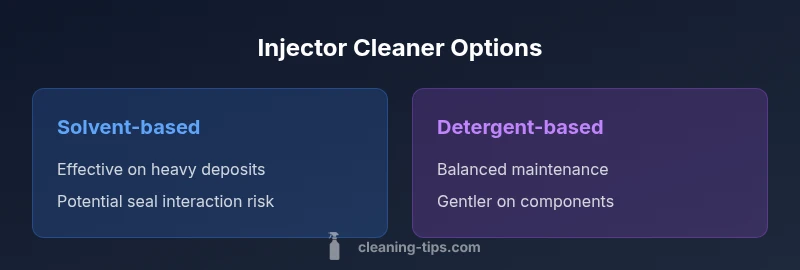
When choosing which injector cleaner, start with your fuel system needs, engine type, and maintenance history. In general, solvent-based cleaners tackle heavy carbon deposits quickly, while detergent-based blends are milder and better for routine maintenance; enzymatic formulas are gentler but may take longer to show results. Compare labels, compatibility with your vehicle, and user reviews before buying.
What is an Injector Cleaner and Why It Matters
Maintaining a clean fuel delivery system helps engines run smoothly, reduce emissions, and prevent rough idling or misfires. An injector cleaner is a fuel additive designed to dissolve varnish and carbon deposits on fuel injectors and intake valves, improving spray pattern and combustion efficiency. When people ask which injector cleaner to use, they are usually weighing speed of results against long-term maintenance. According to Cleaning Tips, keeping the fuel system clean is a core part of vehicle health, and choosing the right cleaner is a practical, data-informed decision. In this guide, we examine how cleaners differ, what to look for on labels, and how to apply them effectively without risking engine components. The goal is not hype, but a transparent framework you can apply to your own car or fleet. Whether you own a modern turbocharged sedan or a high-mileage daily driver, the right cleaner can help you maintain performance without unnecessary guesswork.
What matters most when choosing which injector cleaner? The decision hinges on deposit level, engine design, and your maintenance philosophy. If deposits are light and you prefer routine upkeep, a mild detergent formula paired with regular use may be ideal. If you’re facing heavy varnish or gum buildup from substandard fuel, a solvent-based cleaner can deliver faster results—though you should verify compatibility with seals and fuel lines. For eco-conscious drivers and enthusiasts who favor a low-odor option, enzymatic cleaners provide an alternative approach that emphasizes enzyme-driven agitation rather than solvent strength. Throughout this article, we’ll keep the language practical and the guidance grounded in typical scenarios that homeowners and DIYers encounter. This approach ensures you can select a product that aligns with your vehicle’s needs and your budget.
What to look for on the label includes active ingredients, recommended usage frequency, and clear compatibility notes. Pay attention to the concentration of cleansing agents and the presence of corrosion inhibitors. A well-designed label will also list the cleaning targets (injectors, intake valves, or both) and warn about potential risks with ethanol blends or certain fuel grades. As you compare products, keep a simple checklist: compatibility with your engine, the stated purpose, the expected maintenance interval, and the level of evidence supporting performance claims. By building a clear signal about what you want from a cleaner, you’ll minimize the trial-and-error phase and maximize the odds of a positive outcome.
How we judge injector cleaners goes beyond marketing claims. We look for transparent ingredient disclosures, practical usage guidance, and real-world scenarios that mirror everyday driving. The best decisions balance immediate improvement with long-term maintenance benefits, avoiding aggressive formulations that could stress hard-working seals or fuel-system components. As you read labels, remember that different engines tolerate cleaners at different levels. A modern direct-injection engine may respond differently than an older port-injected system. This is why a thoughtful, evidence-based approach matters more than picking the most attractive color on the bottle.
Feature Comparison
| Feature | Solvent-based injector cleaner | Detergent-based injector cleaner | Enzymatic injector cleaner |
|---|---|---|---|
| Active Cleaning Mechanism | Dissolves heavy varnish quickly | Gently dissolves varnish with detergents | Enzymatic action targets deposits with bio-enzymes |
| Recommended Use Frequency | Occasional, for severe deposits | Regular maintenance (per label) | Occasional, for mild buildup |
| Label Clarity | Strong emphasis on solvents and deposits | Clear on dosing and engine compatibility | Focus on enzymes and environment |
| Best For | Heavy deposits, quick fix | Routine maintenance, balanced approach | Eco-friendly, mild cleaning |
| Potential Risks | Seals risk with certain formulations | Lower risk when used as directed | Generally gentler but may take longer to show results |
| Price Range (qualitative) | Low to moderate | Low to moderate | Moderate |
Strengths
- Offers options for different deposit levels and driving needs
- Can improve idle quality and throttle response with proper use
- Clear labeling aids informed selection and safe use
- Detergent and enzymatic blends are often milder on components
Weaknesses
- Results may vary by engine type and fuel quality
- Some formulas may require multiple treatments for best results
- Solvent-heavy cleaners can stress seals if misused
- Non-standard dosing can lead to over- or under-treatment
Choose based on your deposits and maintenance goals
If you’re dealing with heavy deposits, a solvent-based cleaner used sparingly may help fast. For regular maintenance and a lower risk of issues, a detergent-based formula is typically best. Enzymatic cleaners offer a gentler, eco-conscious option but may require more time to show results.
Questions & Answers
What is injector cleaner and why should I consider using it?
Injector cleaner is a fuel additive designed to dissolve varnish and carbon deposits on injectors and intake components. It can improve spray patterns and engine performance, especially in engines that have not had regular fuel-system maintenance. Consider it if you notice rough idle, reduced power, or decreased fuel economy, but always follow the product label guidance.
Injector cleaner helps dissolve fuel deposits to restore spray quality. Use it if your engine feels less powerful or idles rough, following the label directions.
Can injector cleaner damage my engine or seals?
Most injector cleaners are formulated to be safe when used as directed for typical engines. Problems arise when formulas are used incorrectly or when incompatible with certain seal materials. Always verify compatibility with your vehicle and use the recommended dose. If you have a high-mileage engine or known seal issues, consult your mechanic before use.
Generally safe if used as directed, but verify compatibility with your seals and engine type. When in doubt, ask a professional.
How often should I use injector cleaner for maintenance?
For routine maintenance, follow the product’s label guidance and your vehicle’s recommended service intervals. Many drivers use cleaners every few thousand miles as part of a regular fueling routine, not as a substitute for mechanical maintenance. Avoid mixing multiple cleaners without guidance from the same brand or a mechanic.
Follow the label guidance and your vehicle’s routine maintenance schedule. Regular, not excessive, use helps keep deposits in check.
Will injector cleaner improve fuel economy immediately?
Injector cleaners can help restore optimal spray patterns and combustion, potentially improving efficiency, but results vary. Do not expect dramatic mileage gains from a single treatment; consider it part of ongoing maintenance and fuel-quality considerations.
You might see a modest gain if deposits were impairing performance, but don’t expect dramatic jumps after one dose.
Is injector cleaner safe for diesel engines or only gasoline engines?
There are injector cleaners designed for diesel engines, but many products are formulated for gasoline engines. Always buy a cleaner that matches your fuel type and engine design. Using the wrong product can be ineffective or risky for your engine.
Use products specifically labeled for your fuel type to avoid issues.
Can I combine injector cleaners with other fuel additives?
Avoid mixing different fuel additives unless the manufacturer explicitly approves it. Some combinations can alter chemical interactions, change performance, or cause unforeseen issues. If you use multiple additives, choose a single-brand solution and follow the recommended guidance.
Don’t mix different additives unless the manufacturer says it’s safe.
The Essentials
- Define your cleaning goal before selecting a formula
- Check compatibility with your engine and ethanol blends
- Match use frequency to deposits and driving habits
- Interpret label claims with a critical eye
- Prioritize label transparency and evidence