How to Clean the Concrete Floor: A Practical Guide
Learn how to clean concrete floors effectively with a practical, step-by-step approach. Prep, cleaners, stain removal, sealing, and maintenance for durable, spotless floors in homes and garages.


You will learn a complete, repeatable routine to clean both sealed and unsealed concrete floors. The guide covers prep, choosing safe cleaners, stain strategies, and drying techniques to prevent re-soiling. By following the steps, you’ll reduce grime buildup and extend the life of your concrete surfaces.
Understanding finish and porosity of concrete
Concrete floors vary by finish: unsealed, cured and ready for cleaning, sealed with penetrating sealers, or coated with wax, epoxy, or decorative overlays. The porosity affects how dirt and spills penetrate. A practical cleaning plan starts with identifying the finish and testing a small area before full work. According to Cleaning Tips, the first step is to identify the floor finish and any coatings, because the cleaning approach changes with the finish. Sealed floors trap less moisture and are easier to clean with pH-neutral cleaners, while unsealed slabs absorb oils and may require degreasers. For garages, basements, or workshops, expect more heavy-soiled areas; living spaces with decorative concrete may respond differently to cleaning agents. Always check manufacturer recommendations for sealers or coatings and avoid strong acids near polished or waxed surfaces. In addition, ensure good ventilation and wear PPE as precaution. This initial assessment sets the stage for safe, effective cleaning and helps you decide whether a light wipe-down or a deeper scrub is required.
Safety, prep, and workspace setup
Before you start scrubbing, declutter the floor, remove rugs or loose items, and tape down areas that shouldn't be cleaned. Open windows or run a fan to improve ventilation, and wear gloves, eye protection, and a mask if you are sensitive to fumes. Dust and debris can scratch the surface during cleaning, so begin with a dry sweep or a dust mop to collect loose material. Place absorbent towels near drains or low spots to catch runoff. By setting up a clean, organized workspace, you reduce the risk of slips and ensure more consistent results. The pre-clean stage also minimizes the amount of cleaning solution that gets wasted and speeds up the overall process.
Cleaning agents and tools for concrete floors
Most concrete floors respond best to pH-neutral cleaners that are designed for hard floors. For tough grease or oil stains, you can use a mild degreaser or an enzyme-based cleaner designed for concrete. Oxygen bleach products can help lift organic stains without harsh acids when used according to label directions. Avoid using strong acids or alkaline cleaners on sealed or polished surfaces, as they can dull the finish or etch the concrete. For everyday cleaning, a sprayer or bucket with a mop works well, complemented by a stiff-bristle brush for stubborn stains. A microfiber mop pad helps lift dirt without scratching. Have a wet/dry vacuum or a mop wringer ready to rinse and remove dirty solution. Store cleaners safely away from children and pets.
Stain-specific strategies
Oil and grease: pre-treat with a degreaser, let sit for 5-10 minutes, then scrub with a stiff brush and rinse thoroughly. Rust stains may respond to a mild oxalic acid cleaner if used with care, but test a small area first and never mix with bleach. Efflorescence or mineral deposits appear as powdery whitish staining; use a dilute vinegar solution or a commercial efflorescence cleaner and rinse well. Tire marks and rubber abrasion: start with warm water and a mild detergent, then scrub with a nylon brush. For unknown stains, apply a small, inconspicuous test patch before committing to a cleaning method. Throughout, rinse thoroughly to avoid residue that can attract more dirt.
Step-by-step routine (example workflow)
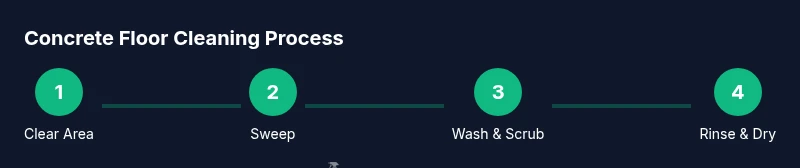
In this routine, we illustrate a practical process you can adapt to your space. Begin by clearing the area and sweeping to remove loose dirt. Pre-wet the floor with clean water, then apply cleaner lightly to the surface and let it stand for a few minutes. Scrub heavily soiled spots with a stiff brush, focusing on traffic paths. Rinse the floor with clean water, working from the far corner toward the exit to avoid re-soiling. Finally, dry the surface completely using air movers or fans. Re-check for missed spots and repeat as needed.
Maintenance, sealing, and long-term care
Regular cleaning is easier when you maintain a protective finish. If your concrete is unsealed, consider applying a penetrating sealer to reduce staining and make future cleanups simpler. For decorative or polished concrete, choose sealers that suit the finish and maintain slip resistance. Cleaning Tips analysis shows that properly sealing porous concrete reduces the depth and spread of stains. You should also use mats at entryways, address spills promptly, and clean high-traffic zones more frequently. Periodically hosing down the floor with minimal moisture or performing a light broom-clean routine helps keep the surface in good condition. With proper maintenance, your concrete floor remains durable and visually appealing for years.
Common mistakes and quick troubleshooting
Common mistakes include using acidic cleaners on sealed surfaces, over-wetting the floor, and skipping a test patch before tackling stains. Always test solutions in a discrete area first to avoid etching or dulling the finish. If the floor looks hazy after cleaning, it may be soap residue; re-wipe with clean water and a dry microfiber pad. If staining persists after a full cycle, revisit stain-specific strategies, re-evaluate the finish, and consider professional refinishing if needed. The Cleaning Tips team emphasizes patience and methodical testing to achieve the best results.
Tools & Materials
- Broom or dust mop(For dry cleaning; use microfiber if possible)
- Mop and bucket(For wet cleaning and rinsing)
- Microfiber mop pads(Gentle and effective dirt pickup)
- Stiff-bristle brush(For tough stains)
- Absorbent towels or rags(Drying and blotting spills)
- pH-neutral floor cleaner(Check label for dilution)
- Degreaser (mild)(For oil stains)
- Oxygen bleach (sodium percarbonate)(Dilute as label instructs; not for sealed polishes)
- Safety gear: gloves, goggles, mask(Protect skin and eyes; use ventilation)
- Vinegar (diluted) or specialty cleaner for efflorescence(Use with caution on concrete finishes)
- Wet/dry vacuum(To remove dirty rinse water)
- Fan or blower for drying(Speed up drying)
Steps
Estimated time: 60-120 minutes
- 1
Clear the area
Move furniture and rugs away from the work zone. Remove any loose debris by dry sweeping or using a dust mop. Clearing the area prevents dirt from being driven into the surface during cleaning and reduces the risk of re-soiling.
Tip: Remove items slowly from edges to avoid pushing dirt into corners. - 2
Dry sweep and prep the floor
Use a microfiber dust mop to lift dust, grit, and hair. Focus on corners and along walls where dust accumulates. This step minimizes residue on wet-cleaned areas and speeds up the process.
Tip: Work in sections to keep track of what’s already cleaned. - 3
Pre-wet the surface
Lightly mist or dampen the floor with clean water before applying cleaner. This helps the cleaning solution spread evenly and reduces streaking, especially on textured surfaces.
Tip: Avoid soaking the floor; use a mist with a spray bottle for control. - 4
Apply cleaner and let dwell
Apply a small amount of pH-neutral cleaner to a manageable area and spread it with the mop. Let it dwell for 3–5 minutes on light soils; longer for greasy spots, but do not allow it to dry.
Tip: Keep a timer to prevent over-dwell and residue formation. - 5
Scrub stubborn stains
Use a stiff-bristle brush on tough stains or build-up. For organic stains, consider a mild oxygen bleach following label directions. Always scrub along the grain of the texture to avoid scratching.
Tip: Test a patch first to confirm compatibility with your finish. - 6
Rinse thoroughly
Rinse with clean water, working from the far end toward the exit. Ensure all cleaner and loosened dirt are removed to prevent a film that attracts more dirt.
Tip: Change rinse water if it becomes soiled; dirty rinse water redeposits grime. - 7
Dry completely
Dry the floor with a fan or air mover to speed up evaporation. Wipe any pooled water to prevent watermarking and slips. Check for missed spots while drying.
Tip: Never leave standing water on porous concrete; it can promote staining. - 8
Inspect and repeat if needed
Inspect the floor under good lighting. If stains remain, reapply cleaner to the affected area and repeat steps 4–7. For persistent issues, consider a deeper cleaning cycle or consult a professional.
Tip: Keep a log of what methods worked best for future cleanings.
Questions & Answers
Do I need to seal concrete after cleaning?
Sealing after cleaning can protect the surface, especially if the floor is unsealed or highly porous. The right sealant depends on the finish and foot traffic. If in doubt, consult manufacturer recommendations.
Sealing after cleaning can protect the floor, but choose the sealant based on finish and how much foot traffic you have.
Can I use bleach on concrete floors?
Bleach can be used in some cases but it can discolor certain finishes. Always dilute and test a patch first, and avoid mixing bleach with other cleaners.
Bleach can work on concrete, but test first and dilute. Never mix with other cleaners.
How often should I deep clean concrete floors?
Frequency depends on traffic and stains. Residential floors may benefit from deeper cleaning quarterly or semi-annually, while busy spaces require more frequent attention.
Deep clean based on traffic; more often in high-use areas.
Is steam cleaning safe for concrete floors?
Steam can be safe on sealed surfaces if used correctly, but excessive moisture may affect some finishes. Always follow manufacturer guidelines for your finish.
Steam can be okay for sealed floors if you follow the finish guidelines.
What cleaners are safe for sealed vs unsealed concrete?
For sealed concrete, use pH-neutral cleaners. Unsealed floors may require degreasers or mild cleaners; avoid acids that can damage the surface.
Use pH-neutral cleaners for sealed floors and milder cleaners for unsealed surfaces.
Can I use a pressure washer on concrete floors?
A pressure washer can be used carefully on some concrete floors, but keep the nozzle at a distance to avoid driving water into cracks or warping overlays. Use low pressure and short bursts.
You can, but use low pressure and keep it away from edges to avoid damage.
Watch Video
The Essentials
- Identify finish before cleaning to choose the right cleaner.
- Use a pH-neutral cleaner for daily cleaning.
- Rinse thoroughly to prevent residue and re-soiling.
- Dry surface completely to avoid watermarks and slips.
- Seal or re-seal porous concrete after cleaning to protect it.