How to Clean a Wine Stain: A Practical Guide
Learn practical, step-by-step methods to remove wine stains from fabrics, carpets, and upholstery using common household cleaners. This guide covers immediate action, fabric-specific tips, and when to escalate to professionals.


To clean a wine stain, start with prompt blotting, then rinse with cold water, treat with a mild detergent or enzymatic cleaner, and blot again. If the stain persists, launder according to fabric care or use a color-safe stain remover and a second rinse. Avoid heat until the stain is fully removed. Testing in an inconspicuous area first is essential.
What makes wine stains tricky and why prompt action matters
Wine stains are tricky because red wine contains tannins and pigments that bond with fibers as they dry. When a spill happens, the liquid begins to dry, concentrating color and making removal harder. According to Cleaning Tips, quick intervention dramatically improves outcomes, especially on delicate fabrics or textured surfaces. Different materials—cotton, polyester, wool, silk, or upholstery fabrics—respond differently to cleaners, so tailor your approach. Lighting and fabric color can also affect perceived stain intensity after treatment, which means you may need to reassess progress under bright, natural light. The key takeaway is to act quickly, blot rather than rub, and test cleaners on a hidden area before full application. Understanding the chemistry behind stains helps you pick the most effective method while minimizing damage.
Immediate actions to take the moment you spill
When wine spills, your first moves should be calm and systematic. Start by placing the stained item on a clean, flat surface and grabbing a stack of clean, white cloths. Gently blot the spill from the outside edge toward the center to lift liquid without spreading the stain. Avoid rubbing, which can embed pigment deeper into fibers. If the fabric is machine-washable, rinse from the backside with cold water to push the dye out rather than further into the material. If you’re dealing with carpet or upholstery, gently blot with a dry cloth and apply a small amount of clean water or a mild detergent solution, then blot again. Time matters: the sooner you begin, the more of the stain you can lift before setting. Always test a hidden area first to confirm colorfastness before treating the visible stain.
Surface-by-surface approach: fabrics, carpet, upholstery
Different surfaces require tailored strategies. For fabrics like cotton, linen, or synthetics, a prewash stain remover or a mild detergent solution is usually effective. On wool or silk, apply blotting with a mild detergent solution and avoid excess moisture. Carpets and upholstery respond well to enzyme cleaners or a dedicated carpet cleaner; avoid bleach on color fibers. For hard surfaces (such as a dining table finish), a gentle cleaning spray followed by a wipe with a damp cloth can remove residue without dulling the surface. Always check care labels and perform a spot test on an inconspicuous area before broad application. When in doubt, start with the gentlest method and escalate only if the stain remains.
Cleaning agents: water, detergents, oxidizers, and enzymatic cleaners
Water is your ally in the early stages, especially cold water that prevents set. A mild detergent mixed with water can lift many stains; apply gently with a clean cloth and blot. Enzymatic cleaners excel on organic stains like wine as they break down proteins and pigments, but test them on delicate fabrics first. Hydrogen peroxide or oxygen-based bleach can help on white or color-safe fabrics, but never use on colored fabrics without a colorfast test. White vinegar can be used as a supplemental stain-breaker on some fabrics, though it’s not a universal fix. For persistent stains, consider a commercial stain remover designed for the specific surface and follow the product directions.
Step-by-step process overview
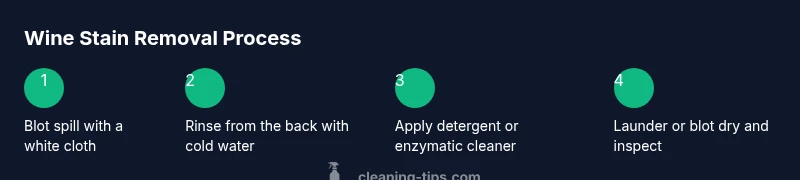
This section outlines the general flow you’ll follow, whether you’re treating a garment, carpet, or cushion cover. Begin by blotting to remove excess liquid, then rinse from the back to push dye outward. Apply a prewash or enzymatic cleaner, wait the recommended duration, and blot again. Launder fabrics according to care labels if feasible. For carpets and upholstery, use a suitable cleaner and monitor progress under good lighting. If the stain remains after a complete cycle, repeat the treatment or move to a more potent, fabric-safe cleaner. Finally, air dry and inspect under bright light to determine whether a repeat treatment is needed.
Testing, safety, and colorfastness
Before applying any cleaner broadly, test on an inconspicuous area of the fabric or surface. If there is color transfer or fading, stop and switch to a milder method. Heat is dangerous for wine stains: avoid hot water, steam, or heat-drying until you confirm the stain is gone. Wear gloves to protect your hands when using cleaners and ensure good ventilation for any products with strong odors. If you’re cleaning delicate textiles like silk or antique fabrics, it’s often safer to seek professional cleaning. Finally, document the steps you took so you can reproduce the process if needed.
Troubleshooting stubborn stains
If the stain resists after initial treatment, repeat the process with a different cleaner or increase contact time slightly, ensuring the fabric can tolerate it. For fabrics, you may switch from a detergent to an enzymatic cleaner for a more aggressive breakdown of pigments. For carpets, a second application of carpet cleaner or a peroxide-based solution (on color-safe fibers) can help. Avoid scrubbing too hard; instead, re-blot with a fresh cloth and apply cleaner in a thin, even layer. When all else fails, consult the product’s directions or consider professional cleaning, especially for large stains or valued textiles.
Special cases: delicate fabrics and carpet fibers
Delicate fabrics such as silk, wool, or acetate require extra care. Use the mildest approach and never apply high-concentration cleaners or heat. For velvet or shear fabrics, avoid saturating the fibers and dry with a fan rather than a dryer. On carpets with dense fibers or looped textures, work from the outside edge inward and use a wetter cleaner in a small area to avoid over-wetting. If the stain seems embedded, your safest option may be to call a professional cleaner who can manage the process without risking fiber damage.
Quick-start reference and tips
If you’re short on time, start with blotting, cold water rinse, and a color-safe stain remover. Test everything first and avoid heat. Document the products you used so you can retry the same approach if needed. Keep a small stash of white towels, a spray bottle, and a mild detergent on hand for quick responses to spills. Remember, consistency and patience yield the best results over rushing the cleanup.
Tools & Materials
- Clean white cloths or paper towels(Laundered cotton cloths preferred for colorfastness and absorbency)
- Cold water(Do not use hot water; heat sets many wine stains)
- Mild liquid detergent(Free of added dyes or scents; test on color first)
- Enzymatic stain remover(Effective on protein-based stains; test on delicate fabrics first)
- Prewash stain remover spray(Optional for fabrics with stable color)
- White vinegar(Optional as a supplementary step on some fabrics)
- Hydrogen peroxide (3%)(Use only on color-safe fabrics; test first)
- Oxygen-based bleach(Use on whites or color-safe fabrics per label)
- Carpet/upholstery cleaner(Choose a cleaner suitable for the material)
- Spray bottle(For applying cleaners evenly)
- Gloves (nitrile or latex)(Protect skin when using cleaners)
Steps
Estimated time: 45-75 minutes
- 1
Blot the spill
Gently blot the stain with a clean white cloth, pressing firmly to lift as much liquid as possible without rubbing. Rubbing can push pigment deeper into fibers and make the stain harder to remove.
Tip: Work from the outside edge toward the center to prevent spreading. - 2
Rinse from the back
Turn the fabric over and run a slow stream of cold water from the backside, allowing the dye to be pushed out of the fiber rather than through it. This flushing helps prevent the stain from setting.
Tip: Hold the fabric taut to avoid bleeding at the seams. - 3
Apply cleaner and wait
Apply a small amount of mild detergent solution or enzymatic cleaner to the stain and blot gently. Let it sit for 5–10 minutes to allow enzymes or detergents to break down pigments.
Tip: Avoid saturating the fabric; use only enough cleaner to cover the stain. - 4
Blot and rinse again
Blot away the cleaner with a clean cloth and rinse from the back or under running water. Repeat as needed until the cloth comes away clean.
Tip: Freshen with a light rinse to prevent any residue from attracting dirt. - 5
Launder or clean the surface
If the item is washable, launder it according to the care label using cold water. For carpets or upholstery, use a suitable cleaner and blot dry, avoiding over-wetting.
Tip: Check the stain before drying; heat can set any remaining color. - 6
Assess after drying
Let the item air dry completely and recheck. If any color remains, repeat steps with a different cleaner or a higher-strength formula safe for the fabric.
Tip: Do not use a dryer until the stain is fully removed. - 7
Escalate if needed
For persistent stains, consider a second treatment with an enzymatic cleaner or oxygen bleach on color-safe fabrics, or seek professional cleaning for valuable or delicate items.
Tip: Keep records of products and steps used for reference. - 8
Prevent future staining
Treat spills promptly and consider a fabric protector after cleaning to reduce future staining potential.
Tip: Acting quickly is the best prevention against set-in stains.
Questions & Answers
Can I use bleach to remove a wine stain on colored fabrics?
Bleach is generally not recommended on colored fabrics; use oxygen bleach or color-safe products if the label permits. For whites, non-chlorine options are safer and often effective.
Bleach on colors is risky. Stick to oxygen-based products or follow the fabric label.
Will salt help absorb wine stains?
Salt can help absorb moisture in the short term but is not a cure. It’s best used as an early, supplementary step before applying cleaners.
Salt can help initially, but it’s not a complete fix.
Is club soda effective for wine stains?
Club soda can help as a mild rinse in a pinch, but it’s not a guaranteed solution. Prioritize detergents, cold water, and tested cleaners.
Club soda may help a bit, but it isn’t a guaranteed fix.
Can wine stains be removed from silk or wool?
Silk and wool are delicate; use milder cleaners and blotting techniques. For valuable items, consider professional cleaning to avoid damage.
Silk and wool require careful handling; consider a pro for best results.
How long should I wait before laundering after treating a stain?
Follow the cleaner’s instructions, but generally wait until the stain is visibly lighter and no cleaner residue remains before washing.
Wait until the stain lightens and the area looks clean before washing.
When should I call a professional?
If the stain remains after repeated DIY attempts, or if the fabric is valuable or delicate, a professional cleaner is advisable to prevent damage.
If DIY steps fail, it’s wise to call a professional.
Watch Video
The Essentials
- Blot spills promptly to prevent setting.
- Test colorfastness on hidden areas before cleaning.
- Use cold water and gentle detergents first; heat is a stain’s enemy.
- For persistent stains, repeat or escalate with enzyme cleaners.
- Always air-dry and recheck under bright light for best results.