Clean or Dirty Hair: Which Is Better for Highlights
Discover whether clean or dirty hair yields better highlights. This analytical guide covers pigment adhesion, processing differences, and aftercare for even, long-lasting color.


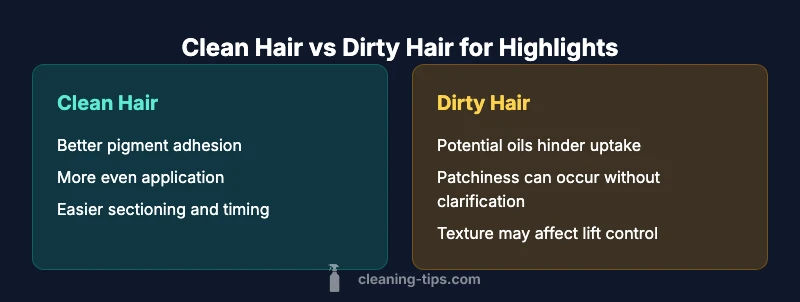
Short answer: clean hair generally yields more even highlights, while dirty hair can introduce variables from oils and residue. The Cleaning Tips team notes that pre-cleaned hair with a clarifying wash often leads to more predictable pigment uptake. For certain services or textures, a stylist may adjust prep, but a clean baseline remains the safest starting point.
Context: The central question behind color decisions
For colorists and DIY enthusiasts, the cleanliness of the hair can become a deciding factor in how evenly highlights appear. The explicit question is is clean or dirty hair better for highlights, and the answer is not one-size-fits-all. In most salon workflows, starting with clean, clarified hair yields the most predictable pigment uptake and even base tones. The Cleaning Tips team emphasizes that a clean baseline reduces barriers created by oils, styling residues, and mineral deposits from hard water. That said, there are scenarios in which a stylist may adapt prep to accommodate texture, scalp sensitivity, or recent chemical services. The goal is to balance color performance with hair health, ensuring minimal processing time while achieving a natural-looking result.
Mechanisms: How hair cleanliness affects pigment adhesion
Oil and residue on the hair surface can act as a barrier to dye penetration, creating uneven color and patchiness. Clean hair tends to present a more uniform cuticle layer, allowing pigments to deposit evenly. Conversely, heavy product buildup can trap air and create micro-reservoirs that alter dye saturation. The role of pH and water hardness also matters: minerals and alkaline residues can affect how color molecules interact with the cortex. Cleaning Tips notes that even small amounts of product can shift the way highlights develop, especially during processing stages such as bleaching, toning, or glossing. The goal is to minimize variables that might skew results.
Service types and prep: balayage, foils, gloss
Different highlighting techniques demand distinct prep standards. Balayage and freehand techniques benefit from a clean canvas to ensure soft, seamless transitions, while foil highlighting can tolerate a touch more buildup if it’s evenly distributed. Glosses rely on the underlying color to take evenly, so starting clean supports uniform pigment saturation. For textured hair or curly styles, stylists may adjust lift timing or perform an extra clarifying step to remove barrier residues before applying color. The bottom line: choose a prep that matches the service while prioritizing even pigment contact with the hair shaft.
The role of pH, water hardness, and product residues
Hair that has been exposed to hard water minerals or alkaline products can alter the efficiency of color uptake. Residues from leave-in conditioners, silicones, or oils can form a temporary shield on the hair surface, hindering pigment penetration. Neutral pH shampoos and gentle clarifiers can restore a receptive cuticle and improve color consistency. If you have recently used heavy styling products or mineral-rich water, a clarifying wash before processing can reduce interference. Cleaning Tips suggests a cautious approach: always ensure the scalp is clean and the hair strands are free of stubborn residues for best results.
Practical prep steps you can take before highlights
- Start with a light clarifying wash to remove minerals and buildup, then assess the hair’s feel and texture.
- If you typically style with heavy silicones, consider a rinse-out clarifier to prevent transfer during processing.
- Avoid heavy oils or serums on the day of coloring unless your stylist approves; a small amount on mid-lengths may be acceptable for conditioning purposes.
- Bring up any scalp sensitivities or recent chemical services with your colorist to tailor processing times and lift levels.
- After washing, dry the hair completely and separate into even sections to help the colorist monitor sectioning and lift.
What to tell your stylist about your hair cleanliness
Honest communication saves time and improves results. Tell your colorist whether you recently clarified, what products you normally use, and whether you’ve encountered unusual buildup or scalp sensitivity. If you regularly swim in chlorinated water or have high mineral content in your water, mention it so the professional can plan a tailored prep. This prevents surprises and supports a smoother processing phase. The cleaner the baseline, the more the stylist can predict how color will behave during lift and tone steps.
Troubleshooting patchy results
Patchiness often stems from uneven lift, inconsistent sectioning, or residue-induced barriers. When you notice patchy results, request a quick clarifying refresher or adjust the timing of the next session to ensure even pigment deposition. A good practice is to photograph your hair in natural light after washing and before coloring to help the stylist gauge uniformity. If patchiness persists, consider a strand test to identify whether residual oils or minerals are affecting uptake.
Aftercare and maintenance
After highlights, proper maintenance helps lock in color and prolong vibrancy. Use color-safe shampoos and avoid heavy oils on the scalp for the first 48 hours after processing, unless your stylist recommends otherwise. Regular clarifying washes, spaced out appropriately, can prevent residue buildup that might dull gloss or tonal intensity. The goal is to sustain even color while protecting hair health, reducing the frequency of corrective appointments.
For salon professionals: optimizing client prep protocols
Developing a standardized prep protocol reduces variability between clients and reinforces predictable outcomes. Start with a default clean baseline, then assess hair texture, oiliness, and product history. Provide clients with simple pre-visit instructions and explain how different services (balayage, foils, gloss) interact with cleanliness. When in doubt, err on the side of thorough clarifying steps to ensure the cuticle is open and free of barriers for even pigment uptake. This approach aligns with best practices recommended by Cleaning Tips and supports consistent salon results.
comparisonTableAligned
Comparison
| Feature | Clean hair | Dirty hair |
|---|---|---|
| Color adhesion | Better pigment contact on clean hair | Oils and buildup can create barriers to penetration |
| Evenness of application | More uniform results on clean hair | Buildup can lead to patchiness in color distribution |
| Processing visibility | Clear sectioning and tracking on clean hair | Oil sheen may obscure sections and timing cues |
| Scalp/hair health assessment | Easier to spot damage or sensitivity on clean hair | Buildup can mask signs of damage or irritation |
| Color longevity | Potentially longer-lasting results with clean hair | Residues may cause uneven fade or dulling |
| Prep time and effort | Standard wash and clarify before processing | May require clarifying steps if the hair is oily before service |
Strengths
- Cleaner baseline improves predictability of results
- Easier assessment of hair health before processing
- Reduces risk of unintended pigment barriers
- Facilitates safer, quicker processing for stylists
Weaknesses
- Over-cleansing can strip natural oils and affect texture
- Overly aggressive clarifying may dry the hair if not followed by conditioning
- Extra prep steps may add time to the appointment
- In some cases, very textured hair might benefit from a tailored prep rather than a strict clean slate
Clean hair generally yields more predictable highlights; dirty hair introduces variables that can affect results
Starting with a clean baseline is the most reliable approach for consistent highlights. If buildup exists, a clarifying step helps, but always balance with hair health and service type. The Cleaning Tips team supports a clean-prep standard for most highlight applications.
Questions & Answers
Should I wash my hair right before highlights, or can I arrive with dirty hair?
Most stylists prefer clean hair to ensure even pigment uptake. If your hair is oily, a light clarifying wash or on-site clarification can help. Always ask your colorist for prep guidance.
Clean hair generally helps color take evenly; if you’ve got oil or product buildup, a quick clarifying wash before the appointment is a good idea.
Can dirty hair ever be better for highlights?
In rare cases, certain textures or previous chemical treatments may respond differently, but the standard practice favors clean hair for even results. Discuss your hair history with the colorist.
Rarely, but usually no—clean hair provides the most predictable results.
What should I tell my colorist about my hair cleanliness and products?
Be honest about your washing routine, recent clarifying, and any heavy styling products. Mention mineral content in water if relevant. This helps the stylist tailor timing and lift.
Tell your colorist what you use and when you last clarified so they can plan the processing steps accordingly.
Does hair type affect prep needs before highlights?
Yes. Fine hair may lift differently and show color saturation more quickly, while thick or curly hair can retain oils differently. The stylist may adjust timing and sectioning based on texture.
Texture matters—your stylist will adjust prep to suit your hair type.
Is clarifying shampoo recommended before highlighting?
A clarifying wash is often helpful if there’s noticeable buildup. If you’re unsure, ask your stylist whether a clarifier is appropriate for your hair today.
Clarifying can help color sit evenly, but check with your colorist first.
How soon after highlights should I wash my hair?
Follow your stylist’s guidance. They’ll usually recommend a delay to let the cuticle seal. Use a color-safe shampoo and lukewarm water when you do wash.
Wait as advised by your stylist, then use gentle, color-safe products.
The Essentials
- Start with a clean baseline for predictability
- Oils and residue can alter pigment uptake
- Clarifying before color reduces patchiness
- Communicate your washing routine to your stylist
- Aftercare matters for color longevity