What Clean Blood Stain Removal: A Practical How-To
Learn how to remove a blood stain from fabrics and surfaces using cold water, enzymes, and safe cleaners. This Cleaning Tips guide covers fabrics, surfaces, and prevention with a clear, step-by-step process.


You're about to master removing a blood stain using cold water, enzyme detergents, and gentle rubbing. This quick guide covers fabrics, surfaces, and quick checks to prevent setting the stain. By following the steps, you'll minimize damage and keep clothing and linens looking their best. Whether you're cleaning cotton, synthetics, or delicate fabrics, this approach emphasizes safety and gentleness.
What is a what clean blood stain and why it matters
A blood stain is a protein-rich spill that can set when exposed to heat. The phrase what clean blood stain is often used to describe stains that are still fresh and treatable with basic household methods. According to Cleaning Tips, acting quickly and using cold water keeps pigment from permanently binding to fibers. A successful removal depends on fabric type, stain age, and the cleaning agents chosen. This guide focuses on practical, safe strategies you can apply at home, from everyday fabrics to delicate textiles, with an emphasis on avoiding damage rather than brute force. The goal is to restore appearance while preserving fiber integrity.
Blood stains are not just cosmetic issues; they signal potential protein breakdown on fibers. Quick, gentle action preserves texture and color, reduces the need for harsh chemicals, and lowers the risk of setting the stain. This section lays the foundation for the methods that follow, including when and why cold water matters and how different fabrics respond to cleaners.
Immediate first steps for fresh stains
When you notice a fresh blood stain, start with cold water. Do not use hot water, as heat can set proteins and make stain removal harder. Blot gently with a clean cloth to lift excess liquid rather than rubbing. If possible, flush the back of the fabric to push the stain outward. Time matters here: the sooner you act, the higher the chance of complete removal. For delicate fabrics, place a clean cloth underneath to avoid spreading the stain, and avoid aggressive scrubbing that can fray fibers.
Choosing the right cleaners for blood stains
Enzyme-based laundry detergents are often the most effective first line of defense because they break down proteins in blood. For whites or colorfast fabrics, an oxygen-based stain remover can help lift remaining residues after the initial rinse. Avoid bleach on colored fabrics, and never mix household cleaners, especially ammonia with bleach, as toxic gases can form. Always test a small hidden area for colorfastness before applying any cleaner broadly. When in doubt, opt for a gentle, fabric-safe approach and gradually escalate only if needed.
Fabric-specific strategies: cotton, synthetics, silk
Cotton and cotton blends typically respond well to enzyme detergents and cold-water rinses. Synthetics like polyester are often less porous and may lift with fewer passes, but test first. Silk and wool demand extra caution; use a mild detergent and minimal agitation, and avoid soaking for long periods. For delicate fabrics, consider applying a small amount of cleaner to a hidden area and air-drying to confirm no damage before treating the main stain.
Dried blood: how to revive removal
Dried blood is tougher because proteins have embedded themselves into the fibers. Rehydrate with a cold-water soak or a short wash cycle using enzyme detergent. After soaking 30–60 minutes, blot and rinse, then inspect. Repeat if needed, but avoid prolonged soaking on delicate fabrics, which can weaken fibers. Persistent stains may require professional cleaning for best results.
Surfaces beyond fabric: upholstery, carpets, and furniture
Blood on upholstery or carpets should be treated with care. Blot to remove excess liquid, then apply a small amount of enzyme detergent solution or a carpet-safe stain remover following the product instructions. Test a hidden edge first to avoid color loss. Rinse with clean water and blot dry, then allow to air-dry completely. For bulky fabrics like sofas, a gentle steam option may help lift the stain, but use only on flame-retardant fabrics and per manufacturer guidance.
Natural cleaners that work: vinegar and baking soda
White vinegar diluted with water can help with light stains on certain fabrics but should never be used full-strength on delicate textiles. A paste of baking soda and water can assist in lifting faint residues on hard surfaces or upholstery, but avoid abrasive scrubbing. These natural cleaners work best as adjuncts to enzymatic detergents and should be tested on a hidden area first. Cleaning Tips recommends combining enzyme detergents with occasional natural boosters for routine upkeep.
Colorfastness and tests: how to avoid damage
Always test cleaners on an inconspicuous seam or hem before applying to visible areas. If color fades or the fabric becomes stiff, stop and rinse thoroughly. For noncolorfast fabrics, use milder options and shorter contact times. Colorfastness testing reduces risk and helps you choose the safest path to stain removal without compromising texture or color.
When to use oxidizers and stain removers safely
Oxygen-based cleaners can be effective for set-in stains on white or colorfast fabrics, but they may brighten or whiten fabrics in unintended ways. Use according to the product directions, and avoid mixing with acidic cleaners. If you’re unsure about fabric reactions, stick to enzyme detergents and water first, then escalate with oxidizers only after testing.
Common mistakes and safety warnings
Mistakes to avoid include using hot water, rubbing aggressively, or applying cleaners without testing colorfastness. Never mix ammonia with bleach or apply bleach to stained wool or silk. Wear gloves to protect skin, work in a well-ventilated area, and keep cleaners away from children and pets. When in doubt, consult professional cleaning resources or a garment care guide.
When to call in pros
If the stain persists after multiple attempts on delicate fabrics, or if you’re dealing with valuable items, it’s wise to seek professional cleaning. Stains on upholstery, vintage fabrics, or large areas may require specialized equipment and expertise to avoid permanent damage. A professional cleaner can assess fiber content and select appropriate treatments.
Authoritative sources and further reading
For reference, consult reputable guidelines on household cleaning and stain removal:
- CDC/NIOSH: Bloodborne pathogens and workplace hygiene guidelines. https://www.cdc.gov/niosh/topics/bbp/
- EPA: Safer Choice and general household cleaning guidelines. https://www.epa.gov/saferchoice
- Health and cleaning best practices from reputable outlets. https://www.webmd.com/ (major publication)
mainTopicQuery
Tools & Materials
- Cold water(Rinse immediately; never use hot water on fresh stains.)
- Enzyme laundry detergent(Best for breaking down protein stains like blood.)
- Clean spray bottle(For applying cleaner and rinsing.)
- Hydrogen peroxide 3% (optional)(Use only on white fabrics and test first.)
- Oxygen-based stain remover(Useful after initial rinse for set-in residues.)
- Microfiber cloth or clean white cloth(Blot and lift; avoid colored cloths that may transfer dye.)
- Bowl or basin for soaking(Allows targeted soaking when needed.)
- Disposable gloves(Protect skin during cleaning and handling cleansers.)
- Color-safe fabric test cloth(Test colorfastness in an inconspicuous area.)
- Salt (optional)(Can help with fresh stains when rinsing.)
Steps
Estimated time: 60-120 minutes
- 1
Rinse with cold water
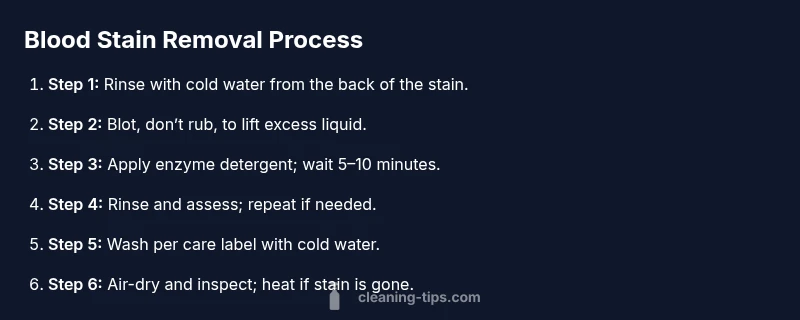
Hold the stained fabric under cold running water to flush out as much blood as possible. Do not use hot water. Rinse from the back of the stain to push it forward toward the surface. If you can’t access running water, blot gently with a cold, damp cloth to lift liquid without spreading it.
Tip: Avoid rubbing; friction can drive stain molecules deeper into fibers. - 2
Blot, don’t rub
Use a clean, colorless cloth to blot the stain and remove as much liquid as you can. Blotting reduces fiber damage and prevents spreading. Repeat with fresh cloths until you see diminishing staining.
Tip: Blot from the outside edges toward the center to avoid widening the stain. - 3
Test colorfastness
Choose a hidden seam and apply a drop of your cleaner. Wait 30 seconds, then blot. If the color remains unchanged, you can proceed; otherwise, opt for milder methods or seek professional help.
Tip: Colorfastness tests save you from accidental fading on visible areas. - 4
Apply enzyme detergent directly
Dampen the stain with a small amount of water, then apply enzyme detergent directly to the stain. Gently work it in for 30–60 seconds and let it sit for 5–10 minutes for proteins to break down.
Tip: Do not spray solution widely; concentrate on the stain to avoid soaking the entire garment. - 5
Rinse again and evaluate
Rinse the treated area with cold water and check if the stain remains. If any pigment persists, repeat the enzyme treatment for another 5–10 minutes before washing.
Tip: Persistent stains often need a second pass with enzyme cleaner. - 6
Soak if needed (optional)
For tougher stains, soak the fabric in a basin with cold water and enzyme detergent for 30–60 minutes. Do not exceed recommended soak times for delicate fabrics.
Tip: Check the fabric care label before soaking; some fibers dislike prolonged immersion. - 7
Wash as directed
Wash the garment in the washing machine on the cold or warm setting per the care label. Use an enzyme-based detergent or an oxygen-based cleaner. Do not use heat until you’re sure the stain is gone.
Tip: If the stain lingers after washing, do not dry in heat; repeat treatment first. - 8
Air-dry and inspect
Dry the item in the air or on a low heat setting. Inspect the area once dry; heat can set any remaining stain. If any color or outline remains, repeat the appropriate treatment.
Tip: Avoid tumble-drying until you confirm complete stain removal. - 9
Repeat if necessary
Some stains require multiple rounds. Reapply enzyme detergent and re-wash, then re-check. If the stain persists after several attempts, seek professional cleaning.
Tip: Patience often yields better results than aggressive scrubbing.
Questions & Answers
Can cold water alone remove a fresh blood stain from fabric?
Cold water can remove a significant portion of a fresh blood stain, especially if you act quickly. However, it may not remove all traces, and enzymes or oxidizers may be needed for complete removal on many fabrics.
Cold water helps a lot, but you may need enzymes for complete removal on some fabrics.
Is hydrogen peroxide safe on colored fabrics?
Hydrogen peroxide can bleach or lighten some colors. Always test on a hidden area and use a low concentration or avoid it on non-white fabrics. Use it only after other gentler steps have been tried.
Test first; avoid on colored fabrics unless you’re sure it won’t fade the color.
Can I use salt or baking soda to help remove blood stains?
Salt or baking soda can assist as a mild cleaner for fresh stains, but they are rarely sufficient alone for set-in stains. They work best as supplementary steps after initial enzyme cleaning.
They help, but usually aren’t enough by themselves.
What should I do if the stain is on upholstery or carpet?
Treat upholstery or carpet with a mild enzyme detergent solution or a product designed for fabrics. Blot rather than rub, test colorfastness, and follow with a rinse and air dry. For large or stubborn stains, consider professional cleaning.
Use fabric-safe cleaners and blot, then air dry. Seek pros if it’s persistent.
Should I heat the fabric to speed up stain removal?
No. Heat can set the stain, especially for blood. Always use cold water first and wait to see if the stain lifts before any heat exposure.
Heat is risky; start cold and be patient.
When is it necessary to call a professional cleaner?
If the stain persists after multiple attempts, involves delicate or valuable items, or covers a large area, professional cleaning can prevent permanent damage and preserve the fabric or upholstery.
If in doubt, a pro can save the item from irreversible damage.
Watch Video
The Essentials
- Act quickly with cold water to prevent setting.
- Test colorfastness before applying cleaners.
- Use enzyme detergents for protein-based stains.
- Avoid heat until the stain is fully removed.
- Air-dry and re-treat if needed.