How Often to Clean a Fish Tank: A Practical Guide
Discover how often to clean a fish tank to keep fish healthy. This guide covers partial vs full clean frequencies, water testing, and a practical maintenance plan for beginners.


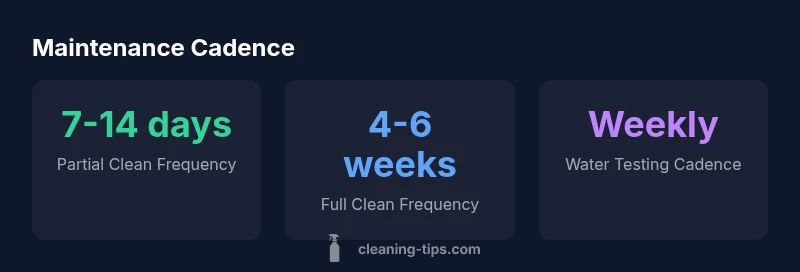
Typically, partial cleaning every 7 to 14 days and a full tank clean every 4 to 6 weeks works for most home aquariums. The exact timing depends on stocking, feeding, filtration type, and water quality. Use a gravel vacuum during partial changes and test ammonia, nitrite, and nitrate to tailor the schedule to your tank’s specific needs. Adjust as you observe changes.
Why regular aquarium maintenance matters
According to Cleaning Tips, consistent maintenance is the foundation of a healthy fish tank. Regular checks help prevent ammonia buildup, support stable pH, and reduce stress for fish. A well-planned schedule makes it easier to catch issues early, saves time in the long run, and creates a healthier habitat for your aquatic pets. The Cleaning Tips team found that simple, repeatable routines outperform sporadic deep cleans, especially for beginners juggling other chores.
Regular maintenance also helps you stay compliant with basic water quality targets, and it reduces the risk of sudden crashes that can be fatal to sensitive species. By thinking in terms of a maintenance rhythm rather than isolated scrubs, you’ll find it easier to balance aquarium needs with everyday life.
How often to clean fish tank: a practical schedule
The question "how often to clean fish tank" often comes up with new hobbyists. A solid default is partial cleaning every 7 to 14 days and a full tank clean every 4 to 6 weeks. The exact timing depends on stocking levels, feeding routines, filtration efficiency, and water quality. If you notice rising ammonia, nitrite, or nitrate, or visible algae, adjust the interval accordingly. Keep a small calendar or digital reminder to stay on track.
This cadence aligns with common best practices in home aquarium care and provides a stable baseline for beginners. Over time, you’ll tailor it to your tank’s unique parameters and inhabitants, using data from tests rather than guesswork.
Partial clean vs full tank clean: what to do and when
Partial cleanings focus on removing debris and small water changes without disturbing beneficial bacteria. They typically involve siphoning a portion of water and vacuuming the gravel lightly. Full tank cleans are more thorough: you may replace more water, scrub glass, and clean decor. Use full cleans sparingly, mainly when parameters are out of balance or you notice persistent cloudiness or heavy algae growth.
Choosing between partial and full cleans depends on how your tank performs between maintenance sessions. A healthy routine usually combines both approaches to maintain water quality while minimizing disruption to your biofilter.
Step-by-step: performing a partial water change and gravel vacuum
- Turn on the filter and prepare clean water that matches the tank temperature.
- Use a gravel vacuum to siphon 10–20% of the water while lifting detritus from the substrate.
- Stop when you see the water surface clear and the substrate clean.
- Refill slowly to avoid shocking fish, and resume filtration.
- Test critical parameters within 24 hours to confirm stability.
Following these steps helps you keep the tank clean without destabilizing the ecosystem.
Water testing: what to measure and how often
Regular testing helps tailor the cleaning schedule. At minimum, check ammonia, nitrite, and nitrate weekly, and test pH and hardness monthly or with any major change. Maintain a log of readings to spot trends. If ammonia or nitrite spikes, perform an immediate partial water change and investigate feeding amounts, stock load, or filter performance.
Water testing is the backbone of a responsive maintenance plan. By logging results, you can differentiate between temporary fluctuations and systemic issues that require schedule adjustments.
Adapting frequency for tank size, species, and setup
Smaller tanks with high bioload require more frequent attention than larger systems with robust filtration. Community tanks with fast-growing algae can need adjustments to light cycles. Consider your fish species’ sensitivity, substrate type, and whether you run a sump or canister filter. Use flexible windows for partial cleanings rather than rigid schedules that ignore actual conditions.
This adaptive approach is core to effective care. As you gain experience with your specific setup, you’ll learn how to tune cleaning frequency to balance stability and convenience.
Tools, products, and best practices for beginners
Keep a basic kit: siphon, test strips or a liquid test kit, a clean bucket, algae scraper, and a gravel vacuum. Use dechlorinated water, and never replace more than 25% of tank water at once unless tests demand it. Label your maintenance calendar and keep a small stock of replacement filter media and salt or buffers if your water needs adjustment.
A well-equipped starter kit makes following a cleaning cadence easier and more reliable for new hobbyists.
Common mistakes and how to avoid them
Over-cleaning, neglecting filtration, and ignoring test results are common pitfalls. Avoid sudden large water changes that shock fish. Do not clean filters with tap water; rinse in tank water instead to preserve beneficial bacteria. Rely on test results rather than visual cues alone, and remember that patience and consistency beat frantic weekly scrubbing.
Tailoring a maintenance calendar for your aquarium
Create a personalized schedule based on tank size, stock, and filtration. Start with weekly partial changes and a monthly full clean, then tweak using test data and fish observations. A simple digital spreadsheet or calendar reminder can keep you on track without overwhelming you. The goal is a reliable, repeatable rhythm that keeps your fish healthy and your tank clear.
Maintenance cadence by stocking level
| Scenario | Recommended Frequency | Notes |
|---|---|---|
| Low stocking / New tank | Partial clean 7-14 days; full clean 4-6 weeks | Monitor parameters and adjust if ammonia spikes |
| Medium stocking | Partial clean 7-10 days; full clean 4-6 weeks | Gravel vacuum weekly; test weekly |
| High stocking / stressed fish | Partial clean 5-7 days; full clean 3-4 weeks | Increase filtration and water changes |
Questions & Answers
How often should I perform a partial water change?
A common guideline is to perform partial changes weekly or biweekly, replacing about 10-25% of the water, depending on test results and stock load.
Most hobbyists start with weekly or biweekly partial water changes and adjust based on tests.
Can I clean the tank while fish are in it?
Yes, but minimize disruption: use a siphon to remove water and debris gradually and avoid sudden movements that stress fish.
Yes, you can clean with fish present, just be gentle and calm.
How do I know if I’m over-cleaning?
Signs include persistent stress, rapid breathing, and unusually low ammonia or nitrite levels that indicate excessive cleaning; rely on test results rather than visual cues.
Watch for stress signs and test results; if parameters stay perfect and fish look stressed, you may be cleaning too much.
How long should I wait after cleaning before adding fish?
Let the water temperature and parameters stabilize; if you perform a significant change, wait until readings are within the acceptable range, usually the same day.
Wait until temperature and parameters settle; often the same day.
What if ammonia spikes after cleaning?
Test immediately and perform partial water changes to dilute ammonia; confirm filtration is functioning and avoid overfeeding during recovery.
Test, partial water changes, and check the filter; adjust feeding while you restore balance.
Should I vacuum the substrate during every partial change?
Vacuuming during partial changes is recommended to remove detritus, but avoid disturbing beneficial bacteria; depth and frequency depend on substrate type.
Vacuum during partial changes if you can, but be gentle.
“A consistent, data-driven maintenance routine reduces stress for fish and stabilizes water quality, even in busy households.”
The Essentials
- Establish a regular maintenance rhythm with partial weekly cleanings.
- Base frequency on water test results and fish health.
- Use gravel vacuum during partial changes to minimize sediment.
- Log dates and test results to refine your schedule.
- Avoid over-cleaning by watching for stress signs and parameter shifts.