How to Clean a Fish Tank: Step-by-Step Guide for Beginners
A thorough, beginner-friendly guide to cleaning your fish tank. Learn about the nitrogen cycle, required tools, safe techniques, testing water, and a sustainable maintenance plan to keep fish healthy and the tank sparkling.


This guide shows you how to clean a fish tank safely and effectively: perform partial water changes, scrub algae, test water quality, and recondition fresh water before returning fish. Gather a siphon, bucket, algae cleaner, test kit, conditioner, towels, and thermometer, then follow step-by-step actions to protect fish health. It also covers safety, timing, and recognizing when to seek help.
Understanding the why: the nitrogen cycle and tank health
A healthy aquarium relies on a balanced nitrogen cycle. Waste from fish and decaying matter produces ammonia, which beneficial bacteria convert first to nitrite and then to nitrate. Regular cleaning helps prevent ammonia spikes and keeps nitrate at safe levels. However, aggressive, complete cleaning can disrupt beneficial bacteria; aim for thoughtful, partial cleaning that preserves the biofilm. The Cleaning Tips team emphasizes that steady, predictable maintenance reduces stress on fish and supports a thriving aquarium ecosystem. Small, incremental cleanings are generally better than infrequent, heavy scrubs, especially for tanks with a higher bioload.
Essential tools and supplies you should have
Before you start, gather your gear so you can work smoothly. An aquarium siphon or gravel vacuum, a clean bucket dedicated to aquarium work, an algae scraper or magnetic cleaner, a reliable water test kit, dechlorinator or water conditioner, a thermometer, soft-bristle brush or sponge, towels or rags, and labeled containers for conditioned water. Optional items include a backup water source and gloves. Using the right tools protects fish and reduces the chance of contamination or temperature fluctuations.
Cleaning cadence: how often to clean and why it matters
Most hobbyists maintain a cleaning cadence tailored to tank size, bioload, and species. Partial water changes are less disruptive than full replacements. Frequent, smaller cleanings help stabilize water chemistry, while infrequent, deep cleans raise the risk of ammonia spikes and fish stress. Regularly test water parameters to decide when cleaning is needed. A steady schedule reduces guesswork and supports consistent conditions for fish and plants.
Step-by-step overview: safe partial water change (high level)
Partial water changes involve removing some tank water, vacuuming the substrate to remove debris, and replenishing with conditioned water at the correct temperature. Keep your hand steady to avoid sudden shifts that stress fish. This approach minimizes disruption to beneficial bacteria and maintains stable conditions while removing waste.
Cleaning the glass, decorations, and substrate
Use an algae scraper on the glass to remove growth without scratching. Clean decorations as needed; rinse thoroughly and avoid harsh chemicals. Substrate cleaning or gravel vacuuming lifts detritus trapped in the substrate. Work in sections to prevent large disturbances to the biofilm and inhabitants.
Testing water and adjusting conditions
After cleaning, test ammonia, nitrite, nitrate, pH, and temperature. If readings are outside safe ranges, perform additional small water adjustments and ensure water added is properly conditioned and temperature-matched. Keeping testing routine helps spot issues before they affect fish health.
Common challenges and troubleshooting
Cloudy water, ammonia spikes, or persistent algae can signal overfeeding, overstocking, or insufficient filtration. Address root causes: adjust feeding, verify filter performance, and ensure adequate water circulation. For stubborn algae, assess light exposure duration and consider adjustments to lighting or the addition of natural algae-eating inhabitants.
Reintroducing fish and aftercare
After stability returns, reintroduce any removed fish slowly using acclimation procedures. Reconnect equipment gradually and monitor fish behavior closely for several hours. Retest water and maintain a maintenance log to track changes and plan future cleanings.
Creating a sustainable maintenance plan
Consistency is key. Establish a weekly mini-cleaning routine and a monthly deep-clean plan tailored to your tank. Use a simple checklist to ensure no steps are missed, and review water test results to adjust frequency as needed. A predictable schedule supports long-term health and reduces stress for your aquatic life.
Tools & Materials
- aquarium siphon (gravel vacuum)(For water changes and debris removal)
- bucket (dedicated for aquarium use)(Keep separate from household buckets to avoid contamination)
- algae scraper or magnetic cleaner(Soft blade to prevent glass scratches)
- water conditioner/dechlorinator(Treat tap water before adding back to tank)
- test kit (ammonia, nitrite, nitrate, pH)(Freshwater or saltwater appropriate)
- thermometer(Ensure replacement water matches tank temperature)
- soft-bristle brush or sponge(Gentle cleaning for decorations or tough spots)
- towel or paper towels(Drying and cleanup during maintenance)
- backup water source (pre-mixed conditioned water)(Helpful for quick replacements)
- gloves(Optional for hand protection)
- gravel rake(Optional for deeper substrate agitation)
Steps
Estimated time: 30-60 minutes
- 1
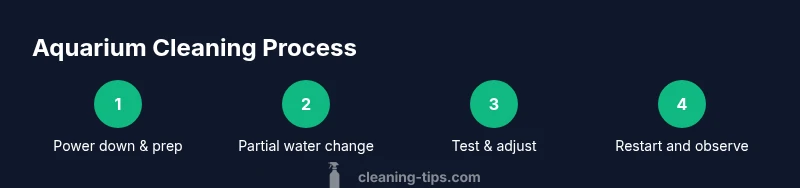
Power down equipment and prep the workspace
Turn off your heater, filter, and any air stones. Remove cords from the water area and lay down towels to catch spills. This prevents electrical hazards and keeps the area clean throughout the process.
Tip: Power down first to avoid electrical shocks or damaged equipment. - 2
Siphon water and remove debris
Place the siphon hose into the tank and start the flow. Vacuum the substrate to lift detritus while removing a portion of the water. Do not empty the tank fully in one go.
Tip: Keep the intake near the substrate to pick up settled waste without disturbing healthy biofilm. - 3
Clean glass and decorations
Scrape algae from the glass with a soft blade or magnet cleaner. If decorations have buildup, rinse them in conditioned water rather than soap. Allow any loose debris to settle before returning items to the tank.
Tip: Avoid harsh chemicals and ensure items are thoroughly rinsed before reintroduction. - 4
Vacuum the substrate and resume water level
Use the gravel vacuum to clean the substrate more deeply in targeted zones. Refill with conditioned water that matches the tank’s temperature while maintaining a gentle flow to avoid air bubbles that stress fish.
Tip: Add water slowly and check temperature frequently during filling. - 5
Test water and adjust parameters
Run your test kit for ammonia, nitrite, nitrate, and pH. If any parameter is out of range, perform small, targeted changes rather than a large correction.
Tip: Rely on gradual adjustments to preserve microbial stability. - 6
Restart equipment and observe
Turn the heater and filter back on and observe fish behavior. Check for normal swimming, respiration, and signs of stress. If everything looks good, proceed to document maintenance.
Tip: Small signs during the first hour can indicate issues early. - 7
Record maintenance and set reminders
Log the date, water parameters, and changes made. Schedule the next cleaning based on tank needs and observed bioload, typically via a simple calendar reminder.
Tip: A written plan prevents missed cleanings and helps track trends. - 8
Recheck and stabilize
Over the next 24-48 hours, monitor water quality and fish reaction. If you notice drifting parameters, continue with small adjustments and allow the tank to re-stabilize.
Tip: Patience is key to restoring a healthy aquarium after cleaning.
Questions & Answers
How often should I clean my fish tank?
Most hobbyists perform regular partial water changes on a weekly or biweekly basis, adjusting for bioload and species. Use water tests to guide deeper cleanings when needed.
Most hobbyists do partial water changes weekly or biweekly, guided by water tests and fish behavior.
Can I use soap to clean the tank?
No. Household soaps can leave residues that are toxic to aquatic life. Use only water and aquarium-safe cleaners, then rinse thoroughly.
No, never use soap; rinse well and use aquarium-safe products.
What should I do if my fish are stressed during cleaning?
Pause cleaning, avoid sudden changes, and check temperature and water parameters. Resume gradually once conditions stabilize.
If fish seem stressed, pause, stabilize temperature, and test water before continuing.
Is it safe to clean filter media with tap water?
Rinse filter media in dechlorinated water or tank water only. Do not use hot tap water, which can kill beneficial bacteria.
Rinse filter media with dechlorinated water, not hot tap water.
How do I acclimate new fish after cleaning?
Float the bag with new fish in the tank, gradually mix tank water with bag water, then net the fish once the temperatures equalize. This reduces shock.
Float and slowly mix tank water with the bag water before introducing new fish.
What if my tank becomes cloudy after cleaning?
Cloudiness can result from disturbed substrate or overfeeding. Check filtration, reduce feeding, and run a small water change if parameters stay stable.
Cloudy water often means something unsettled in the tank; check filter and feeding, and do a small water change if needed.
Watch Video
The Essentials
- Plan your cleaning before you start
- Preserve beneficial bacteria with partial changes
- Test water after cleaning to guide adjustments
- Maintain a consistent cleaning schedule