Steam Clean for Fleas: A Complete How-To Guide
Learn how to steam clean for fleas safely and effectively across carpets, upholstery, and pet bedding. This step-by-step guide covers prep, technique, aftercare, and tips to prevent reinfestation.


Steam cleaning for fleas can effectively kill fleas, larvae, and eggs on carpets, upholstery, and pet bedding when you apply high-temperature steam to thoroughly treated areas. Move slowly, cover seams and edges, and repeat after surfaces dry to break the life cycle. Pair steam with vacuuming and textile-safe disinfectants for best results.
Why steam clean for fleas works
Fleas are tiny pests with a life cycle that includes eggs, larvae, pupae, and adults. Eggs and larvae can hide deep in carpet fibers, fabric seams, pet bedding, and cracks in furniture. Steam cleaning for fleas leverages heat and moisture to disrupt that life cycle in a predominantly mechanical way, killing fleas on contact and loosening debris so vacuuming can remove them. When you steam clean for fleas, target the most active zones: living room carpets, area rugs, pet beds, upholstered furniture, and any space your pets frequent. Cleaning Tips emphasizes consistency: steam should penetrate gaps rather than just the surface. After steaming, allow fabrics to dry completely and plan a follow-up vacuum and wash to remove dead Fleas and eggs. This method is especially helpful in homes with children or pets, where minimizing chemical exposure is a priority.
According to Cleaning Tips, regular, thorough steaming paired with strategic vacuuming creates a multi-layered defense, reducing the flea population and buying time between chemical treatments. It’s not a one-and-done fix, but a powerful non-chemical approach that complements preventive cleaning routines.
Choosing the right equipment and settings
The central tool for a successful flea-focused steam clean is a quality portable steam cleaner with a steady, controllable jet and a nozzle attachment suitable for fabrics. Use a model that offers a moving nozzle and a customer-replaceable filter to minimize mineral buildup, which can reduce steam quality over time. Before you begin, test the steam on a hidden area of any delicate fabric—especially upholstery or curtains—to ensure there’s no sheen, watermark, or fabric distortion. When you steam, keep the nozzle in slow, overlapping passes and avoid saturating any single spot. If your cleaner allows adjustable temperature, aim for a higher setting that still respects fabric safety. Always follow the manufacturer’s guidelines for use and maintenance. Pair steaming with a thorough vacuum before and after treatment to maximize debris removal and reduce reinfestation risk.
Preparing the space for steam cleaning
Clear rooms of small items and delicate electronics. Remove or protect pillows, cushions, and pet toys, and move lightweight furniture to create clear pathways for moving the steam nozzle. Ventilation is important, so open windows or doors where feasible and use a fan to improve air exchange. If you’re treating a bedroom or living space with heavy fabric, consider placing a sheet or plastic barrier over delicate surfaces to prevent moisture damage. Have a vacuum ready for a post-steam cleanup, and consider washing removable covers and pillowcases in hot water to eliminate remaining pests. Finally, create a simple log of treated areas so you don’t miss sections during successive passes.
Targeting high-risk zones: carpets, bedding, upholstery, and cracks
Fleas congregate where pets rest and where fur, skin cells, and organic debris accumulate. Focus on the main traffic areas: carpeted floors, area rugs, pet bedding, and upholstered furniture seams. Move cushions and pillows aside to expose seams and zipper lines, which are common flea harborage zones. Treat cracks along baseboards, under furniture edges, and any fabric folds where dust and larvae hide. Keep the steam head in motion and avoid lingering in one spot, which can over-wet fabrics and encourage mold. After steaming, vacuum thoroughly to remove detached fleas and eggs. Periodic laundry of pet bedding and washable textiles increases the likelihood of eliminating life stages that the steam might miss.
How to apply steam without damaging surfaces
Use a steady, overlapping pattern rather than a single, long pass. Maintain a comfortable distance from delicate fabrics and finishes, and avoid soaking wood, laminates, or electronics. For thicker fabrics, slow the nozzle to ensure heat penetrates fibers without saturating. Do not steam damp wood or unsealed floors; use a protective barrier or mat to elevate the surface. When finished with a zone, wipe down any moisture-prone surfaces and allow ample drying time before reoccupying the space. If your steam cleaner includes a brush or textile tool, attach it to improve coverage over textured surfaces. Finally, always follow safety warnings to prevent burns or electrical hazards.
Integrating steam cleaning with vacuuming and laundry
Steam cleaning is most effective when combined with a robust cleaning routine. Vacuum before steaming to remove loose debris and flea larvae, then steam to kill life stages hidden in fibers. Vacuum again after steaming to collect dead fleas and eggs that the heat has loosened. Launder removable fabrics—bedding, pillow covers, and washable throws—on hot settings when possible and dry thoroughly. For non-washable textiles, consider spot-treating with a textile-safe cleaner or using a steam-safe fabric freshener. Finally, seal or protect entries to infested areas with tight-fitting covers and maintain a regular cleaning schedule to reduce re-infestation risks.
Aftercare and monitoring flea activity
After you complete steaming, monitor the space for new flea activity over the next two weeks. Vacuum daily for a week, then recheck high-traffic areas for signs of fleas, eggs, or larvae. If activity returns, repeat the steam clean or pair it with an approved flea-control product recommended by a pest professional. Maintain pet hygiene, wash bedding weekly, and vacuum under furniture more frequently during warm months when fleas are most active. Keeping a clean, well-sanitized home makes it harder for fleas to rebound and helps protect your family and pets from bites.
When to call pest professionals
If flea activity persists despite multiple steam sessions, or if you have a high infestation in a multi-unit building, seeking a licensed pest-control professional is wise. Flea management often requires integrated approaches, including environmental treatments and pet-specific precautions. A pro can assess entry points, identify hidden harborage areas, and tailor a treatment plan that minimizes exposure to children and pets. Remember that steam cleaning is a strong non-chemical option, but it may need to be combined with approved products for complete control in severe cases.
Tools & Materials
- Steam cleaner(Choose a model with adjustable heat and attachments suitable for fabrics.)
- Vacuum cleaner with hose attachment(HEPA filter preferred; use before and after steaming.)
- Microfiber cloths(For quick wipe-downs and drying.)
- Pet-safe laundry detergent or enzyme spray(Use only as directed by fabric care labels.)
- Protective coverings (plastic sheeting, drop cloths)(Protect furniture and electronics from moisture.)
- Gloves and eye protection(Guard against splashes and heat.)
Steps
Estimated time: 45-60 minutes
- 1
Gather and prepare materials
Collect your steam cleaner, vacuum, cloths, PPE, and any fabric protection you plan to use. Clear the area and remove items that obstruct movement. This preparation reduces the chance of missing spots and minimizes accidental moisture on electronics.
Tip: Have a clear plan for the room layout and which zones you’ll treat first. - 2
Test a hidden fabric area
Before full use, test the steam on a small, inconspicuous area of fabric to confirm no damage or color bleeding. This protects delicate upholstery and curtains from unwanted changes. If the fabric shows any adverse reaction, adjust the nozzle and temperature or skip that surface.
Tip: If unsure, skip high-risk fabrics and focus on sturdy textiles first. - 3
Treat primary flea hotspots
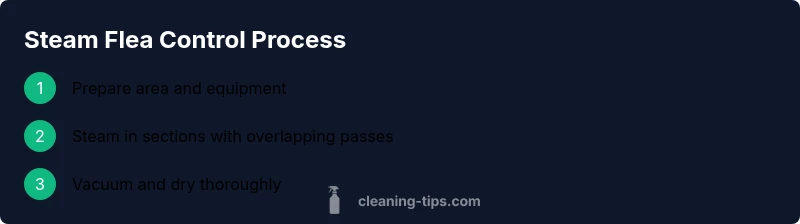
Begin with carpets, pet bedding, and upholstered surfaces. Use slow, overlapping passes to ensure heat penetrates fibers without oversaturating. Work methodically in sections to avoid missing areas, especially seams and bases of furniture.
Tip: Keep the nozzle moving to prevent soaking fibers. - 4
Ventilate and allow to dry
After steaming a zone, increase ventilation and allow materials to dry completely before reoccupation. This reduces mold risk and ensures fleas aren’t lingering in damp fabrics. If needed, use fans to speed up drying.
Tip: Do not reintroduce people or pets until surfaces are dry. - 5
Vacuum and launder after steaming
Vacuum treated zones to remove dead fleas, larvae, and eggs loosened by the heat. Launder removable covers and bedding on hot settings if possible, then dry thoroughly. This final step helps seal in the flea control results.
Tip: Vacuum slowly over seams and edges where debris hides. - 6
Assess results and plan follow-up
Evaluate flea activity in the following days and weeks. If signs persist, repeat the steam process or combine with a pest-control plan. Maintain regular cleaning and pet hygiene to prevent reinfestation.
Tip: Documentation helps track progress and schedule future sessions.
Questions & Answers
Can steam kill fleas instantly on contact?
Steam can kill fleas on contact in treated fibers, but eggs and larvae hidden deeper may survive. A follow-up vacuum and laundering increase effectiveness, and repeated steam sessions are often necessary.
Steam can kill fleas on contact in treated areas, but you may need follow-up cleaning and possibly more sessions.
Is steam cleaning safe on upholstered furniture?
Yes, when you use the correct nozzle and keep the steam at a safe distance to avoid soaking fabrics. Always test a hidden spot first and monitor for moisture.
Yes, with careful testing and proper technique on fabrics.
Should I steam clean eggs on carpets?
Flea eggs may be embedded deep in fibers and could survive if the steam isn’t thorough. Combine steaming with regular vacuuming and fabric washing to remove them.
Eggs can be hard to reach; combine steam with vacuuming and washing for best results.
When should I vacuum relative to steaming?
Vacuum before steaming to remove debris and larvae, then vacuum again after steaming to remove dead fleas. This maximizes removal of living stages.
Vacuum first, then steam, then vacuum again for best results.
What if fleas return after steaming?
If activity returns, repeat the steam process and/or integrate an approved flea-control product. Regular cleaning and pet hygiene are key to preventing reinfestation.
If fleas come back, repeat cleaning and check pet areas for exposure.
Can I rely on steam alone for a severe infestation?
Steam is a strong non-chemical approach but may not be sufficient for heavy infestations. Consider a professional pest-control plan for comprehensive treatment.
Steam helps, but severe infestations often require professional treatment.
Watch Video
The Essentials
- Steal flea life cycle with thorough steam coverage
- Vacuum before and after steaming for best results
- Launder or wash textiles to remove remaining larvae and eggs
- Use a section-by-section approach for complete coverage
- Monitor flea activity and repeat as needed