AC Clean: A Practical Step-by-Step Guide to Safe Home Air Conditioner Cleaning
Learn a safe, practical approach to cleaning your air conditioner—from filters and coils to exterior casings—to improve efficiency, airflow, and indoor air quality for a healthier home.


By the end of this guide, you will confidently perform an ac clean on a residential air conditioner safely and effectively. You'll learn how to prepare, remove and clean filters, wipe down surfaces, and handle condensate with basic tools. This process applies to window, through-wall, and many central systems, and helps improve efficiency, reduce odors, and support better indoor air quality.
Why AC cleaning matters
Regular AC cleaning matters for comfort, efficiency, and health. Over time dust, pollen, mold, and pet dander accumulate in filters, coils, and drain pans, reducing airflow and forcing the unit to work harder. According to Cleaning Tips, routine maintenance can help preserve system performance and improve indoor air quality. By cleaning, you remove debris that would otherwise clog components, cause uneven cooling, and emit musty odors. The most visible benefits are stronger airflow, more consistent temperatures, and fewer allergy symptoms during peak seasons. The cost of neglect often shows up as higher energy bills and more frequent repairs, not to mention potential moisture problems that invite mold growth. This section explains what parts of the AC you should clean, how often, and the order of operations for safety and effectiveness. Even if you rent and have limited space, simple cleaning steps can make a big difference in comfort and air quality. Start with non-technical steps and move to deeper cleaning as you gain experience.
What to know before you start
Before you reach for cleaners, take a few practical safety steps. Always turn off power to the unit at the breaker or switch, and unplug any removable components if possible. Wear protective gloves and safety glasses to guard against sharp edges and accidental splashes. Gather essential tools and cleaners, and read the user manual for model-specific guidance. Assess whether you will clean interior components—like coils and drain pans—or if you should limit work to exterior surfaces and the filter area. If you rent, check your lease for any restrictions on cleaning activities and make sure you do not void any warranty. Finally, plan to work in a well-ventilated area and protect floors with towels or a drop cloth to catch dust and drips. This prep reduces mess, minimizes risk, and sets you up for a successful ac clean.
Cleaning different AC setups
Different types of air conditioners require different approaches. Window units and through-wall models expose exposed components that are easier to access, and their filters should be checked monthly during heavy use. Central air systems, by contrast, involve a larger coil and a shared duct network; avoid blasting water into the ducts and focus on accessible surfaces and filters. For all setups, start with the filter area, then move to the cabinet, and finally address the coil where practical. If your unit sits inside a cabinet or closet, be mindful of space constraints and moisture buildup. In all cases, never use high-pressure water on internal parts or electrical connections. If your unit is older or shows signs of mold growth beyond cleaning, contact a professional.
Filters: the heart of your clean
Filters trap dust and allergens before air reaches living spaces. Remove the filter frame and assess the media: if it is visibly dirty, torn, or clogged, replace or wash as appropriate for reusable filters. If using a washable filter, rinse with lukewarm water, let it dry completely before reinstalling, and avoid bending the frame. For disposable filters, replace with the correct size and type recommended by the manufacturer. Keep a simple log of filter changes or cleanings; this helps you maintain regular care without guessing. After filter care, wipe the surrounding filter housing and seals with a damp cloth to remove dust, then reseal the cabinet to prevent reentry of lint and moisture.
Coil and fins care: coils, fins, and condensate
Coils and fins are the heart of the cooling process. Dusty coils reduce heat transfer and efficiency, while bent fins can block airflow. Use a soft brush or a microfiber cloth to gently remove debris from the condenser or evaporator coil, following the direction of airflow. For stubborn grime, a light mist of water with mild detergent can help loosen dirt; never soak coils or use strong solvents that could corrode metal. Inspect the condensate pan and line for clogs or standing water; clean with a damp cloth and clear any visible obstruction. If you encounter mold or a persistent bad odor, stop and consult a professional rather than pushing through the discomfort of cleaning.
Maintenance schedule and when to call a pro
Regular maintenance should become part of your home care routine. Create a simple calendar that marks monthly checks and seasonal deep cleanings. For questions or uncertainties about complex systems, or if you notice unusual noises, reduced cooling, or water leaks, contact a licensed technician. A pro can assess refrigerant levels, duct integrity, and electrical safety beyond routine cleaning. Keeping records helps you track wear and anticipate service needs. Remember, an ac clean is a proactive investment in comfort, energy efficiency, and indoor air quality.
Tools & Materials
- Vacuum with hose and brush attachments(For removing dust from vents and coil surfaces)
- Microfiber cloths(Lint-free and washable)
- Soft brush or old paintbrush(Gentle on fins; avoid bending)
- Mild detergent or AC-safe cleaner(Dilute as directed)
- Spray bottle(For diluted cleaner or water spray)
- Bucket or bowl(Rinsing cloths and tools as needed)
- Gloves(Protect hands from sharp edges and cleaners)
- Safety glasses(Eye protection during cleaning)
- Old towels or drop cloth(Protect floors and surfaces)
Steps
Estimated time: 60-90 minutes
- 1
Power down and prep
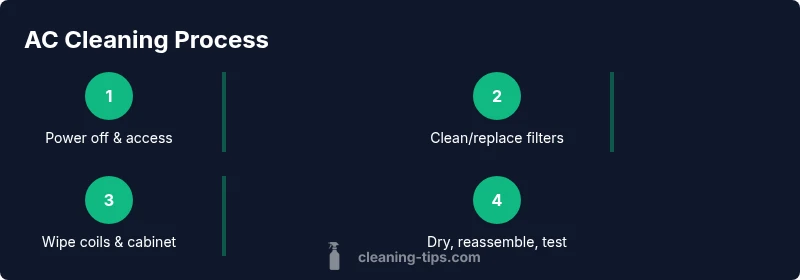
Begin by turning off the unit and unplugging it if possible. Gather your tools, wear protective gear, and clear the workspace. This reduces the risk of electric shock and keeps the area clean as you work.
Tip: Always unplug; switch off the circuit at the breaker to prevent accidental启动. - 2
Access the unit and remove the cover
Carefully remove the access panel or housing to expose filters and internal surfaces. Use a screwdriver if required, keeping track of screws so you don’t lose any inside the unit.
Tip: Keep screws in a labeled container to avoid misplacement. - 3
Inspect the filters
Take out the filter frame and assess its condition. If reusable, rinse as directed; if disposable, replace with the correct size and type per the manufacturer.
Tip: Check for gaps around the seal after reinstalling the filter. - 4
Clean or replace filters
Clean washable filters with lukewarm water and a mild detergent, then let them dry completely before reinsertion. Replace disposable filters with a new one of the same rating.
Tip: Do not reuse a dirty filter; dirty filters hinder airflow and efficiency. - 5
Vacuum and wipe the coil and cabinet
Use the vacuum’s brush attachment to remove dust from both evaporator and condenser areas. Wipe surfaces with a damp microfiber cloth, taking care not to bend fins or touch electrical parts.
Tip: Work gently along the airflow direction to avoid damage. - 6
Clean the drain pan and condensate line
Clear any visible debris from the drain pan and gently flush a non-toxic cleaner through the condensate line if accessible. Do not force water into electrical components.
Tip: If you see standing water, address it promptly to prevent mold. - 7
Dry, reassemble, and test
Allow all components to dry completely before reassembling the cover. Plug the unit back in and run a short test cycle to confirm proper operation and airflow.
Tip: Listen for unusual noises or reduced airflow during the test run. - 8
Document and maintain
Record the date of cleaning and any parts replaced. Schedule the next check based on usage and environment to maintain performance over time.
Tip: Keeping a simple log helps you stay on top of maintenance.
Questions & Answers
Can I use bleach or harsh chemicals to clean an AC?
Avoid harsh chemicals near electrical components and seals. Use diluted mild cleaners and water as directed by the manufacturer.
No. Harsh chemicals can damage parts; use mild cleaners instead.
Is it safe to clean an AC myself?
Yes, you can clean an AC yourself if you follow safety steps: power off, avoid water on electrical parts, wear protection, and follow the manual.
Yes, as long as you follow safety steps and use the right cleaners.
How often should I check or replace filters?
Check filters monthly during heavy use and replace or wash as needed according to the type and manufacturer guidance.
Check monthly, replace or wash as needed.
What if I see mold in the condensate pan?
Stop cleaning and consult a professional; mold suggests moisture issues beyond basic cleaning.
If you see mold, stop and call a pro.
Can I power wash the AC coils?
Do not power wash coils or electrical components. Use gentle brushing and damp cloth instead.
Do not power wash; use gentle brushing.
Do window units require the same care as central systems?
The basic approach is similar, but access and scale differ; adjust steps accordingly for window units.
Basics apply, but adjust for the unit type.
Watch Video
The Essentials
- Unplug and prep before cleaning
- Prioritize filters; they drive air quality
- Be gentle with coils and fins
- Document maintenance and replacements
- Seek professional help for mold or refrigerant issues