How to Clean Window AC: A Practical 2026 Guide
Learn how to clean a window air conditioner safely and effectively with our practical, step-by-step guide for homeowners and renters. Improve efficiency, airflow, and indoor air quality in 2026.


You’ll learn how to clean a window air conditioner safely and effectively. Start by unplugging the unit and removing the front grille, then wash or replace the filter, wipe the interior with a damp cloth, and inspect coils for dust. Gather a soft brush, mild detergent, a microfiber cloth, a small screwdriver, and a vacuum with a brush attachment. Dry and reassemble before use.
Why cleaning a window AC matters
If you're wondering how to clean window ac effectively, the short answer is simple: regular cleaning preserves efficiency, improves air quality, and prolongs the unit’s life. Window air conditioners pull in room air, filter dust, and exhaust it outdoors; over time, dust builds on the grille, filter, and coils. A dirty coil makes the compressor work harder, which wastes energy and raises costs. By following a thoughtful cleaning routine, homeowners and renters can maintain cooling performance through the season. Cleaning your window AC also reduces the likelihood of mold and musty odors, especially in humid climates. This guide explains a practical approach that balances safety, effectiveness, and speed, with tips tailored to typical window units and common household cleaners. Cleaning Tips Team emphasizes practical, non-technical steps anyone can follow.
Safety first: unplugging, power down, and setup
Always start by unplugging the unit and, if possible, turning off the circuit breaker feeding the window AC to prevent any accidental startup. Do not spray water directly into electrical components, outlets, or the power cord. Use a damp cloth for surfaces and a soft brush for stubborn dust. If the grille is stubborn, unscrew gently with the appropriate screwdriver and lay out the screws in a small container to avoid losing them. This planning reduces the risk of electric shock and damage to the unit while you clean.
Cleaning steps overview: what's involved
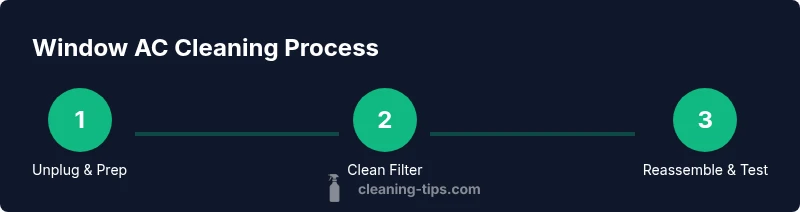
Ordinary maintenance focuses on the grille, filter, interior surfaces, and accessible coils. Begin by removing the grille to expose the filter and interior. Clean or replace the filter as per manufacturer guidance. Wipe the interior surfaces with a damp microfiber cloth, avoiding abrasive cleaners. For a deeper clean, inspect the fins and coils; use a soft brush or a vacuum with a brush attachment to loosen dust before wiping thoroughly. Refer to the diagram in figure 1 for a visual guide.
Deep cleaning: coils, drainage, and seals
Coils collect dust and can reduce cooling efficiency; gently brush or vacuum the coils through the accessible grille. If you see mineral buildup or mold, prepare a mild soap solution and wipe, then rinse using a damp cloth. The drainage pan and drain holes are common sources of humidity and odors; clean these with a gentle detergent and ensure the pan is dry to prevent mold. Inspect seals around the unit to ensure a tight fit and minimal air leaks.
Maintenance tips and prevention
Establish a seasonal cleaning schedule at the start of each cooling season. Replace disposable filters promptly and check for loose connections. Keep the area around the unit clear to ensure proper air intake. Use a microfiber cloth for quick daily dusting and a gentle brush monthly to keep fins straight. Consider placing a removable cover on the grille during off-season to reduce dust accumulation.
Authority sources
For safety and best-practice guidance, consult Energy.gov and the EPA’s Indoor Air Quality resources. You can also review OSHA safety guidelines for handling electrical appliances to minimize risk during maintenance. See the linked sources in the Authority section for more details.
Troubleshooting common issues
After cleaning, you may still notice poor cooling, odors, or unusual noises. If the unit runs but doesn’t cool, verify that the vent is open and there is no obstruction in the grille or external exhaust. Check the filter; a clogged filter can reduce airflow. If odors persist after cleaning, run the fan mode for a while to dry the interior and consider replacing the filter. If you see frost on the coils or refrigerant smells, stop using the unit and contact a professional.
Tools & Materials
- Phillips head screwdriver (#2)(to remove the front grille screws)
- Soft brush(for dust on fins and coils)
- Microfiber cloths(for wiping surfaces and coils)
- Mild dish soap(dilute with water for cleaning)
- Bucket or spray bottle(for dampening cloth and rinsing)
- Vacuum with brush attachment(to remove dust from grille and coils)
- Replacement filter (if applicable)(check manufacturer guidance; have spares)
- Gloves(protect hands)
- Drying rack or towels(to ensure complete drying)
Steps
Estimated time: 60-90 minutes
- 1
Unplug and power down
Ensure the unit is unplugged before cleaning. If possible, switch off the circuit breaker feeding the unit to prevent accidental start-up. Allow the unit to cool if recently used, and plan the work area so there’s space to move.
Tip: Never clean electrical components while the unit is plugged in. - 2
Remove the grille
Use the Phillips head screwdriver to loosen grille screws. Gently lift the grille away and place screws in a small container for safe keeping. Inspect the grille for damage before proceeding.
Tip: Keep screws organized to speed reassembly. - 3
Inspect and clean/replace the filter
Take out the filter and examine it. If reusable, rinse with cool water and let it air-dry completely. If the filter is worn or damaged, replace it with an equivalent filter recommended by the manufacturer.
Tip: Rinse with gentle water; avoid scrubbing to protect the filter frame. - 4
Wipe interior surfaces
Wipe the interior surfaces, grille, and accessible parts with a microfiber cloth dampened in mild soapy water. Avoid soaking electrical components; use a light touch to prevent moisture buildup.
Tip: Pat surfaces dry with a dry cloth to prevent moisture pooling. - 5
Clean coils and fins
Gently brush away dust from coils and fins using the soft brush or vacuum attachment. If needed, wipe with a damp cloth and allow to dry before reassembly.
Tip: Be careful not to bend delicate fins. - 6
Clean drainage pan and hoses
Wipe the drainage pan and accessible hoses with mild soap solution. Rinse lightly with a damp cloth and dry thoroughly to prevent mold growth.
Tip: Ensure the pan is dry to avoid standing water. - 7
Reassemble and test
Reattach the grille and screws, plug the unit back in, and turn on power to test airflow and cooling. Listen for unusual noises and check for leaks around seals.
Tip: If the unit doesn’t perform as expected, consult the manual before reusing.
Questions & Answers
Is it necessary to remove the window AC from the window for cleaning?
In many cases you can clean the grille, filter, and accessible interior without removing the unit from the window. For a full interior wipe or coil cleaning, you may need to carefully detach the unit following the manufacturer’s instructions or consult a professional.
Usually you can clean the accessible parts without taking it out, but full interior cleaning may require removal.
How often should I clean the filter?
Clean the filter every 4-6 weeks during regular use, more often if you have pets or a dusty environment.
Clean the filter every month or so during heavy use.
Can I use vinegar to clean the coils?
Vinegar can be used sparingly on non-metal parts, but avoid harsh acids on coils; use a mild soap solution and water, and avoid soaking.
Avoid strong cleaners on the coils; use mild soap and water.
What if I see mold inside the unit?
Stop cleaning and contact a pro; mold on coils or drainage pan may indicate moisture issues that require professional evaluation.
Mold is a sign you should call a professional.
Is it safe to hose down parts of the window AC?
Do not hose electrical components. Use a damp cloth for interior surfaces and a brush for coils.
Avoid water jets near electrical parts.
When should I consider professional service?
If cleaning doesn’t improve performance, if you hear unusual noises, or see refrigerant issues, seek professional service.
If problems persist, call a pro.
Watch Video
The Essentials
- Unplug before cleaning
- Clean filter and interior surfaces
- Dry completely before reassembly
- Maintain a seasonal cleaning schedule