How to clean an AC filter: Step-by-step guide
Learn how to clean ac filter safely, when to replace, and how to maintain best airflow and indoor air quality with a step-by-step guide from Cleaning Tips.


Learn how to clean a clogged AC filter safely and effectively, extending filter life, reducing energy use, and improving indoor air quality. This guide covers when to rinse versus replace, the exact tools you’ll need, safety reminders, and a clear step-by-step process you can follow at home. By the end, you’ll know how to inspect, clean, and reseat the filter for optimal performance.
Why clean ac filter matters
According to Cleaning Tips, a dirty or clogged AC filter can restrict airflow, force the system to work harder, and reduce indoor air quality. When the filter is dirty, the HVAC draws more power and produces more wear on fan and motor components. A clean ac filter not only helps the system circulate air more effectively but also minimizes dust circulation and allergen spread in the living space. The Cleaning Tips team found that regular filter maintenance supports healthier homes, reduces maintenance surprises, and helps keep cooling costs predictable. This section explains the science behind filtration and why neglecting the filter compounds dust, mold spores, and pet dander in the return air. By recognizing visual cues and operating symptoms, homeowners can decide when cleaning or replacement is appropriate, without risking damage to the unit or violating warranty terms. Throughout, you’ll see practical examples of real-world scenarios and quick checks you can perform during a routine cleaning session.
How to identify a dirty filter
A filter’s appearance is a clear first indicator. Look for visible buildup on the grille or frame and notice when air seems to flow more slowly through the return. If you can barely feel air at the supply vent or the system runs longer cycles than usual, the filter is likely obstructed. Use a bright light or hold the filter up to a lamp to gauge translucence; a dark, opaque layer signals heavy dirt. In fiberglass filters, discoloration toward the dirty side is common; pleated filters hide dirt more effectively but still clog with time. For households with pets, smoke exposure, or seasonal allergies, inspections should be more frequent. Remember: a dirty filter can masquerade as weak cooling, uneven room temperatures, or increased noise from the blower.
Cleaning vs replacing: making the right call
Not all filters can be cleaned, and some are designed to be disposable. If you have a washable, non-foil filter, a gentle rinse with cool water and a mild detergent can revive the surface, followed by thorough air drying. If the filter is paper-based or shows creases, tears, or warped edges, replacement is the safer option. Filtration efficiency matters too: even when washed, some filters lose their shape or performance, reducing protection against particulates. Always consult the manufacturer’s guidelines for your model and match any replacement to size, thickness, and MERV rating. When in doubt, replacing a questionable filter is often more cost-effective than chasing marginal gains from cleaning.
Preparing to clean: safety and setup
Before you touch the filter, power off the HVAC at the breaker or switch to prevent shock or accidental startup. Put on gloves and eye protection if you’re dealing with dusty environments, and ensure the area around the unit is dry to avoid slips. Remove nearby objects that could obstruct access and have a replacement filter on hand. If you’re washing a washable filter, lay towels to catch drips. Take a quick photo of the filter orientation and airflow arrows to ensure you reinstall it correctly. Document any signs of damage on the housing that might require professional service.
Cleaning techniques and best practices
Washable filters respond best to a gentle rinse under cool running water; avoid strong sprays that push dirt deeper into fibers. Use mild dish soap on stubborn grime and agitate lightly with a soft brush or your gloved fingers. Rinse until the water runs clear and shake excess moisture from the filter surface, then allow it to air dry completely in a clean, dust-free area. Do not reinstall a damp filter, as moisture can promote mold growth inside the ductwork. For disposable filters, do not wash—these are designed for single-use and should be replaced when dirty. When reassembling, ensure the filter sits flat and aligns with airflow arrows so air passes through the filtering material rather than around it.
Reinstallation and post-cleanup checks
Once dry, reinsert the filter in the same orientation as before, with arrows pointing toward the blower. Replace the grille or blower cover securely and restore power. After starting the system, listen for abnormal noises and observe airflow at multiple vents to confirm even distribution. If you notice persistent odor, reduced cooling, or unusual sounds, stop using the unit and schedule a professional inspection. Regular checks between seasons can prevent unexpected breakdowns and protect your indoor air quality.
Maintenance mindset: long-term tips
Set a mental reminder to inspect the filter at the change of seasons and after events that introduce dust, like home renovations or pet shedding seasons. Create a simple maintenance calendar and mark filter replacement or cleaning tasks as a non-negotiable habit. The Cleaning Tips analysis shows that proactive maintenance reduces the risk of dirty air returning to living spaces and keeps your system running efficiently. Pair filter care with other IAQ practices, such as sealing ducts and using high-quality portable air purifiers in high-traffic areas.
Tools & Materials
- Flexible filter brush or comb(Dislodges dust from the filter surface without tearing fibers)
- Mild detergent (optional)(Use only for washable filters; avoid harsh chemicals)
- Container with warm water(For washing washable filters; ensure water is not hot to avoid damage)
- Replacement filter of correct size(Verify model number and MERV rating for best fit)
- Gloves (nitrile/latex)(Protect your hands from dust and moisture)
- Vacuum with brush attachment(Clean surrounding grille and ducts if dusty)
- Screwdriver (Phillips/flathead)(Access panel screws if needed)
Steps
Estimated time: 30-45 minutes
- 1
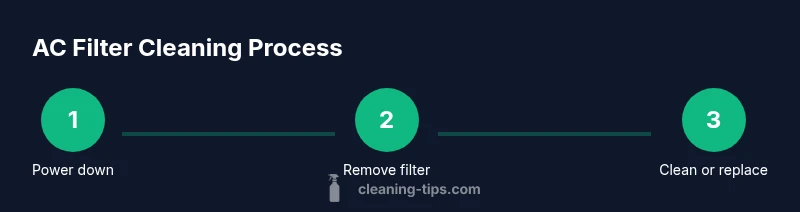
Power down and locate the filter
Turn off the HVAC at the breaker or thermostat to prevent accidental startup. Locate the filter access panel or return grille and confirm the filter type and size from the label. If you’re unsure of the exact size, take a photo or measure the frame before removal.
Tip: Record the filter size or take a photo of the orientation arrows for easy reinstallation. - 2
Remove the filter carefully
Gently slide the filter out, avoiding contact with the dirty surface to minimize dust dispersion. Note the direction of airflow arrows on the frame so you can reinsert correctly. If the filter is stubborn, use a soft brush to loosen debris near the edges.
Tip: Keep the old filter nearby to compare thickness and material when buying a replacement. - 3
Assess dirt level
Hold the filter up to a light source to inspect density. If you see a thick, dark layer on the dirty side or airflow remains low after cleaning, plan for cleaning or replacement. For pleated filters, check the folds for compacted dust.
Tip: Visible heavy dirt usually means replacement is needed. - 4
Clean a washable filter
If the filter is labeled washable, rinse with cool water and a mild detergent, working the grime free from the fibers. Rinse until the water runs clear and gently shake out excess moisture.
Tip: Do not use hot water or high-pressure sprays that can deform the fibers. - 5
Decide to replace if needed
If the filter is damaged, torn, warped, or cannot be cleaned effectively, replace with a new one of the same size and MERV rating. A degraded filter offers little protective benefit and can harm system efficiency.
Tip: Avoid reusing damaged filters even if they look clean. - 6
Dry and inspect
Allow washable filters to dry completely on a clean surface before reinstalling. Check edges for warping and verify there is no moisture trapped behind the filter frame.
Tip: Rushing reinstallation with a damp filter can promote mold growth. - 7
Reinstall and test airflow
Reinsert the filter with arrows pointing toward the blower, reseal the grille, and restore power. Run a short cycle and verify even airflow at multiple vents; listen for unusual noises which may indicate improper seating.
Tip: If airflow is inconsistent, remove and reseat the filter again.
Questions & Answers
Can I wash non-reusable AC filters?
No; many disposable filters should not be washed. If it is labeled washable, follow the manufacturer’s instructions for washing and drying. Otherwise, replace it when dirty.
Most disposable filters aren’t meant to be washed; check the label and replace if required.
How do I know if I should replace or clean?
If the filter is torn, warped, or deeply clogged beyond cleaning, replacement is the safer option. For washable, non-foil designs, cleaning is possible if guided by the label. Always prioritize airflow and fit.
If it’s damaged or can’t be cleaned effectively, replace it.
What can I clean a filter with?
Use mild soap and cool water for washable filters. Avoid harsh chemicals or bleach unless the manufacturer specifies it for your filter.
Gentle soap and water work for washable filters; avoid harsh cleaners.
How often should I clean or replace my AC filter?
Follow the manufacturer's guidance. Regular checks during seasonal changes or after events like renovations help maintain airflow and IAQ.
Check your filter at least seasonally and after events that create dust.
What signs indicate poor airflow after cleaning?
Persistent weak airflow, unusual noises, or higher energy use may indicate improper seating or a failing filter. Recheck orientation and replacement needs.
If airflow stays weak after cleaning, reseat or replace the filter.
Is cleaning the filter enough to improve air quality?
Filter maintenance helps reduce dust and improves airflow, contributing to better IAQ. For optimal results, pair with duct sealing and periodic duct cleaning if needed.
Maintaining the filter helps, but IAQ is best with broader ventilation and purification practices.
Watch Video
The Essentials
- Inspect filters before each season.
- Use the correct size and orientation.
- Choose wash vs. replace based on type.
- Allow washable filters to dry completely before reinstall.