How to Clean an AC Unit: A Complete Home Guide
Learn how to safely clean an AC unit with our step-by-step guide for window, central, and outdoor systems. Improve efficiency, air quality, and comfort with trusted tips from Cleaning Tips.


By following this guide, you’ll learn how to clean an AC unit safely and effectively, whether you have a window unit, a central system, or an outdoor condenser. You’ll gain practical, step-by-step instructions, safety checks, and maintenance tips to improve efficiency, reduce dust, and extend the life of your cooling system.
Why Cleaning an AC Unit Matters
According to Cleaning Tips, regular AC unit cleaning is essential for efficiency, indoor air quality, and longevity. If you're learning how to clean ac unit, this guide covers the key routines that prevent mold growth, reduce dust, and keep your home cooler with less energy. When dirt and debris accumulate on filters and coils, airflow is restricted, causing the system to work harder. That added strain can shorten component life and raise electricity bills. A clean unit also improves performance during peak usage months.
This section explains the science behind cleaning and outlines the practical benefits. For example, a clean filter restores airflow and reduces the risk of contaminants circulating through the living space. It also helps the compressor and fan run cooler, which can extend the life of critical parts. By establishing a simple cleaning routine, homeowners and renters can maintain comfort without expensive repairs.
Safety First: Power, Pets, and Precautions
Cleaning an AC unit involves working around electrical components and sometimes wet surfaces. Always power down the unit at the thermostat and unplug it from the wall outlet before you begin. If you’re dealing with a central system, switch off the relevant breaker to ensure no power can reach the unit. Keep pets and kids away during the process to prevent accidental contact with fans or exposed wiring. Wear gloves and eye protection if you’re handling sharp fins or using cleaning agents. Cleaning Tips emphasizes safety as the foundation of any maintenance task, and this project is no exception. If you smell burning, notice exposed wiring, or see visible damage, stop immediately and seek professional help.
By planning for safety, you reduce the risk of electric shock, falls, or component damage, which keeps your AC running longer and more reliably.
Understanding Types: Window, Split, and Central Systems
Not all AC units are cleaned in the same way. A window unit typically has a removable grille and a filter you can wash or replace. Split systems have indoor and outdoor components; the indoor evaporator coil and grille are easier to access, while the outdoor condenser coil needs gentle cleaning from the surrounding area. Central systems have large outdoor condensers and multiple indoor air handlers; cleaning often focuses on filters, accessible ducts, and exterior components. This section helps you identify which parts you’ll clean and what to leave to a professional. Knowing your system type makes the cleaning process safer and more effective, especially when deciding whether to tackle outdoor coils or call for service.
Tools and Materials You’ll Use (Overview)
Before you begin, gather the essential tools and supplies. While the exact items depend on your unit, a soft brush, vacuum with brush attachment, microfiber cloths, mild dish soap, a spray bottle, and a non-abrasive cleaner are commonly useful. Keep old towels nearby to catch drips, and have replacement filters on hand if your unit uses washable filters. This overview helps you prepare so the cleaning goes smoothly and avoids mid-task runs to the store. Remember to keep an absorbent mat under the unit if you’re working on a window unit to protect nearby surfaces.
Cleaning a Window Air Conditioner: A Practical Guide
Window AC units are often the easiest to clean since most components are accessible from the front. Start by turning off power, remove the grille, and take out the air filter. Vacuum loose dust from the grille and coils using a brush attachment. Wash the filter with mild soap and warm water, rinse, and allow it to dry completely before reinstalling. Wipe down the evaporator coil housing and grille with a damp cloth, then reassemble and run the unit on a cool setting to verify proper operation. This section focuses on window units, but the same principles apply to other types with appropriate adjustments. If you’re learning how to clean ac unit, this approach keeps things simple and effective.
Cleaning a Central or Split System: What You Can Do
For central or split systems, begin with power-down procedures and filter access. Indoor filters should be cleaned or replaced according to manufacturer guidance. Remove the filter, wash if washable, and air-dry fully before reinserting. Vacuum any accessible fins gently to dislodge dust and debris, taking care not to bend the fins. If you encounter a stubborn buildup, use a mild cleaner on non-electrical surfaces and wipe away with a damp cloth. Do not spray water directly into the ductwork or onto electrical connections. This section outlines practical steps that balance safety with effective cleaning for larger systems.
Outdoor Unit Maintenance: The Condenser Coil and Fan
Outdoor condensers require careful maintenance because debris, leaves, and yard dust can accumulate around the coil. Clear vegetation and debris from the area around the condenser to maintain airflow. Use a low-pressure garden hose to rinse the condenser coil from the inside outward, never blasting water directly into electrical components or the fan housing. Inspect the fan and housing for damage or loose components and tighten as needed. Keep a safe distance from the unit while cleaning to avoid contact with sharp fins. By treating the outdoor unit with respect, you protect your system’s efficiency and longevity.
Filters: How Often and How to Clean or Replace
Filters are the heart of clean air and efficient cooling. Washable filters can often be cleaned every one to three months, while disposable filters should be replaced as recommended by the manufacturer. Inspect the filter for heavy staining, tears, or mold. If you can’t clean it effectively or if it shows damage, replace it. Regular filter maintenance improves airflow, reduces energy use, and lowers the risk of indoor air contaminants. This section helps you establish a practical filter schedule that fits your home and climate.
Post-Cleaning Maintenance and Scheduling
After you finish cleaning, let all components dry completely before powering the unit back on. Document the cleaning date and planned next maintenance session to stay consistent. Create a simple calendar reminder for filter checks and outdoor coil inspections, especially during dusty seasons or high usage. If you notice reduced cooling performance after cleaning or unusual noises, reassess the steps and consider consulting a professional. A routine maintenance plan keeps your AC unit performing efficiently and lasting longer.
Tools & Materials
- All-purpose cleaner or mild dish soap(Non-abrasive, non-corrosive cleaner)
- Soft-bristle brush(Gentle on fins)
- Vacuum with brush attachment(Dust and debris removal)
- Microfiber cloths(For wiping and drying)
- Spray bottle with water(For rinsing surfaces)
- Old towels or rags(Protect surfaces and catch drips)
- Replacement filters (if disposable)(Have on hand if you need a swap)
- Gloves(Protect hands)
- Safety goggles(Eye protection)
- Screwdriver set(For grille removal if needed)
Steps
Estimated time: 60-90 minutes
- 1
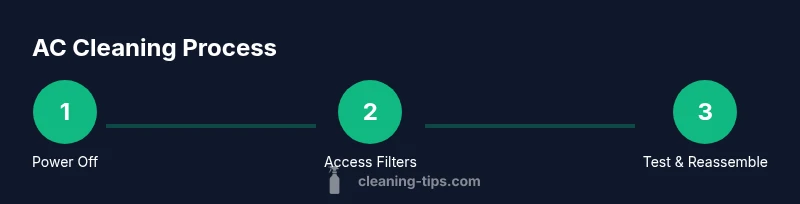
Turn off power and unplug the unit
Ensure safety by switching off the power at the thermostat and unplugging the unit from the wall outlet. For central systems, switch off the breaker that serves the unit. This prevents shocks and keeps you safe while cleaning.
Tip: If you’re not sure which breaker controls the unit, label it in advance to avoid surprises later. - 2
Remove grille and access the filter
Carefully remove the grille or front panel to expose the filter. Take note of how the grille sits so you can reassemble correctly. If your unit uses a reusable filter, remove and inspect it for dirt and damage.
Tip: Document grille screws or clips so nothing gets lost during reassembly. - 3
Vacuum loose dust from coils and fins
Use a brush attachment on a low setting to gently remove dust from the coils and fins. Focus on the exterior surfaces first, then work inward. Avoid aggressive brushing that can bend or break fins.
Tip: Keep a gentle touch to prevent damage; bent fins may reduce airflow. - 4
Wash or replace the air filter
If the filter is washable, rinse with mild soap and warm water. Allow it to air-dry completely before reinstalling. If the filter is disposable, replace it with a new one.
Tip: Never reinstall a damp filter as moisture can encourage mold growth. - 5
Wipe down evaporator surfaces and grille
Damp-wipe the evaporator housing and grille with a microfiber cloth. Avoid soaking electrical components. Use a mild cleaner only on non-electrical surfaces.
Tip: Follow the manufacturer’s guidance for any exposed wiring or seals. - 6
Clean interior and avoid soaking electronics
Use a damp cloth to wipe interior areas, then dry with a clean cloth. Do not spray water directly into ducts or onto motors or electrical connections. Allow all components to dry before reassembly.
Tip: If you notice mold, address it with a mild cleaner and ensure thorough drying before use. - 7
Clean outdoor condenser coil (if applicable)
For outdoor units, remove surrounding debris and trim vegetation at least a few inches away from the unit. Rinse the coil with a garden hose on a gentle setting, directing water from inside out. Do not blast high pressure against the fins or wiring.
Tip: Maintain clearance around the unit year-round to maximize airflow. - 8
Reassemble and test the unit
Reinstall the grille and any covers, reinsert the filter, plug the unit back in, and run a test in cooling mode. Listen for unusual noises and check for signs of moisture around connections.
Tip: Start with a low fan setting to listen for issues before ramping up. - 9
Schedule ongoing maintenance
Create a simple maintenance calendar for filter checks, coil cleaning, and outdoor unit inspections. Note the cleaning date and next planned maintenance to stay consistent.
Tip: Consistency beats intensity; mini-cleanings are easier than big overhauls.
Questions & Answers
How often should I clean my AC unit's filter?
Most units benefit from cleaning every 1-3 months, depending on usage, pets, and dust levels. In smoky or dusty environments, more frequent checks may be needed.
Most AC filters should be cleaned every one to three months, depending on conditions like dust, pets, and usage.
Can I clean the outside condenser coil with a garden hose?
You can rinse the outdoor condenser coil with a garden hose on a gentle setting from the inside outward. Avoid high pressure and never spray water into electrical components or the fan.
You can rinse the outdoor condenser coil gently with a garden hose from the inside outward, but avoid high pressure and never spray into electrical parts.
What should I do if there is visible mold in the unit?
If you see mold, stop cleaning and use a mold-safe cleaner on non-electrical surfaces. If mold persists, contact a professional to assess and remediate the issue.
If you spot mold, stop cleaning and use a mold-safe cleaner on non-electrical parts; call a professional if it persists.
Can I reuse a cleaned filter?
If the filter is washable, rinse thoroughly and air-dry completely before reinstalling. If it’s disposable, replace with a new one rather than reusing.
If washable, dry it completely before reinserting; otherwise replace with a new one.
Are vinegar or baking soda safe cleaners for ACs?
Mild cleaners are generally safe. Use small amounts of vinegar on exterior surfaces if needed, but avoid harsh chemicals near electrical components.
Mild cleaners are best; use vinegar sparingly for exterior surfaces and avoid harsh chemicals near electrical parts.
Does cleaning void the warranty?
Routine cleaning with safe methods typically does not void warranties, but avoid disassembly that could affect coverage. Always consult the manufacturer’s guidelines.
Routine cleaning usually won't void the warranty, but never disassemble beyond what's allowed; check the manual.
Watch Video
The Essentials
- Power off before starting any cleaning task
- Regularly clean or replace filters to maintain airflow
- Avoid high-pressure water on coils and electrical components
- Keep outdoor units clear of debris and vegetation
- Log maintenance dates for ongoing upkeep