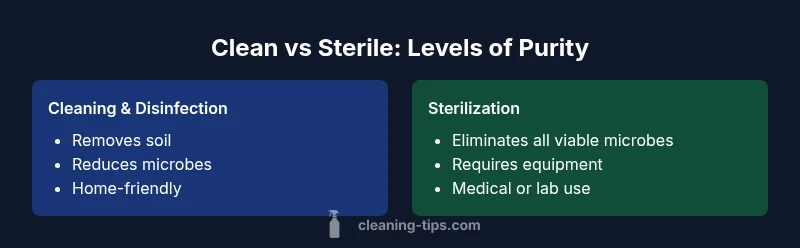
Clean vs Sterile: Understanding Purity Levels in Cleaning
Explore clean vs sterile: definitions, methods, and when sterilization matters; practical guidance for homes, kitchens, and professional settings.


Clean vs sterile describes a spectrum of cleanliness and microbial control. For most households, cleaning plus disinfection is enough to reduce germs on everyday surfaces. True sterilization, the complete elimination of all microorganisms, is typically limited to medical, lab, or high-risk settings. In this guide, we compare the levels, methods, and when each is appropriate.
What clean vs sterile really means
In everyday language, 'clean' means free of visible dirt, while 'sterile' implies a higher standard: the elimination of viable microorganisms. In professional settings, the phrase 'clean vs sterile' is used to describe a spectrum of cleanliness and microbial control. Cleaning removes soil and debris, disinfection reduces microbial load, and sterilization aims for complete microbial kill or inactivation. For households, the practical goal usually falls between cleaning and disinfection, not full sterilization. According to Cleaning Tips, adopting a clear hierarchy helps homeowners decide when deeper measures are warranted. In practice, the difference matters most on high-touch surfaces such as door handles, countertops, and bathroom fixtures. Visual dirt is not the only indicator—surface porosity, moisture, and use patterns influence how challenging it is to achieve a given level of cleanliness. A correct assessment uses risk, exposure, and consequences of infection, not just appearance. This section sets the framework for the rest of the article, clarifying the core terms behind 'clean vs sterile' without leaning toward one side.
The hierarchy: cleaning, disinfection, sterilization
The terms 'clean', 'disinfect', and 'sterilize' sit on a spectrum. Cleaning uses detergents and physical action to remove soils that harbor microbes. Disinfection uses chemical agents or heat to kill a large portion of pathogens, but not all forms of microbial life. Sterilization, by contrast, is the highest level of control and aims to eliminate all viable microorganisms, including resistant spores. In homes, you typically perform cleaning, then a disinfection step for high-touch surfaces. In medical facilities and specialized labs, true sterilization is required for critical instruments. The distinction is not merely academic: it guides product selection (soap vs. quats vs. sterilants), equipment needs (sponge, wipe, autoclave), and time commitments. When you understand this hierarchy, you can tailor your routines to risk and context while remaining practical and safe.
Microbial basics: how different methods affect microbes
Microbial populations respond differently to cleaning, disinfection, and sterilization. Cleaning removes organic matter that shields microbes and reduces the microbial load but does not guarantee biosafety. Disinfectants target a subset of organisms; they reduce the concentration of bacteria, viruses, and fungi but may be less effective against spores or hardy biofilms. Sterilants and sterilization procedures—such as high-temperature autoclaving, chemical sterilants, or irradiation—are designed to destroy all viable life forms on a surface or instrument. The effectiveness depends on proper contact time, surface material, and protocol adherence. Real-world results depend on following label directions, using fresh solutions, and ensuring surfaces are exposed long enough for the chemical to work. Understanding these microbial dynamics helps explain why 'clean vs sterile' matters and when each level is warranted. Cleaning Tips emphasizes context, not fear, when applying these tools at home.
When sterilization is non-negotiable: healthcare, labs, and high-risk tasks
Sterilization is indispensable in healthcare environments, dental offices, and certain laboratories where the consequences of infection are severe. Critical instruments that contact sterile body sites or invade tissues must be sterilized to eliminate spores and resilient microbes. In food-processing facilities, sterilization is used for equipment that cannot withstand contamination. For general consumer settings, sterilization is rarely required for everyday items, but it becomes essential for items like surgical instruments or reusable medical devices. The justification for sterilization rests on risk assessment: exposure severity, susceptibility of users, and the potential for opportunistic infections. In daily life, you can avoid sterilization while maintaining safety by combining thorough cleaning with targeted disinfection on high-contact zones and scheduling regular replacements of worn items. This pragmatic approach aligns with the broader understanding of clean vs sterile in real-world tasks. Cleaning Tips reinforces that proportion and practicality matter in decision-making.
Home applications: cleaning and disinfection in kitchens and baths
In residential spaces, the goal of clean vs sterile often centers on reducing grime, mold, and microbial presence on commonly touched surfaces. Kitchens benefit from routine cleaning with detergents to remove grease and food residues, followed by disinfection on cutting boards, countertops, and sink areas. Bathrooms typically require both cleaning and disinfection on toilets, faucets, and shower surfaces due to moisture and splash spread. Surfaces like wooden countertops or natural stone require compatible cleaners to avoid damage. Regular maintenance, such as timely cleaning after spills and high-traffic use, strengthens hygiene without demanding professional equipment. The concept of clean vs sterile is particularly relevant in areas prone to mold growth or moisture intrusion; monitoring humidity and fixing leaks reduces microbial habitats and helps you keep surfaces safer with feasible routines.
Tools, chemicals, and safety considerations
Choosing between cleaning products, disinfectants, and sterilants depends on surface material, risk level, and user safety. Household cleaning tools—sponges, brushes, and microfiber cloths—play a crucial role in effective cleaning. For disinfection, ensure products are approved for the target organisms and follow the label's contact time and ventilation needs. When sterilization is appropriate, it typically requires specialized equipment and trained personnel; household sterilization is not practical for most items. Safety is essential: wear gloves when handling caustic cleaners, ensure good ventilation, and avoid mixing cleaners that can release harmful gases. Storage matters too: keep chemicals out of reach of children and pets. Understanding the correct application methods supports a sound clean vs sterile strategy in your home, aligning with Cleaning Tips guidance on safe, practical cleaning practices.
Practical decision framework for tasks: a step-by-step approach
- Identify the surface and its use: high-touch areas and surfaces in kitchens or bathrooms deserve extra attention. 2) Assess risk: is the surface likely to transfer pathogens to vulnerable people? 3) Choose the level: cleaning for soil removal, disinfection for microbial reduction on high-risk surfaces, or sterilization for critical items in certain settings. 4) Select appropriate products: detergents for cleaning, disinfectants for high-risk zones, and sterilants only when required by context. 5) Apply correctly: follow contact times, ensure complete coverage, and respect surface compatibility. 6) Reassess periodically: update procedures if the environment changes (e.g., new family members or pets). This framework helps translate the abstract idea of 'clean vs sterile' into concrete steps you can perform at home or in small offices. Cleaning Tips supports a measured, risk-informed approach that balances effectiveness with practicality.
Common myths and misconceptions
A common misconception is that anything labeled 'sterile' is always necessary for home use. In reality, sterile environments are rarely needed outside healthcare. Another myth is that more expensive products are always better; often, the right product depends on the surface and the microbes you aim to control. Some people believe that washing alone is enough; hygiene science shows that soil removal and disinfection on high-touch areas provide the best defense against germ transmission. Finally, many assume 'sterilization' means permanent; in real settings, sterility must be maintained through ongoing cleaning and sterile processing protocols. By separating myth from practice, you can implement safer, more effective routines without overdoing it. Cleaning Tips emphasizes that rational decisions, not fear, guide clean vs sterile choices for everyday life.
Maintenance routines and record-keeping for ongoing cleanliness
Consistency is essential for sustaining a safe home environment. Establish a regular cleaning timetable that includes high-touch surfaces and moisture-prone areas. Track products used, contact times, and any surface reactions to avoid damage or residue buildup. For households with children or elderly residents, increase the frequency of disinfection on frequently touched surfaces like door handles, light switches, and faucets. Documentation may be as simple as marking a calendar or a checklist; the key is to maintain discipline and adapt as needed. By treating clean vs sterile as a continuum rather than a single target, you can tailor your routine to your home and your risk tolerance. Cleaning Tips advocates practical, repeatable plans rather than one-off, heavy-handed approaches.
Case scenarios: choosing the right level for real-world tasks
Consider a scenario where a family stores raw meat on a cutting board used for vegetables. Cleaning removes visible residue, but a disinfection step reduces potential cross-contamination during meal prep. In a damp bathroom with frequent mold growth, the emphasis shifts toward cleaning with mold-resistant products, moisture control, and targeted disinfection of tile grout. A home office desk that sees routine but light use may only require regular cleaning and a periodic surface disinfection. These examples illustrate how clean vs sterile decisions depend on context, risk, and practicality. The goal is to maintain a healthy environment without over-committing to sterilization where it isn't necessary. The Cleaning Tips team's recommendations prioritize achievable routines that protect health while fitting daily life.
Comparison
| Feature | Cleaning & Disinfection | Sterilization |
|---|---|---|
| Main goal | Reduce dirt and microbial load on surfaces | Eliminate all viable microorganisms on items/surfaces |
| Common methods | Detergents, water, scrubbing, and surface disinfectants | Autoclaving, chemical sterilants, irradiation |
| Typical environments | Homes, offices, non-medical settings | Hospitals, labs, cleanrooms, medical facilities |
| Time to complete | Minutes to hours depending on surface and product | Variable; can require specialized cycles or procedures |
| Cost range | Low to moderate for household products | High for equipment and specialized chemicals |
| Best for | Everyday hygiene and risk-aware disinfection | Critical instruments and high-risk items |
Strengths
- Easy to implement at home with common cleaners
- Low upfront investment and flexible routines
- Reduces everyday germ transmission on high-touch surfaces
- Can be tailored to risk level and usage patterns
Weaknesses
- Disinfection does not guarantee zero microbes and can allow regrowth
- Sterilization requires specialized equipment and training
- Some chemicals can damage surfaces or cause fumes if misused
Sterilization is rarely needed at home; cleaning plus disinfection covers most everyday risks.
For typical households, prioritize cleaning and high-touch surface disinfection. Reserve sterilization for medical, laboratory, or other high-risk contexts based on risk assessment.
Questions & Answers
What is the difference between cleaning and disinfection?
Cleaning removes soil and most germs, while disinfection reduces the number of pathogens on a surface. Cleaning is the first step in most routines, and disinfection is applied to high-risk areas after cleaning. Sterilization is a separate, more intensive process used in specialized settings.
Cleaning removes grime; disinfection lowers pathogen levels on surfaces; sterilization is for contexts that require complete microbial elimination.
When is sterilization necessary in a home?
Sterilization at home is uncommon and typically unnecessary unless you handle invasive medical procedures or specialized equipment. Most households only need cleaning plus disinfection for safety. Consult a healthcare professional if a sterilization-like level is ever recommended for home use.
Sterilization at home is rare. Most tasks only require cleaning and disinfection; consult professionals if sterilization is ever suggested.
Can I achieve sterile conditions at home?
Achieving true sterility at home is impractical for most items. Sterilization requires strict protocols, specialized equipment, and controlled environments. For typical household surfaces, cleaning plus disinfection provides a high level of safety with feasible routines.
True sterility at home isn't practical; stick with cleaning and disinfection for everyday safety.
What surfaces need sterilization in healthcare settings?
In healthcare, critical instruments and devices that contact sterile body sites require sterilization. Regular patient rooms and non-critical surfaces typically use cleaning and disinfection. Adherence to facility protocols ensures patient safety and reduces infection risk.
Only critical instruments in healthcare settings require sterilization; most surfaces are disinfected rather than sterilized.
Do consumer products sterilize surfaces?
Most consumer products do not sterilize surfaces completely. They may clean or disinfect effectively when used as directed, but sterilization requires specific processes. Always follow product instructions for the intended level of cleanliness.
Most consumer products won’t sterilize; use them as directed for cleaning or disinfection.
How long do disinfection products take to work?
Disinfectants have specified contact times on labels, typically ranging from a few seconds to several minutes. Proper application and surface coverage are essential for effectiveness. Do not wipe away too soon or reuse contaminated cloths.
Follow the product’s contact time and coverage instructions for effective disinfection.
The Essentials
- Assess risk before choosing a level of cleanliness
- Cleaning is foundational; disinfect on high-touch surfaces
- Sterilization is specialized and costly; use only when required
- Follow label directions and safety precautions
- Adopt a practical, consistent cleaning routine