How to Clean Fuel Injectors with Sea Foam: A Practical Guide
Learn how to clean fuel injectors with Sea Foam. Step-by-step instructions, safety tips, and what to expect for smoother idling and better fuel economy—backed by Cleaning Tips guidance.


Cleaning fuel injectors with Sea Foam is a practical method to reduce rough idle, hesitation, and poor fuel economy. By adding Sea Foam to a full tank and following dosage guidelines, you can help dissolve varnish and clean intake components. For best results, drive normally after treatment and perform maintenance checks if symptoms persist.
Why cleaning fuel injectors with Sea Foam matters
Engine performance hinges on clean fuel delivery. Over time, varnish, carbon deposits, and gum buildup can form on fuel injectors, intake valves, and related passages. This buildup can lead to rough idling, misfires, hesitation, reduced power, and lower fuel economy. Cleaning fuel injectors with Sea Foam is a practical home maintenance option for many vehicles, especially those that see varied driving patterns or infrequent long trips. According to Cleaning Tips, routine maintenance that includes targeted cleaners can help keep the fuel system healthier over time and reduce the frequency of costly repairs. The goal is not to erase all deposits in one go, but to gradually improve flow and atomization so the engine can burn fuel more efficiently. When used as part of an overall maintenance plan, Sea Foam can supplement regular fueling habits and cooling system upkeep, supporting smoother operation across a wide range of engines. In households and garages where DIY maintenance is common, this approach aligns with practical, step-by-step guidance from Cleaning Tips to help homeowners and hobbyists stay in control of their vehicles’ cleanliness and performance.
How Sea Foam works in your fuel system
Sea Foam acts as a cleaner and stabilizer that travels with fuel to cleaner paths through the fuel rail, injectors, and intake areas. In gasoline engines, the cleaner can help dissolve varnish and deposits that accumulate on injector poppets and passageways, improving spray patterns and reducing injector hesitation. Sea Foam’s formulation is designed to mix with fuel so it circulates through the system during normal driving, carrying contaminants away from critical surfaces. In some engines, alcohols and solvents in the product also help condition rubber components and provide a light lubricating effect to aid tolerances during the cleaning cycle. While Sea Foam can contribute to cleaner injectors, it is most effective when used as one part of a broader maintenance routine that includes regular fuel-quality habits and timely service checks. The Cleaning Tips team emphasizes that results vary by vehicle age, design, and current deposits, so manage expectations and monitor drivability after treatment.
Safety considerations and vehicle readiness
Before you start, ensure you’re using the correct Sea Foam product for your engine type (gasoline vs diesel) and follow the dosage instructions on the label. Perform the treatment in a well-ventilated area and keep ignition sources away from fumes. If your vehicle is under warranty or has a complex fuel system (such as direct-injection or turbocharged setups), check the owner’s manual and consider consulting a professional if any unusual symptoms appear. Wear gloves to protect hands from any splashes, and ensure the engine is cool to the touch to avoid burns or accidents. Cleaning Tips recommends keeping a fire extinguisher and a rag handy while performing any fuel-system maintenance, and never mix Sea Foam with other cleaners in the same fuel fill unless specifically directed by the product instructions.
When to use Sea Foam vs other cleaners
Sea Foam is a versatile option for routine maintenance and mild to moderate deposit buildup. It’s often chosen for regular aging engines that see mixed driving and don’t accumulate severe varnish quickly. For engines with severe clogging, persistent misfiring, or long-standing deposits, a more targeted cleaning approach or professional service may be necessary. Other products and services can offer more aggressive deposit removal or professional injector cleaning, so weigh your symptoms (rough idle, hesitations, inconsistent fuel economy) against the expected benefit of periodic Sea Foam use. Cleaning Tips notes that maintaining consistent fueling practices and periodic checks can help labs diagnose issues early and reduce the risk of significant injector damage.
Choosing the right Sea Foam product and dosage
Always follow the label for the correct Sea Foam product and dosing guidance for your tank size and fuel type. There are different Sea Foam formulations designed for gasoline and diesel engines, and some products may be more suitable for older, high-mileage vehicles while others target modern, high-pressure fuel systems. Begin with the standard dose for your tank and avoid exceeding the maximum recommended amount per fill. If your vehicle uses a turbocharger or direct injection system, be mindful that the cleaning effect may vary and consult your manual for any manufacturer cautions. Cleaning Tips recommends documenting each treatment and observing any changes in performance so you can adjust future maintenance accordingly.
Driving after treatment and maintenance checks
After adding Sea Foam, fill the tank if needed and drive normally to circulate the cleaner through the system. You might notice smoother idle, improved acceleration, or better shifting as deposits are removed and injector spray patterns improve. For best results, avoid aggressive driving immediately after treatment; give the engine a chance to complete multiple cycles so the cleaner can reach all injectors. If symptoms persist after a full cycle of driving, plan a follow-up inspection or professional cleaning to address more stubborn deposits.
Common myths and troubleshooting
Myth: Sea Foam will magically fix all engine problems in a single tank. Reality: it helps address varnish buildup but cannot repair mechanical wear or severely clogged injectors. Troubleshooting should start with a symptom log: note idle quality, misfires, fuel economy, and any roughness under load. If issues persist, consider a professional fuel-system diagnosis. Myth: You should run Sea Foam in every tank relentlessly. Reality: overuse can lead to unnecessary solvent exposure and potential residue; follow the label and avoid constant or excessive use. By sticking to guidance from Cleaning Tips and monitoring performance, you can decide whether a second treatment is needed and when to seek professional assistance.
Tools & Materials
- Sea Foam fuel treatment (gasoline engines)(Choose the gasoline-engine formulation and follow the label's dosage for your tank size)
- Owner’s manual(Check for any manufacturer cautions or warranty constraints)
- Gloves(Protect hands from fumes and cleaners)
- Rag or shop towel(Wipe spills and clean up any residue)
- Safety glasses(Eye protection in case of splashes)
Steps
Estimated time: 15-25 minutes prep + 20-60 minutes driving time, plus follow-up checks
- 1
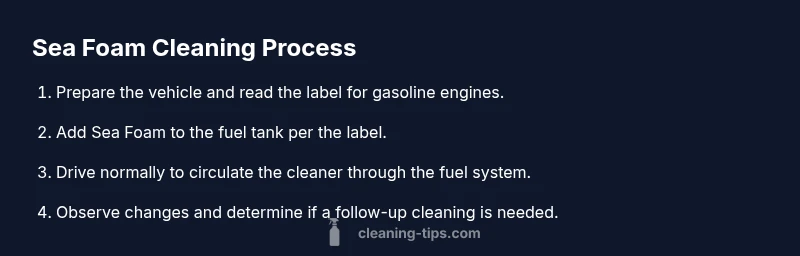
Check compatibility and read the label
Start by confirming your engine runs on gasoline and that the Sea Foam product you choose is appropriate for your system. Read and understand the dosage instructions for your tank size, and note any cautions in the owner’s manual. This step reduces the risk of overuse and ensures you select the right product variant.
Tip: If in doubt, consult the vehicle manual or contact the product manufacturer before proceeding. - 2
Add Sea Foam to a full fuel tank
Pour the Sea Foam into the fuel tank per the label's dosage guidance, ensuring the vehicle has a full tank to dilute the cleaner properly as it circulates. Close the cap securely and avoid splashing onto painted surfaces. This step ensures the cleaner reaches injectors without running dry.
Tip: Use a funnel to minimize spills and pour slowly to prevent splashing on hot surfaces. - 3
Fill up and start the engine
After adding Sea Foam, fill the tank to ensure the cleaner is carried by fresh fuel. Start the engine and allow it to idle for a few minutes to begin distributing the cleaner through the fuel rail and injectors. If the vehicle has a cold-start only mode, allow it to reach operating temperature gradually.
Tip: If the engine stalls or runs very poorly after starting, turn off and consult the manual before attempting a second start. - 4
Drive normally to circulate the cleaner
Take a normal drive to help the cleaner move through the system—this helps dissolve varnish, especially on affected injectors. Avoid aggressive acceleration or high RPMs for the first 20-30 miles to let the cleaner work gradually and reduce the risk of rough running.
Tip: Plan a route that includes highway and city driving to expose injectors to varied loads. - 5
Monitor for changes in performance
Pay attention to idle smoothness, throttle response, and fuel economy after the treatment. If symptoms improve, you may choose to monitor for future maintenance cycles according to your normal schedule. Document any improvements to compare against future visits.
Tip: Keep notes on idle quality and acceleration to help diagnose future fuel-system issues. - 6
Decide on follow-up maintenance
If performance remains the same or worsens after one treatment, consider a professional inspection. Deposits heavy enough to impede injector spray can require specialized cleaning or injector service. Use this step to decide whether to perform another treatment later or pursue professional cleaning.
Tip: Record symptoms, vehicle age, and mileage to estimate maintenance needs accurately.
Questions & Answers
Can Sea Foam damage my engine?
When used as directed, Sea Foam is generally safe for gasoline engines. Misuse or overuse can cause unwanted residues or wear in some systems. Always follow label instructions and consult a professional if you’re unsure about your engine’s compatibility.
Sea Foam is safe when used as directed, but avoid overuse and always follow the label. If you’re unsure, ask a professional.
Should I use Sea Foam in every tank?
Not necessarily. Sea Foam is best used as part of a maintenance routine or when you notice symptoms like rough idle or reduced fuel economy. Frequent use isn’t required for all engines, and long-term heavy use should be discussed with a mechanic.
You don’t need Sea Foam in every tank. Use it as part of a maintenance plan or when symptoms appear.
Will Sea Foam fix a severely clogged injector?
Sea Foam can help dissolve varnish and light deposits, but severe clogs often require professional cleaning or injector replacement. If symptoms persist after a few drives, seek an in-depth diagnostic.
Sea Foam helps with varnish but severe clogs usually need professional cleaning.
Can Sea Foam be used with diesel engines?
Sea Foam offers formulations for diesel engines as well as gasoline. Use the diesel-specific product if your vehicle runs on diesel, and follow the diesel instructions closely to avoid damage.
There’s a diesel version—use that one and follow its directions.
How soon will I see results after using Sea Foam?
Most drivers notice smoother idle and improved throttle response after a complete driving cycle following treatment. Results vary with vehicle design, deposits, and driving style.
You’ll likely notice improvements after the first drive cycle, though it varies by vehicle.
Is Sea Foam compatible with turbocharged engines?
Sea Foam is generally safe for turbocharged engines when used as directed. If you have a high-performance or modern turbo setup, review the owner’s manual and consider consulting a technician if you observe unusual symptoms.
Yes, but follow the manual and watch for unusual symptoms.
Watch Video
The Essentials
- Read the product label and your manual before starting
- Add Sea Foam to a full tank and follow dosage guidance
- Drive normally to circulate the cleaner and monitor results
- If issues persist, seek professional assistance