How to Clean Viruses Free at Home: A Practical Guide
Practical, step-by-step guidance to reduce viruses on household surfaces through cleaning, disinfection, and safe ventilation. Learn what works, how to implement a daily routine, and how to avoid common mistakes for a healthier home.


This guide shows how to clean viruses free from everyday surfaces by combining cleaning and disinfection with good airflow and hygiene. Learn practical steps, required supplies, and how to avoid common mistakes. While no method guarantees a 100% virus-free environment, consistent cleaning and proper disinfection dramatically reduce risk in homes.
Why Clean Viruses Free Matters
According to Cleaning Tips, reducing the presence of viruses on household surfaces starts with a deliberate, repeatable routine. The goal of cleaning viruses free is not a guarantee of absolute sterility, but a practical objective: to lower viral load and minimize transmission opportunities in daily life. A well-structured approach combines surface cleaning, disinfection, and attention to ventilation and hand hygiene. When homes are consistently kept clean and well-ventilated, occupants experience fewer opportunities for viruses to spread through touch, droplets, or contaminated residues. The Cleaning Tips team found that routine practices are more effective than sporadic deep cleanings, especially on high-touch surfaces like door handles, countertops, and electronics.
Key takeaway: sustained, deliberate cleaning and disinfection routines are the most reliable way to reduce viruses free from common surfaces. By adopting these practices, homeowners and renters can create safer living spaces without needing professional interventions every week.
tip to add context on phrasing and tone
Tools & Materials
- Protective gloves(Nitrile, size M or L; use a fresh pair for each room)
- EPA-registered disinfectant(Select a product approved for general sanitization; follow label for contact time and surfaces)
- All-purpose cleaner or soap and water(Used for initial cleaning to remove soils before disinfection)
- Microfiber cloths(Multiple cloths; use a clean one per surface to avoid cross-contamination)
- Spray bottle(For even application of cleaner and disinfectant; label-dilution may apply)
- Bucket (optional)(Use for rinsing cloths if needed)
- Ventilation aid(Open windows or use a fan to improve air exchange during and after cleaning)
- Face mask(Optional for better comfort when using strong cleaners or in poorly ventilated spaces)
Steps
Estimated time: 45-60 minutes
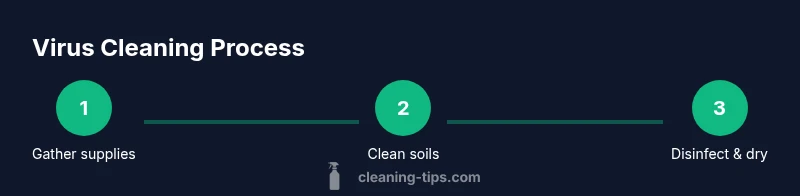
- 1
Gather supplies
Before you begin, collect all required tools and products so you won’t interrupt the process. This helps keep the routine steady and ensures you apply each product correctly. Confirm you have EPA-listed disinfectant and fresh microfiber cloths on hand.
Tip: Having everything organized minimizes risk of recontamination from juggling materials. - 2
Prepare the room and PPE
Put on gloves and, if desired, a mask. Ventilate the space by opening a window or turning on a fan. Remove or cover items that cannot be cleaned easily to protect them from exposure to cleaners.
Tip: Ventilation improves air quality and reduces inhalation exposure to fumes. - 3
Clear visible soils from surfaces
Wipe surfaces with a soap-and-water solution or all-purpose cleaner to remove dirt and grime. Soil can hinder disinfectant contact and reduce its effectiveness.
Tip: Dirty surfaces often need extra wipe-downs before disinfection for best results. - 4
Apply disinfectant to high-touch surfaces
Apply the EPA-listed product to high-touch surfaces such as doorknobs, light switches, countertops, and mobile devices. Do not mix cleaners unless the label permits it.
Tip: Keep surfaces visibly wet for the required contact time as stated on the product label. - 5
Allow contact time and avoid recontamination
Let the product remain on the surface for the recommended contact time. Do not wipe dry immediately unless the label instructs you to do so. Afterward, allow surfaces to air-dry or gently dry with a clean cloth.
Tip: Contact time is critical for effectiveness; rushing can leave viruses on the surface. - 6
Ventilate and dry surfaces
Continue to ventilate the room during and after disinfection to help remove any lingering fumes and to promote faster drying. Ensure surfaces are dry before use.
Tip: Fresh air helps reduce chemical odors and maintains a safer environment. - 7
Clean and sanitize reusable tools
Rinse cloths and reusable tools with clean water after disinfecting surfaces, or launder cloths according to label instructions. Dry completely before reuse.
Tip: Avoid cross-contamination by separating used cloths from fresh ones. - 8
Review and maintain routine
Set a simple schedule for daily cleaning and weekly deeper disinfecting, with emphasis on high-touch areas. Keep a running list of rooms to revisit and adjust as needed.
Tip: Consistency beats intensity; short, frequent sessions beat long but sporadic cleans.
Questions & Answers
Can I guarantee a virus-free home?
No cleaning method can guarantee a completely virus-free home, but consistent cleaning and disinfection significantly reduce viral presence and transmission risk when done correctly.
No method guarantees a virus-free home, but regular cleaning and disinfection greatly reduce viral risk.
What surfaces should I disinfect daily?
Prioritize high-touch surfaces like door handles, light switches, countertops, and phones. These are most likely to spread pathogens between people.
Focus on high-touch surfaces to reduce viral spread.
How long should disinfectants stay on surfaces?
Always follow the product label for the required contact time, which varies by product and surface type.
Check the label for contact time; it varies by product.
Are natural cleaners enough to disinfect?
Natural cleaners alone are usually not registered sanitizers. Use EPA-approved disinfectants for effective viral reduction and then consider routine cleaning for soils.
Natural cleaners aren’t generally enough for disinfection; use EPA-listed products.
Is it safe to disinfect when kids are around?
Yes, with proper precautions. Keep products out of reach and choose gentler options for spaces used by children, ensuring good ventilation during and after use.
Take precautions and ventilate; keep kids away from chemicals.
Do I need PPE?
Wearing gloves is usually sufficient for routine cleaning and disinfection. Use a mask or eye protection if you are sensitive to fumes or cleaning strong products.
Gloves are typically enough; use more PPE if you’re cleaning with strong fumes.
Watch Video
The Essentials
- Master a two-step routine: clean, then disinfect.
- Target high-touch surfaces first for quick wins.
- Ventilate during and after cleaning to improve air quality.
- Always follow label directions and use EPA-registered products.