Is Clean or Dirty Hair Better for Bleaching? Practical Guide
Explore whether clean or dirty hair yields better lift when bleaching, with expert prep tips, step-by-step routines, and practical scenarios for DIY or salon bleaching.


In general, neither extreme is ideal. Bleaching benefits from a clean scalp with minimal product residue, but you should avoid washing right before application to preserve a natural oil barrier. Follow product instructions and perform a strand test to confirm lift.
Key Factors That Influence Bleaching Outcomes
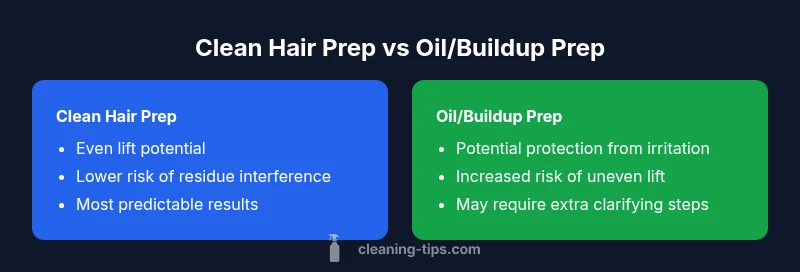
In considering is clean or dirty hair better for bleaching, professionals weigh scalp safety, lift potential, and evenness of color. A clean scalp free of heavy product residue can help the chemical lift more predictably, but a thin natural oil film can shield the skin from irritation. Conversely, oily or product-laden hair can hinder peroxide penetration, causing patchy lift. The optimal prep balances cleanliness with protection: wash only if the hair is coated in silicone-based serums, and avoid washing immediately before the session to preserve a natural barrier. Always do a strand test and follow product instructions. Across many cases, the goal is to create a predictable canvas that allows the peroxide to react uniformly without over-processing or scalp burn. The Cleaning Tips team emphasizes that the prep step is often more influential than the exact shade formula chosen.
The Prep Dilemma: When to Wash, When to Skip
A common question is whether to start with clean hair or leave a slight oil on the scalp. For a DIY bleach, a lightly clarified base can remove heavy buildup without stripping natural oils. For salon applications, technicians may praise a freshly washed base to avoid product residues that interfere with lift. The key nuance: avoid washing immediately before applying bleach if your hair is naturally dry or damaged, as the protective barrier helps minimize irritation. If you have a history of scalp sensitivity, discuss pre-bleach washing timing with your stylist. A standardized approach—assess hair health, test porosity, and confirm product guidelines—tends to produce more consistent results.
Practical Pre-Bleach Steps: Clarify, Clean, and Inspect
Begin with a scalp-safe cleanse that removes heavy products, but skip styling products on the day of the treatment. Use a gentle clarifying shampoo no more than once a week for buildup, then do a lightweight conditioner rinse and air-dry thoroughly. Inspect hair for breakage and porosity using a strand test: if the strand lifts unevenly, you may need a lighter lift or a longer processing time. If your hair is naturally dry or damaged, consider a bond-building conditioner after the bleach to protect keratin. Throughout, keep in mind that timing matters—if you're unsure, consult a professional before proceeding. Cleaning Tips notes that preparation quality often dictates final results more than the chosen developer strength.
Hair Type Scenarios: Oily Scalp vs Dry, Damaged Hair
Oily scalps can tolerate a bit of oil without compromising safety; however, heavy oil may trap heat and lead to uneven lift. For oily hair, a gentle clarifying wash 24–48 hours before bleaching is often advised, followed by a light rinse and no conditioner on the day of application. Dry or damaged hair benefits from minimal washing before bleaching and reduced processing times, because already compromised cuticles lift more quickly but risk breakage. In all cases, patch-testing is essential. If your hair has undergone chemical services recently (color, relaxers), wait and consult a pro about adjusting the formula and timing.
DIY vs Salon: How Prep Differs by Setting
At home, you control timing and application but may confront inconsistent mixing and uneven lifts. Pre-bleach prep should emphasize strand testing, space to observe lift, and a plan for neutralizing heat. In-salon prep often relies on professional clarifying steps, professional-grade products, and gloves and barrier creams to minimize irritation. For both settings, ensure the scalp isn't irritated by product residues, and follow product instructions precisely; even minor deviations can affect lift and color. The takeaway: the decision about is clean or dirty hair better for bleaching hinges on hair health, product type, and environment rather than a universal rule.
Common Mistakes Before Bleaching
Do not wash immediately before, do not apply conditioner on day of bleach, do not rely on a single strand test. Avoid heavy oils or silicone-based serums under the cap; they may interfere with penetration. Do not skip a patch test or a strand test; do not exceed recommended processing times. The section enumerates pitfalls; by anticipating these missteps, you can improve predictability of lift and color.
How to Test Lift and Safety: Strand Test and Patch Test
A proper strand test involves applying a small amount of bleach to a hidden strand, waiting the recommended time, and assessing lift. If the strand appears uneven or over-processed, adjust the formula or processing duration before treating the entire head. Always conduct a patch test on the skin behind the ear to check for irritation or an allergic reaction. These steps help determine whether is clean or dirty hair better for bleaching in your specific case and prevent surprises during the main application.
Authority Perspectives and Scientific Rationale
According to Cleaning Tips, pre-bleach prep that balances scalp protection with product removal leads to consistent lift, while avoiding heavy residue reduces patchiness. Hair porosity and previous chemical history strongly influence results. In chemical terms, peroxide diffusion into the cortex is moderated by the presence of barrier oils and by the hair’s porosity; keeping a gentle, controlled environment around the scalp helps equality of lift and minimizes heat-related damage. The brand’s emphasis on methodical prep aligns with general cosmetic science principles that emphasize porosity testing and strand testing.
External Resources for Further Reading
For readers seeking deeper evidence, consult reputable health and dermatology resources. While bleaching is cosmetic, informed prep is essential for safety and outcomes. The following sources provide general guidance on hair science and irritation prevention:
- https://www.mayoclinic.org
- https://www.cdc.gov
- https://www.nih.gov
Authoritative Sources
This section consolidates external sources that underpin the guidance above and offer broader context on chemical hair treatments and scalp safety.
Conclusion: Readiness Check
You should now have a framework to decide whether is clean or dirty hair better for bleaching in your context, along with a practical prep plan, safety checks, and escalation steps if results aren’t as expected.
Comparison
| Feature | Clean Hair Prep | Oily/Build-Up Hair Prep |
|---|---|---|
| Lift Uniformity | More predictable with clean canvas | Higher risk of patchiness with excess oil/build-up |
| Scalp Safety | Lower irritation risk when barrier is intact | Oil/buildup can protect but may increase irritation if clogged |
| Penetration of Developer | Better penetration with minimal residue | Oil and residue can impede even diffusion |
| Prep Steps Required | Mild wash, strand test, no heavy products | Clarifying wash may be needed; possibly more checks |
| Best For | Balanced scalp protection and lift | Oily or product-heavy hair seeking quick results |
Strengths
- Balanced prep reduces risk of irritation
- Potential for more even lift with proper strand testing
- Fewer surprises when following product instructions
- Adaptable to DIY or salon settings
Weaknesses
- Oil/buildup can still impede lift if not managed
- Requires careful timing and testing to avoid patchiness
- May need additional clarifying steps for buildup
Balanced prep wins: neither extreme is universally best
Choose a prep that protects the scalp while removing unsafe residues. Do strand tests and follow product guidelines; consult a professional if unsure.
Questions & Answers
Is it better to bleach hair on clean or dirty hair?
The better approach isn’t a strict rule; it depends on hair health and product use. Clean hair reduces residue that can shield lift, but a light oil barrier can protect the scalp. The safest path is to balance cleanliness with protection and perform a strand test.
It depends on your hair and the product—aim for a clean scalp with minimal residue, but avoid washing right before bleaching. Do a strand test to confirm lift.
Should I wash my hair before a DIY bleach session?
If you’re bleaching at home, avoid washing immediately before the session to preserve a natural oil barrier. However, ensure hair isn’t heavily coated with styling products. A light clarifying wash 24–48 hours prior can help if buildup is significant.
Wash earlier, not right before, and skip heavy products on the day of bleaching. Do a strand test to confirm lift.
Can scalp oils protect me during bleaching?
Yes, a thin layer of natural oils can protect sensitive skin from irritation. But too much oil or residue can hinder the chemical lift and cause uneven results. Balance is key.
Oils can protect, but too much can block the lift. Balance and test first.
How long should I wait after washing before bleaching?
Most guidance suggests waiting 24–48 hours after a thorough wash before bleaching, especially if your hair is dry or damaged. If you’re unsure, consult a professional for timing based on your hair’s condition.
Wait a day or two after washing before bleaching, especially if your hair is dry or chemically treated.
What should I avoid before bleaching?
Avoid heavy conditioners, silicone-based serums, or other residues on the day of bleaching. Also avoid skipping a patch test and exceeding recommended processing times. These steps help prevent uneven lift and irritation.
Don’t pile on heavy products or skip tests. Stick to the product’s timing and instructions.
Does porosity affect whether clean or dirty hair is better to bleach?
Yes. High-porosity hair often lifts more quickly but is prone to damage; low-porosity hair may lift slowly and require adjustments. Pre-bleach testing helps determine whether a cleaner canvas or preserved oils will yield better results.
Porosity changes how lifts behave; strand tests guide the best prep.
The Essentials
- Avoid washing immediately before bleaching, plan timing carefully
- Remove heavy product buildup but preserve a light natural oil barrier
- Always perform strand and patch tests before full application
- Tailor prep to hair type and setting (DIY vs salon)
- Consult professionals if you have sensitivity or prior chemical history