What is Needed for a Cleaning Company: A Practical Startup Guide
Discover the essentials to launch a cleaning company, including licensing, insurance, equipment, staffing, pricing, and operations. A practical, step-by-step guide for homeowners and aspiring cleaners.


To launch a cleaning company, you need a clear plan and the basics: licensing and insurance, a solid business structure, essential equipment, trained staff, pricing systems, and reliable operations. This quick guide outlines what is needed for a cleaning company and the key steps to start confidently. By following the steps, you’ll align legal, safety, and service standards from day one.
What is Needed for a Cleaning Company: An Overview
Launching a professional cleaning business starts with a clear view of what is required to operate legally, safely, and profitably. The phrase 'what is needed for a cleaning company' isn't just about gear—it's about structure, compliance, people, and processes. According to Cleaning Tips, the most reliable startups begin with a well-defined service scope, a feasible business model, and a plan to scale. You'll need to understand local licensing, insurance requirements, and how to manage risk and compliance across client sites. Establishing a lean baseline for equipment, supplies, and uniforms helps you stay consistent, cost-conscious, and safe. In this guide, we’ll break down each category with practical, actionable steps, real-world examples, and safety considerations. The aim is to help homeowners and renters turn a good idea into a dependable cleaning service with repeat clients and steady cash flow.
Legal Structure, Licensing, and Registration
Choosing the right legal structure affects taxes, liability, and growth. Most new cleaning companies start as a sole proprietorship or Limited Liability Company (LLC) to balance simplicity and protection. You will typically need to register your business name with your local authority and obtain a basic business license. Depending on your city or state, additional registrations or permits may apply for commercial cleaning, hazardous materials handling, or vehicle operation. The key is to verify requirements with local government portals early to avoid surprises later. Clear paperwork and formal registrations also simplify bank accounts, hiring, and insurance enrollment. Cleaning Tips emphasizes building a compliant foundation from day one to prevent expensive corrections later.
Insurance and Risk Management
Basic liability coverage is non-negotiable for a cleaning company. General liability insurance protects against property damage and third‑party injuries, while workers’ compensation is essential if you hire employees. Some clients may require proof of insurance before agreeing to service, especially for commercial contracts. Consider adding an employer’s liability endorsement and a cyber liability policy if you handle client data or online payments. Work with an experienced insurance broker to tailor limits to your service scope, client base, and risk exposure. Proper insurance not only protects you but also boosts client confidence and professional credibility. Cleaning Tips Team notes that solid coverage is a foundational trust signal for customers and lenders alike.
Equipment, Supplies, and Service Kits
Your toolkit determines both the quality of work and your operating margins. Begin with a core kit: high‑quality vacuum, microfiber cloths, mops, buckets, scrub brushes, squeegees, and a dependable backpack or cart for mobility. Stock EPA‑registered cleaning solutions with clear labels and SDS sheets for safety. Organize supplies by job type (residential, commercial, move‑in/move‑out) to speed up crews and reduce cross‑contamination. Plan for replenishment cycles, inventory tracking, and environmentally responsible options where possible. A clean, organized kit also reflects well on your brand and helps with on‑time arrivals.
Staffing, Training, and Safety Programs
Hiring reliable staff is as important as your cleaning method. Define roles clearly (supervisor, crew, dispatcher) and implement a basic background check policy. Training should cover cleaning techniques, product use, time management, and safety procedures, including slip hazards, chemical mixing, and PPE usage. A formal safety program reduces accidents and insurance claims while improving client satisfaction. Consider short, hands‑on training sessions and a simple checklist to standardize routines. Ongoing coaching keeps service quality consistent as you scale. The focus is on dependable teams who perform consistently and represent your brand with professionalism.
Pricing, Service Packages, and Proposals
Pricing should reflect service scope, regional market rates, and operating costs. Start with a simple rate card for core services (standard home cleaning, deep cleaning, move-out cleaning) and create tiered packages that add value (upsells like oven cleaning or fridge interiors). Develop transparent proposals that include scope, frequency, expected outcomes, and cancellation terms. Consider a basic calculator for quotes to speed up sales while maintaining margins. Track key metrics such as labor cost per job, travel time, and supply usage to refine pricing over time. A thoughtful pricing strategy helps you win bids and sustain profitability. Cleaning Tips Analysis suggests keeping pricing aligned with service quality and client expectations.
Marketing, Client Acquisition, and Contracts
A strong marketing plan targets homeowners, property managers, and small offices in your service area. Start with a professional website, local SEO, and a handful of introductory offers. Build a simple CRM to manage leads, bookings, and follow-ups. Use service agreements to formalize expectations and reduce disputes; include cancellation windows and payment terms. Networking with real estate agents, property managers, and local business groups can yield steady referrals. Maintain a portfolio of before/after photos and client testimonials. Consistent communication and reliable scheduling build trust and encourage repeat business. In practice, many startups find that a steady pipeline of small, recurring clients outperforms sporadic larger jobs.
Compliance, Safety Data Sheets, and Chemical Handling
Regulatory compliance includes properly storing chemicals, maintaining SDS sheets, and adhering to local chemical safety requirements. Use clearly labeled bottles, segregated storage, and lockable cabinets when appropriate. Train staff to follow dilution ratios and to wear appropriate PPE for each product. Document safety procedures and incident reporting processes; this reduces risk and demonstrates professionalism to clients. Regular audits—both on-site and in the office—help ensure ongoing compliance as you grow. This section emphasizes staying current with safety standards and industry best practices to protect both employees and clients.
Operational Routines: Scheduling, Quality Control, and Growth
A reliable operations spine is essential as you scale. Implement a simple scheduling system that balances workload, travel time, and crew capacity. Establish quality control checklists for post-cleaning inspections and client feedback loops. Define escalation paths for issues and a process for service recovery when a client isn’t satisfied. Track customer satisfaction metrics and respond promptly to concerns. Growth comes from refining processes, standardizing service, and consistently delivering value. The days of ad-hoc cleaning jobs are behind you when you adopt repeatable workflows and clear accountability. The Cleaning Tips team emphasizes reviewing processes quarterly to stay ahead of client expectations and regulatory changes.
Tools & Materials
- Business registration and licenses(Register your business name and obtain local permits per city/county rules.)
- General liability insurance(Covers property damage and bodily injury; request quotes from reputable brokers.)
- Workers’ compensation insurance(Required if you hire employees; verify state requirements.)
- Employer identification number (EIN)(Needed for tax reporting and payroll processing.)
- Cleaning equipment kit(Vacuum, mops, buckets, squeegees, microfiber cloths, brushes.)
- Cleaning supplies and chemicals(EPA-registered cleaners; include SDS sheets.)
- Uniforms and safety gear(Visible branding; include gloves, masks, and aprons as needed.)
- Billing and accounting software(Invoicing, time tracking, client management, and receipts.)
- Vehicle(s) or transportation(Optional but helpful for multiple service sites or rapid response.)
- Service agreements and contracts(Clear terms, scope, pricing, and cancellation policy.)
- Health and safety training materials(On-boarding checklists, safety manuals, and PPE guidelines.)
Steps
Estimated time: 4-6 weeks
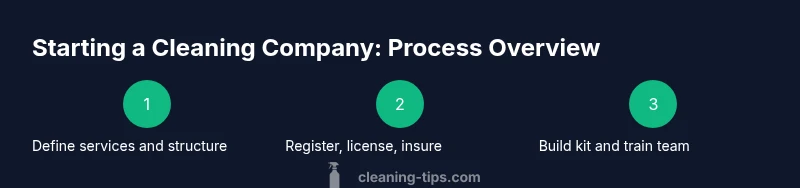
- 1
Define service scope and structure
Outline core services (residential, commercial, move-in/move-out) and decide on a legal structure (sole proprietor vs LLC). This helps with pricing, contracts, and client expectations.
Tip: Document service boundaries to prevent scope creep and keep pricing consistent. - 2
Register the business and obtain licenses
File the business with your local/state authorities, choose a business name, and obtain any required licenses for cleaning operations.
Tip: Check city portals for specific cleaning licenses or special permits. - 3
Secure insurance and safety compliance
Acquire general liability and workers’ comp as applicable. Ensure coverage meets client requirements and state regulations.
Tip: Ask your broker to tailor limits to typical client contracts. - 4
Assemble your cleaning kit and supplies
Put together the core equipment and cleaning solutions, organized for quick access and safety.
Tip: Label all bottles and maintain SDS sheets for every product. - 5
Hire and train staff with safety in mind
Recruit reliably, run a basic background check, and implement a safety-first training program.
Tip: Use a simple on-boarding checklist and hands-on practice sessions. - 6
Set pricing and create service packages
Develop a transparent rate card and tiered packages with clear inclusions and add-ons.
Tip: Track labor and supplies to preserve margins as you scale. - 7
Launch pilot tests and refine
Start with a few trusted clients to test processes, measure outcomes, and gather feedback.
Tip: Use client feedback to tighten checklists and standard operating procedures.
Questions & Answers
What licenses do I need to start a cleaning company?
Licensing varies by city and state. In general, register your business, obtain any local permits, and ensure compliance with health and safety regulations. Check with your local government or small business office for specifics.
Licensing varies by location; register the business and verify local permits with your city or state office.
Is insurance mandatory for cleaning businesses?
General liability insurance is essential to protect against property damage and injuries. If you hire employees, workers’ compensation is typically required. Some commercial clients may mandate proof of insurance.
Yes, you’ll need liability insurance, and workers’ comp if you have employees.
What equipment is essential for a cleaning company?
A core kit includes a vacuum, mops, buckets, microfiber cloths, squeegees, brushes, and reliable cleaning solutions. Organize supplies by job type to save time and reduce cross‑contamination.
Essential gear includes a vacuum, mops, cloths, and basic cleaners.
How should I price cleaning services?
Start with a simple rate card for core services and offer tiered packages. Include factors like labor, supplies, travel, and time to service. Regularly review margins and adjust as costs change.
Price using simple service packages and track costs to stay profitable.
How do I recruit and train staff safely?
Define roles, run background checks, and implement a basic safety program. Use hands-on training, safety briefings, and ongoing coaching to maintain quality and reduce accidents.
Hire careful, train well, and prioritize safety.
How long does it take to launch a cleaning company?
A typical setup takes several weeks to register the business, secure insurance, purchase equipment, and train staff. Realistically, you can be service-ready within 1–3 months depending on licenses and hiring.
Expect a few weeks to a few months to be fully ready.
Watch Video
The Essentials
- Define a clear service scope and structure.
- Secure essential licenses and insurance before serving clients.
- Build a practical, organized equipment kit.
- Establish transparent pricing and reliable operations.
- Invest in safety training and consistent quality control.