Baking Soda Clean Rust: Safe, Simple Rust Removal Guide
Discover step-by-step methods to remove rust with baking soda on metal surfaces. This Cleaning Tips guide covers prep, paste making, scrubbing, and upkeep.


Baking soda can safely remove light rust from many metal surfaces using a thick paste and gentle scrubbing. This guide shows prep, paste-making, application, and rinse steps to achieve durable, rust-free results.
Understanding Rust and Why Baking Soda Works
Rust forms when iron or steel reacts with oxygen and moisture. Baking soda, a mild alkaline compound, acts as a gentle abrasive in water to lift rust oxide from surfaces without harsh chemicals. It’s especially effective on light, surface rust on non-porous metals like stainless steel and chrome. Always test a hidden area first and avoid aggressive scrubbing that can scratch finishes. Cleaning Tips advocates starting with a mild approach and escalating only if needed.
When Baking Soda Is a Good Rust Remedy
For light surface rust on metal tools, cabinet hardware, or appliances, a baking soda paste can reduce stains and restore a brighter finish. It’s inexpensive, readily available, and non-toxic, making it safer for households with kids and pets. The key is even coverage and a soft brush rather than abrasive pads which can scratch delicate surfaces. If the rust is deep or pitting, consider professional assessment.
Tools, Materials, and Safety Considerations
Before you begin, assemble a simple kit: baking soda, water, a mixing bowl, a measuring spoon, a soft-bristled brush or old toothbrush, a non-abrasive pad, a lint-free cloth, and protective gloves. Work in a well-ventilated area and wear eye protection if you’re cleaning rusty parts that may shed particles. Keep a damp rag handy for quick wipe-ups and a dry towel for thorough drying. This approach minimizes chemical exposure and is aligned with Cleaning Tips’ emphasis on practical, safe cleaning.
Surface-Specific Advice and Limitations
Baking soda works best on lightly rusted, smooth surfaces like stainless steel, chrome, and certain painted metals where the paint is intact. For galvanized or aluminum parts, test first since finishes vary. On pitted or heavily corroded areas, baking soda will not restore structural integrity and may require rust converters or professional refinishing. Always dry surfaces completely after cleaning to prevent quick re-oxidation.
Common Mistakes and How to Avoid Them
Avoid using metal scrubbers that can gouge metal and create more rust-prone scratches. Don’t soak items for long periods in baking soda solutions, which can lead to water spots or corrosion beneath finishes. Don’t mix baking soda with bleach or ammonia; it creates hazardous fumes. Finally, don’t skip drying; moisture is the enemy of lasting rust resistance.
How to Maintain and Prevent Rust Reformation
After cleaning, apply a light oil or rust-inhibiting spray to create a protective barrier. Wipe surfaces dry, store tools in a dry place, and inspect regularly for early rust signs. A simple routine—clean, dry, and protect—extends the life of metal items and reduces the need for frequent rust removal.
Tools & Materials
- Baking soda(Fine granules for a smoother paste)
- Water(Tap water is fine; warm water helps paste consistency)
- Mixing bowl(Prefer ceramic or glass)
- Measuring spoon(Standard spoon sizes (teaspoon/tablespoon))
- Old toothbrush or soft-bristled brush(For applying and scrubbing)
- Non-abrasive scrub pad(Avoid steel wool on finishes)
- Lint-free cloth(For wiping and drying)
- Protective gloves(Keeps skin dry and safe)
- Safety goggles(Eye protection recommended)
Steps
Estimated time: 20-40 minutes
- 1
Prepare the work area
Wipe away loose rust and dust. Set up a clean, well-lit workspace and wear gloves to protect your skin. Lay down a towel to catch drips and protect the surface around the rust spot.
Tip: Test a hidden area first to confirm the surface tolerates gentle abrasion. - 2
Create the baking soda paste
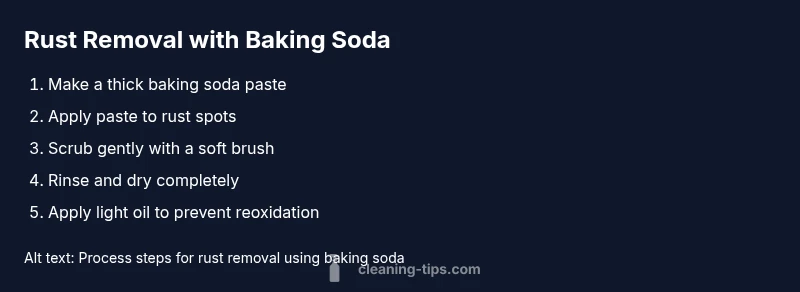
In a mixing bowl, combine baking soda with water until a thick, spreadable paste forms. Adjust the water gradually to reach a consistency that sticks to vertical rust without dripping. Avoid adding excess liquid that would dilute the paste.
Tip: Use a teaspoon to measure and mix gradually for precise paste consistency. - 3
Apply paste to rust spots
Spread a generous layer of paste over the rusted areas. Ensure full coverage and press lightly to help the paste cling to uneven surfaces. If the area is large, work in sections.
Tip: An old toothbrush helps spread paste into crevices and along edges. - 4
Let paste sit
Allow the paste to sit for about five to ten minutes. This gives the mixture time to loosen the oxide and begin lifting rust. Do not rush this step; patience improves results.
Tip: While waiting, gather a clean cloth and prepare your rinsing setup. - 5
Scrub the rust away
Gently scrub with a soft brush or non-abrasive pad in a circular motion. Reapply paste as needed for stubborn spots. Rinse occasionally to clear residue and prevent paste from drying onto the surface.
Tip: Avoid metal scrubbers that can scratch the finish and promote new rust spots. - 6
Rinse, dry, and assess
Rinse with clean water and dry thoroughly with a lint-free cloth. Inspect the area for remaining rust; repeat steps if necessary. Apply a light protective coat to help prevent reoxidation.
Tip: Drying completely is crucial to prevent immediate re-rusting.
Questions & Answers
Can baking soda remove rust from all metals?
Baking soda can remove light rust on many metals, especially smooth surfaces like steel and chrome. Deep pitting or heavily corroded parts may require stronger methods or professional refinishing.
Yes for light rust on many metals; for heavy rust, you might need stronger options.
Is baking soda safe for stainless steel surfaces?
Yes, baking soda is generally safe for stainless steel when used as a paste with a soft brush. Avoid abrasive pads that could scratch the surface.
It's usually safe for stainless steel with a soft brush.
Should I use vinegar with baking soda for rust removal?
Vinegar and baking soda can fizz together but do not significantly improve rust removal and may dull finishes. For rust cleanup, stick to the baking soda paste and mechanical scrubbing.
They react, but for rust cleanup, keep to the paste and scrubbing.
How long should the paste sit on rust?
Let the paste sit for about five to ten minutes on light rust. For stubborn spots, repeat the process after drying and cleaning the area.
Five to ten minutes is enough for light rust; repeat if needed.
Can baking soda remove rust from painted surfaces?
Be cautious: baking soda can abrade paint. Test on an inconspicuous area and avoid applying over intact paint where possible.
Be careful with painted surfaces; test first.
What about rust on cast iron cookware?
Baking soda paste can remove surface rust from cast iron. After cleaning, re-season the cookware to restore the protective coating.
Yes, you can remove rust from cast iron; re-season afterward.
Will baking soda remove rust permanently?
Baking soda helps remove surface rust and slows reformation when followed by drying and protection. It may not stop deeper corrosion by itself.
It helps with surface rust and protection, not deep corrosion.
Watch Video
The Essentials
- Test a small area first
- Make a thick paste for better adhesion
- Use a soft brush; avoid harsh scrubbing
- Rinse and dry thoroughly after cleaning
- Seal or oil metal to prevent future rust