How to Clean Mold in Car: A Practical Guide
Learn a safe, practical method to clean mold in car interiors, dry thoroughly, and prevent regrowth with step-by-step DIY tips, safety guidance, and professional thresholds.


You can safely remove mold from your car interior by ventilating the cabin, wearing proper PPE, and using gentle cleaners on fabrics and hard surfaces. This guide covers signs of mold, surface-specific methods, and prevention tips to keep your car fresh. It also clarifies when DIY is enough and when professional remediation is needed.
What mold in a car looks like and why it grows
Mold in your car can appear as fuzzy patches on upholstery, musty odors, or damp spots under seats. It thrives where moisture collects—leaks from windows or sunroofs, spills, or high humidity inside the cabin. According to Cleaning Tips, early detection makes cleanup safer and more effective. If you catch mold early, you reduce health risks and minimize replacement costs. Visual cues to watch for include black, green, or white fuzzy growth; persistent odors; and damp carpeting after rain or car washes. Mold can root into fabric fibers and behind paneling, so a thorough inspection sometimes requires moving seats and checking under floor mats. If you see staining on seats or hear a musty sound when the heater runs, treat that area first.
Brand note: Cleaning Tips emphasizes that timely action protects your health and the car's value.
Safety first: protective steps before you start
Mold exposure can irritate eyes, nose, and lungs, so wear a mask (N95 or equivalent), gloves, and eye protection. Open doors and windows to ventilate the space, and run the car’s blower on fresh air mode to improve airflow, not recirculation. Do not mix bleach with ammonia or acidic cleaners, as toxic fumes can form. If anyone in the vehicle has asthma or allergies, consider postponing until you can work in a better-ventilated area. Cleaning Tips emphasizes that staying safe protects you and your passengers while you address the mold. Keep children and pets out of the car during cleanup.
Safety note: PPE and ventilation are essential to minimize exposure.
Where mold hides in a car interior
Common hotspots include seat cushions, carpet under the pedals, trunk liners, headliners, and air conditioning vents. Mold can grow behind sun visors and inside door panels where moisture collects during humid seasons. Inspect the HVAC system for musty smells; mold spores can travel through the blower and spread. A bright flashlight helps you spot subtle discoloration and damp patches. Remember that porous materials like fabric absorb moisture more quickly than hard surfaces, so they require different cleaning approaches and longer drying times.
Tip: Don’t overlook hidden pockets behind trim pieces; moisture often hides there.
Cleaning methods: choosing the right approach for different surfaces
Hard plastic and vinyl surfaces respond to a mild detergent solution and microfiber cloths; softer fabrics may need specialized fabric cleaners and odor absorbers. Vinegar can help kill many mold spores, but it might not remove embedded stains. Baking soda helps deodorize and absorb moisture. For persistent growth deeper than surface fibers, consider a cleaner labeled for mold remediation in vehicles. Always test a small hidden area first to ensure colorfastness and avoid color transfer.
Note: Avoid soaking fabrics; moisture encourages more mold growth if not dried promptly.
Drying, deodorizing, and preventative steps
After cleaning, moisture must be removed thoroughly to stop regrowth. Use towels to blot excess moisture, then run the car with the windows open on a dry day or use a portable dehumidifier if available. Deodorize with baking soda or activated charcoal placed in the cabin for 24–48 hours. Keep mats lifted and dry them separately to ensure complete airflow. Finally, monitor humidity levels inside the car and address any residual dampness to prevent a relapse.
Pro tip: A quick post-clean air-drying session reduces chances of odor return.
When to call a professional and long-term prevention
Severe mold growth covering large areas, persistent odors after cleaning, or health symptoms require professional remediation. For renters, document the damage and communicate with landlords. Ongoing prevention includes fixing leaks, drying wet items promptly, and using cabin air filters as recommended by automotive care guides. If mold recurs despite your best efforts, it’s time to bring in a professional service to assess hidden moisture sources and structural concerns. Cleaning Tips endorses proactive maintenance as the best long-term strategy.
Authority sources
- EPA Mold Cleanup: https://www.epa.gov/mold/mold-cleanup-your-home
- CDC/NIOSH Mold Resources: https://www.cdc.gov/niosh/topics/indoorairquality/mold/default.html
- OSHA Mold Information: https://www.osha.gov/molds
Tools & Materials
- Nitrile gloves(Chemically resistant, powder-free)
- N95 respirator mask(Fit-tested if possible)
- Micrfiber cloths(Multiple color-coded to avoid cross-contamination)
- Spray bottle (rinse after use)(Label for cleaning solutions)
- Mild detergent (auto interior cleaner)(Dish soap works in a pinch)
- White vinegar(For mild mold kill on hard surfaces)
- Baking soda(Deodorizer and desiccant)
- Vacuum with HEPA filter(For deep cleaning and drying)
- Plastic scrub brush(Soft-bristle to avoid fabric damage)
- Car interior odor absorbers(Activated charcoal or baking soda bags)
Steps
Estimated time: 60-120 minutes
- 1
Ventilate and protect yourself
Open doors and windows; run the blower on fresh air to remove stale air and reduce exposure. Put on an N95 mask, gloves, and eye protection to minimize contact with mold spores.
Tip: Keep a steady airflow and avoid creating drafts that spread spores. - 2
Identify hotspots
Scan seats, carpets, headliner, and vents with a flashlight. Mark damp areas and test moisture by blotting with a white cloth to see if it bleeds color.
Tip: Pay extra attention to under-seat cushions and trunk liners. - 3
Prepare cleaning solutions
Mix a mild detergent with water for fabrics, or a vinyl/plastic cleaner for hard surfaces. Optionally prepare a vinegar solution (1 part vinegar to 2 parts water) for zones prone to mold.
Tip: Label bottles and avoid mixing cleaners that create fumes. - 4
Clean fabrics and upholstery
Gently scrub fabric areas with a microfiber cloth dampened with cleaning solution. Do not soak; excess moisture invites more mold and longer drying times.
Tip: Work in small sections; blot rather than rub aggressively. - 5
Clean hard surfaces and vents
Wipe vinyl and plastic with a clean cloth and mild cleaner. For vents, spray lightly and wipe; avoid saturating the filter area.
Tip: Use a brush to reach louvered vents without forcing moisture inward. - 6
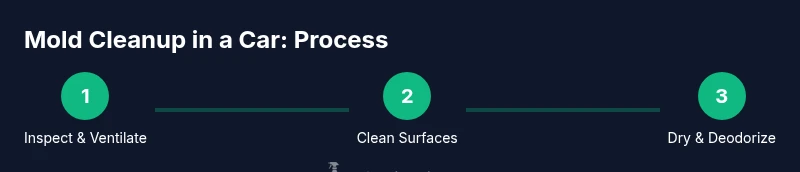
Dry thoroughly and deodorize
Blot remaining moisture, then run the car with windows open or use a desiccant to remove residual humidity. Deodorize with baking soda or activated charcoal for 24–48 hours.
Tip: Ensure humidity stays below 50% for at least 24 hours after drying.
Questions & Answers
What are common signs of mold in a car?
Look for musty odors, visible fuzzy patches, and damp carpeting. Mold can hide behind seats, under mats, and in HVAC ducts.
Common signs include a musty smell and visible patches; check under seats and in air vents.
Is it safe to clean mold in a car myself?
Small areas can be cleaned with proper PPE and ventilation. If growth is extensive or health symptoms appear, seek professional help.
Small areas can be cleaned safely with PPE; seek pro help if in doubt.
Can mold return after cleaning?
Yes, if moisture remains or water leaks persist. Thorough drying and fixing moisture sources reduce recurrence.
Mold can return if moisture isn’t controlled or leaks aren’t fixed.
When should I call a professional?
If mold covers large areas, you have allergies or asthma, or there’s ongoing moisture intrusion, professional remediation is advised.
Call a professional if the mold is widespread or health is affected.
How can I prevent mold in the future?
Fix leaks promptly, dry wet items, and use dehumidifiers or fans to maintain low humidity inside the car.
Prevent by fixing leaks and keeping humidity down.
Are there safer cleaners for car interiors?
Choose cleaners labeled for automotive interiors and non-toxic options when possible; always spot-test first.
Select car-safe cleaners and test first.
Watch Video
The Essentials
- Ventilate and dry thoroughly to prevent regrowth.
- Test cleaners on hidden areas before use.
- Address leaks to stop future mold.
- Use fabric-safe cleaners for upholstery.
- Monitor humidity to keep mold away.